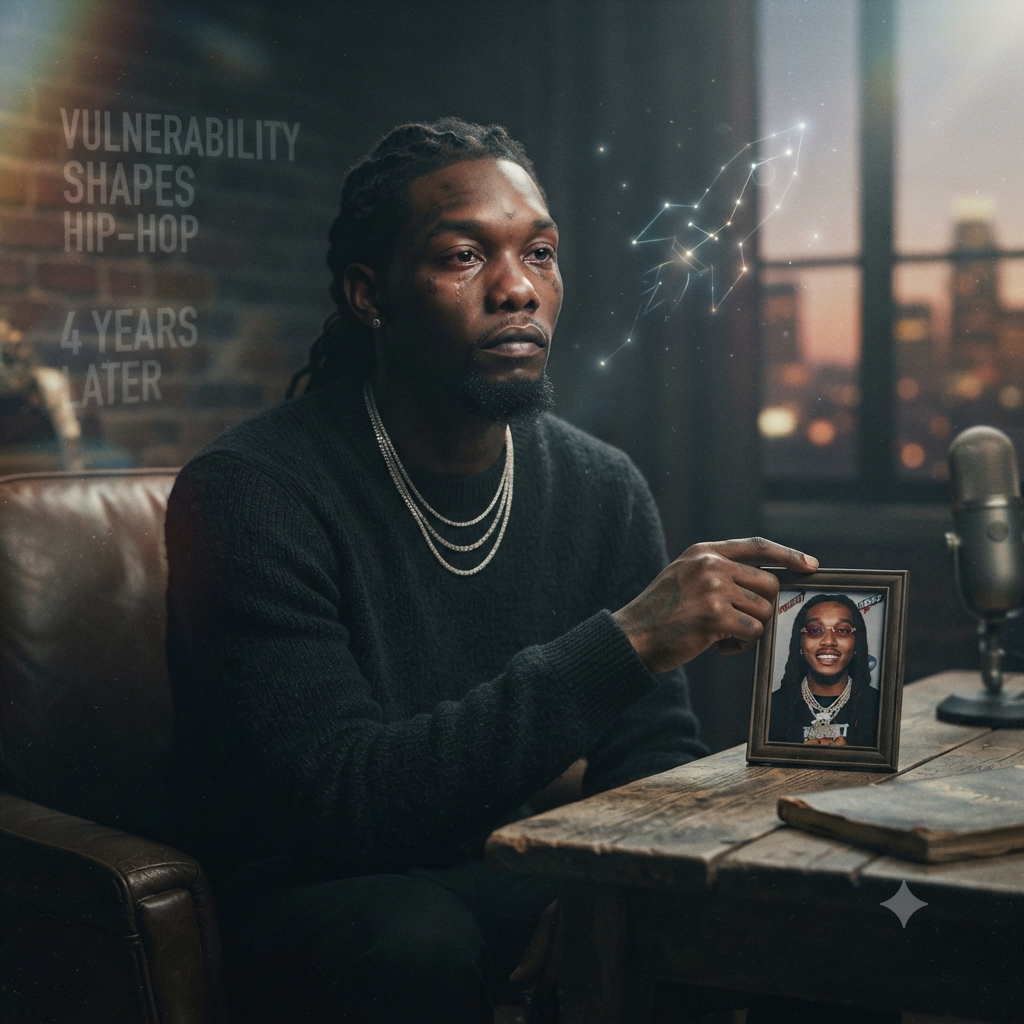
Offset Opening Up About Takeoff 4 Years Later: How Vulnerability Shapes Hip-Hop Press
Four years is a long time in hip-hop, yet for anyone who grew up watching the Migos reshape modern rap, November 2022 still feels like yesterday. When Offset recently sat down and spoke openly about grieving Takeoff four years after his passing, the reaction across the internet wasn’t just the usual cycle of quick Twitter reactions and forgotten Instagram clips. People actually stopped, listened, and felt the weight of his words. Watching one of Atlanta’s most prominent trap pioneers drop his guard like that offers a masterclass in how emotional vulnerability impacts rap interviews, shifting the entire conversation away from surface-level hype toward genuine human connection.
For decades, hip-hop media operated on a very specific, unwritten set of rules. If you came from the streets, you showed up to interviews with your armor locked tight. You talked about the jewelry, the charting singles, the studio sessions, and maybe a hint of industry drama, while keeping any real pain locked behind closed doors. Showing grief, exhaustion, or uncertainty was treated like a liability. Offset’s willingness to talk candidly about therapy, survivor’s guilt, and the quiet, heavy reality of missing his brother breaks that outdated mold wide open. When an artist of his stature lets the room see the person behind the persona, it forces music journalists and listeners alike to rethink what strength actually looks like in rap culture.
Breaking the Tough-Guy Archetype in Rap Journalism
Anyone who has worked in music journalism knows how exhausting traditional press runs can be. Artists spend twelve hours doing back-to-back fifteen-minute interviews, repeating the exact same talking points until nobody in the room feels anything. Writers end up transcribing generic quotes about how the new album is their “best work yet,” and readers scroll right past the article because there is nothing real to hold onto.
When Offset speaks honestly about still processing Takeoff’s death four years later, the entire dynamic in the interview chair shifts. Suddenly, the journalist isn’t just trying to pull a clickbait headline out of a guarded celebrity. Instead, the conversation turns into a real exchange between two human beings. That level of candor gives writers permission to ask better, deeper questions about brotherhood, mental health, and what it actually costs to survive success in the music industry.
More importantly, it challenges the lazy stereotypes that mainstream media often projects onto trap and street-oriented artists. For years, outsiders tried to box Southern rap into narrow narratives centered purely on excess and aggression. Hearing Offset articulate the complexity of mourning someone he came up with from nothing—someone who was family long before the fame—humanizes him in a way no PR campaign ever could. It reminds the public that behind the platinum plaques and sold-out arenas are real men carrying heavy trauma in front of millions of strangers.
Why Unguarded Interviews Create Better Press Coverage
If you look closely at how emotional vulnerability impacts rap interviews, the biggest takeaway is that honesty raises the ceiling on how seriously an artist’s music gets covered. When a rapper keeps things strictly surface-level, critics tend to review the project on purely technical or commercial terms—grading the beats, the guest features, and the first-week projections.
When an artist opens up about the real-life pain sitting underneath the records, music writers start treating the catalog like lived testimony. Every cadence shift, every dark melody, and every introspective verse suddenly carries extra weight. Writers spend more time unpacking the lyrics because they understand the emotional stakes behind them. Instead of a quick three-hundred-word news blurb that disappears off a homepage in two hours, the artist earns long-form profiles, thoughtful album breakdowns, and retrospective essays that stay relevant for years.
Readers can smell manufactured press angles from a mile away. Fans today are smart; they know when an artist is dodging real questions or reciting rehearsed lines. On the flip side, when someone admits they don’t have everything figured out—that four years later, the grief still hits out of nowhere—audiences lean in. That kind of transparency builds a bond with listeners that streaming algorithms simply cannot manufacture.
What Independent Artists Can Learn from Offset’s Candor
You do not need major-label budgets or a decade of mainstream hits to apply this lesson to your own press strategy. In fact, for rising and independent rappers trying to stand out in an oversaturated market, emotional honesty is one of the strongest tools you have. Music editors and bloggers receive hundreds of submissions every single week, and almost all of them pitch the exact same angle: luxury lifestyle, relentless grind, and unmatched confidence.
Standing out starts with trusting that your real story is compelling enough on its own. You don’t have to trauma-dump or force fake emotion to make an impact, nor do you have to abandon the confidence that makes hip-hop exciting in the first place. It simply means letting interviewers and writers see the full picture. Talk about the doubts you had while recording the project, the losses that reshaped your perspective, or the specific moments in your life that forced you to grow up fast.
Giving context to your music turns casual listeners into invested supporters. When a fan reads an interview where you explain the exact headspace you were in while writing a record, that song hits completely differently the next time it comes through their headphones. If you are ready to step beyond generic promo and share your authentic personal story and musical depth with seasoned writers on our hip-hop music review blog (https://itshiphopmusic.com/submit/music-review/), leading with genuine substance is the fastest way to make people care about your catalog.
The Lasting Impact on Hip-Hop Culture
Hip-hop has always been at its best when it reflects the unfiltered truth of the people making it. From Tupac speaking candidly about loneliness and paranoia in the nineties to DMX wearing his pain on his sleeve in front of stadium crowds, the artists who leave the deepest mark are rarely the ones who pretended to be invincible.
Offset’s reflections on Takeoff four years after the tragedy add an important chapter to that lineage. By refusing to pretend that time automatically erases grief, he sets a healthier standard for the next generation of artists stepping up to the microphone. He shows younger rappers that you can command respect on the block, dominate the charts, and still be honest enough to say that losing someone you love hurts every single day.
For music journalists, moments like this are a reminder of why this work matters. The best hip-hop press doesn’t just report on who is winning the weekend or who dropped the flashiest visual; it documents the real human lives behind the culture. When artists choose honesty over armor, everyone wins—the writers get to tell stories that actually matter, the fans feel genuinely connected to the music, and the culture grows deeper and stronger with every honest word spoken on the record.