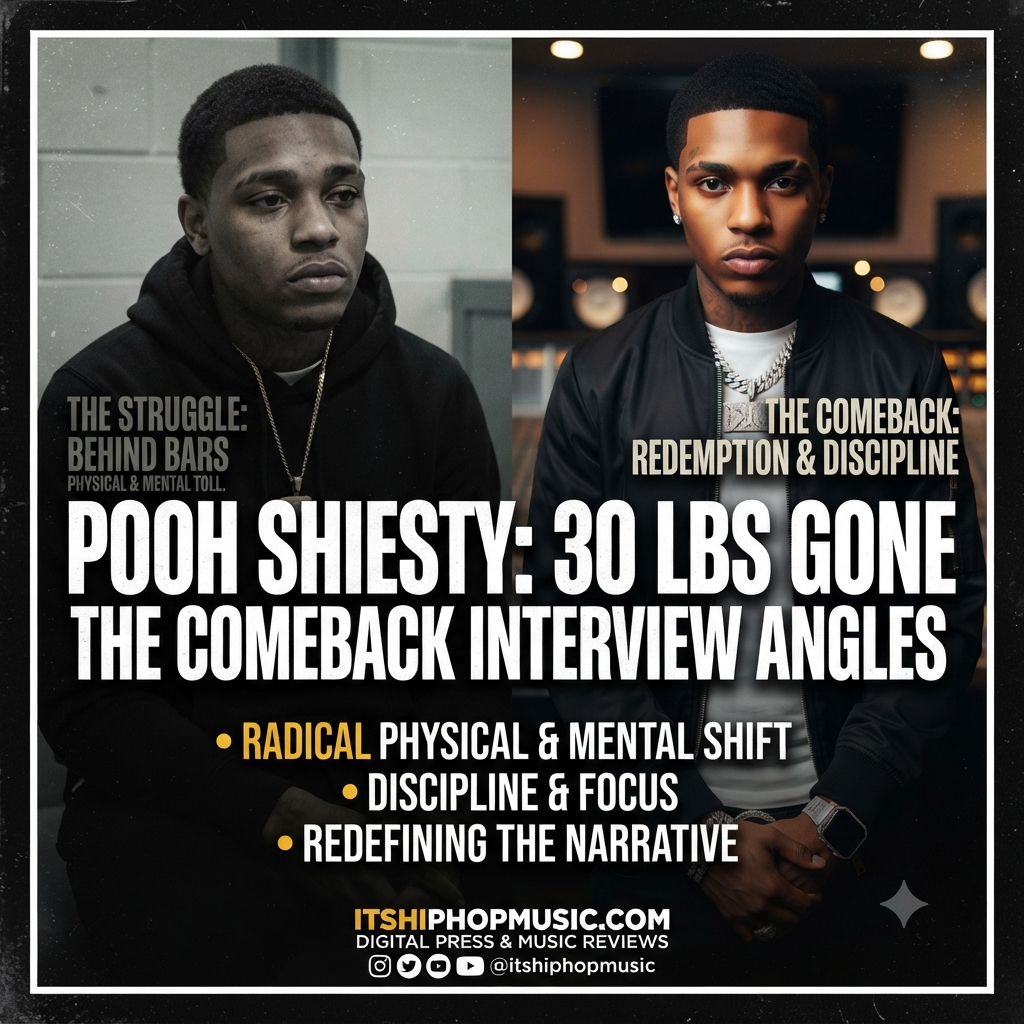
Pooh Shiesty Speaking on Losing 30 Pounds in Prison & His Return: Comeback Interview Angles
In hip-hop, coming home from prison is rarely treated like a normal album rollout. The second an artist walks out the doors, every major blog, radio show, and podcast starts looking for the exact same thing: proof that the time away actually changed them. Nobody wants to hear the same old press-release talking points. Editors want to see grit, clarity, and a hunger to make up for lost time. Studying how rappers frame prison comeback stories in press gives independent artists a real blueprint for turning personal struggle into genuine media momentum.
Few modern examples show how powerful—and complicated—these narratives are better than Memphis rapper Pooh Shiesty. Between his late-2025 federal release, his blunt interviews about growing up behind bars, and the unsettling headlines about him losing 30 pounds while locked up, his press run shows why raw physical and mental transformation dominates hip-hop headlines.
Why Hip-Hop Media Obsesses Over the Comeback Arc
When Pooh Shiesty came home from his three-year federal bid in late 2025 and immediately shook up the Billboard charts with “FDO” (“First Day Out”), his team didn’t just lean on his old street reputation. Instead, his interviews centered on maturity, staying sober, and moving smarter than he did before he went in. He summed up his mindset in plain terms: “I’m five years older. Faster, smarter, sober [and] wiser.”
Then came the contrast. Reports from his legal team detailing a severe 30-pound weight loss and sleep deprivation during solitary confinement in a Texas facility painted a much starker picture of what being locked down actually does to a person’s body. Put side by side, both moments explain why hip-hop journalism latches onto behind-bars transformation stories so aggressively:
-
Physical change feels undeniable: You can fake a tough persona on Instagram, and you can buy fake streams, but you cannot fake losing 30 pounds or getting sober. Concrete physical shifts strip away industry smoke and mirrors. When editors and fans see a visible difference, it forces them to take the story seriously.
-
Turning dead time into studio urgency: The best comeback narratives treat incarceration like a pressure cooker rather than a pause button. Right after his release, Shiesty showed off his ankle monitor on social media with a simple message: “studio, studio, studio.” That single clip connected his struggle directly to his work ethic, telling fans the music was already on the way.
-
Owning the past instead of dodging it: Hip-hop audiences have a built-in radar for excuses. When Shiesty openly pointed out that he had spent more of his adult life locked up than actually rapping, he reframed his return. He wasn’t trying to recapture an old wave—he was introducing a sharper, more focused version of himself.
Three Comeback Interview Angles That Always Get Clicks
Whether an artist is coming home from prison, fighting their way out of a bad label deal, or bouncing back from a personal rock bottom, music editors tend to greenlight the same three storylines. When you look closely at how rappers frame prison comeback stories in press, it almost always comes down to these three angles:
Notice that none of these angles are really about bragging. Even in a genre built on flexing, the comeback press cycle works best when the artist sounds grounded, observant, and laser-focused on what comes next.
How Indie Artists Can Use This Same Playbook
You don’t need a major-label machine or a high-profile court case to use these exact same storytelling mechanics in your own rollout. In fact, one of the biggest mistakes independent rappers make when pitching blogs is sending over a Spotify link with zero backstory. An editor getting 200 emails a day doesn’t care about a generic “new single out now” pitch—they care about why you sound hungrier right now than you did six months ago.
If you have been grinding through a rough patch, taking time off to get your mind right, overhauling your health, or locking yourself in the studio to rebuild your sound from scratch, put that front and center in your bio and interview pitches. People connect with discipline. When you show writers that your new music came out of real sacrifice and focus, they have an actual hook to write a headline around.
At the same time, telling a good story in an interview only works if your digital footprint backs it up when fans and A&Rs Google your name. Random social media posts disappear down the timeline in a day, while indexed press articles stay up for years. If you are stepping into a new chapter of your career, cement a clean, forward-looking digital press footprint via our indie hip-hop press reviews hub. Having real write-ups tied to your name turns personal growth into searchable proof that you are taking your career seriously.
Making the Narrative Stick After the Headlines Fade
The hardest part of any comeback isn’t the first week back—it’s keeping people locked in once the initial shock wears off. Pooh Shiesty’s return grabbed attention because his real-life transformation matched the urgency in his voice on “FDO.” The weight loss, the sobriety, and the non-stop studio focus all pointed in the exact same direction.
For independent artists, that is the real takeaway. Your press angle, your visuals, and your actual work ethic have to tell the same story. If you pitch yourself as disciplined and reborn, your release schedule and visual presentation need to look just as sharp. Give writers a real human arc to latch onto, back it up with undeniable music, and let your growth do the heavy lifting.
Build an unignorable media footprint focused on your growth. Get reviewed via our Music Review Page.