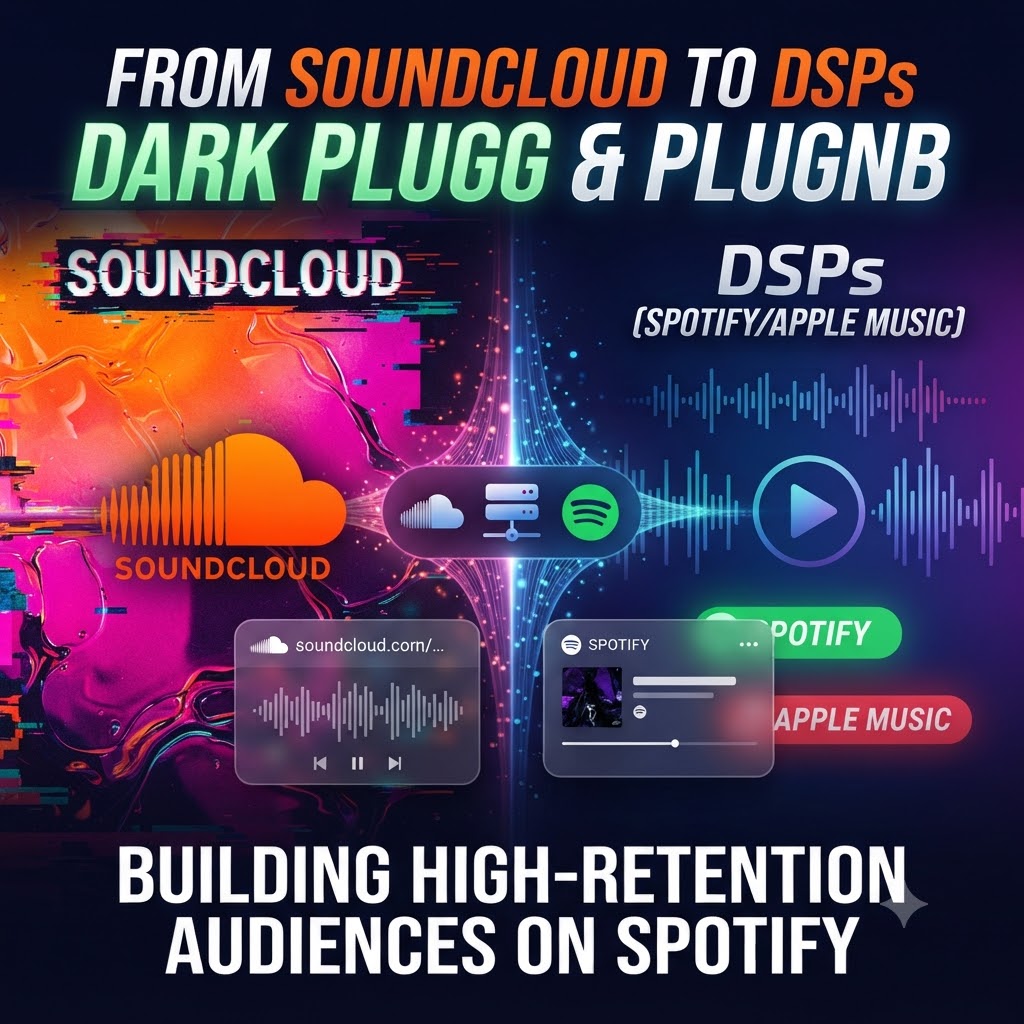
The underground music scene is shifting right under our feet. For years, SoundCloud was the ultimate ecosystem for raw, experimental rap subgenres and late-night club demos. But the playbook is changing.
Today, artists and producers pushing Dark Plugg and Pluggnb are proving that niche underground movements don’t have to stay on the fringes. Instead, they’re quietly building hyper-loyal, high-retention streaming accounts right on major DSPs like Spotify.
If you’re an independent artist making atmospheric, melody-driven rap, understanding this migration is how you turn internet hype into sustainable momentum.
What Are Dark Plugg and Pluggnb?
Before looking at the streaming side of things, it’s worth breaking down the actual sound:
-
Pluggnb: Growing out of the foundation laid by Mexikodro and the BeatPluggz collective, Pluggnb blends the bouncy drums of modern trap with lush, nostalgic R&B synth pads and chopped vocal lines. It’s dreamy, emotional, and deeply melodic.
-
Dark Plugg: The moodier, sinister sibling. It swaps out those airy, bright synths for eerie bells, distorted 808s, and haunting atmospheres that sound straight out of a late-night horror movie.
Both subgenres live and die by their aesthetic—sleek graphic design, tight-knit communities, and a distinct mystique that fans latch onto instantly.
Why Underground Sounds Dominate Spotify Retention
Major labels are always chasing broad, one-size-fits-all pop-rap hits, but the DSP algorithm actually thrives on true listener behavior. That’s where Dark Plugg and Pluggnb artists have a massive edge: retention.
Niche subgenres naturally attract super-fans. When someone puts on a Dark Plugg playlist, they aren’t just zoning out—they’re locked in. Because these sounds hit a specific mood, listeners tend to save songs to their libraries right away, put tracks on repeat, and dig straight into full artist discographies.
For Spotify, high save rates and full completion percentages are pure gold. They tell the algorithm that your music has real substance, which is what triggers recommendations like Discover Weekly and Release Radar.
The Blueprint: Moving From SoundCloud to DSPs
Transitioning a core audience from a free-upload platform like SoundCloud to a monetized streaming service takes more than just dropping a link. Artists winning at this game follow a few core rules:
-
Keep the grit, clean up the mix: SoundCloud listeners are famously forgiving of blown-out, distorted audio. But translating that raw energy to Spotify means getting a proper master. Those heavy Plugg 808s and delicate synth pads need to hit cleanly in car speakers and cheap earbuds without losing their edge.
-
Feed the algorithm early data: The Spotify backend needs proof of life to understand who likes your music. Securing early traction through niche curators helps kickstart that data loop. If you want to skip the guesswork, you can convert underground momentum into DSP streams using our targeted rap playlist placements to get your records in front of actual genre fans.
-
Never water down the aesthetic: Moving to Spotify doesn’t mean you need a corporate media rollout. Keep your visuals mysterious, lean into eye-catching Spotify Canvas loops, and treat your artist profile like an extension of your underground identity.
The old choice between the raw, community-driven culture of the underground and the professional infrastructure of DSPs is gone. By bringing the heavy, engaged energy of Dark Plugg and Pluggnb over to platforms like Spotify, independent acts are proving that niche sounds can command massive retention. Polish your mix, feed the algorithm right, and turn that SoundCloud buzz into permanent fans.