If you’re a drill producer or hip-hop artist building dark, atmospheric tracks using chopped vocal samples, we need to talk.
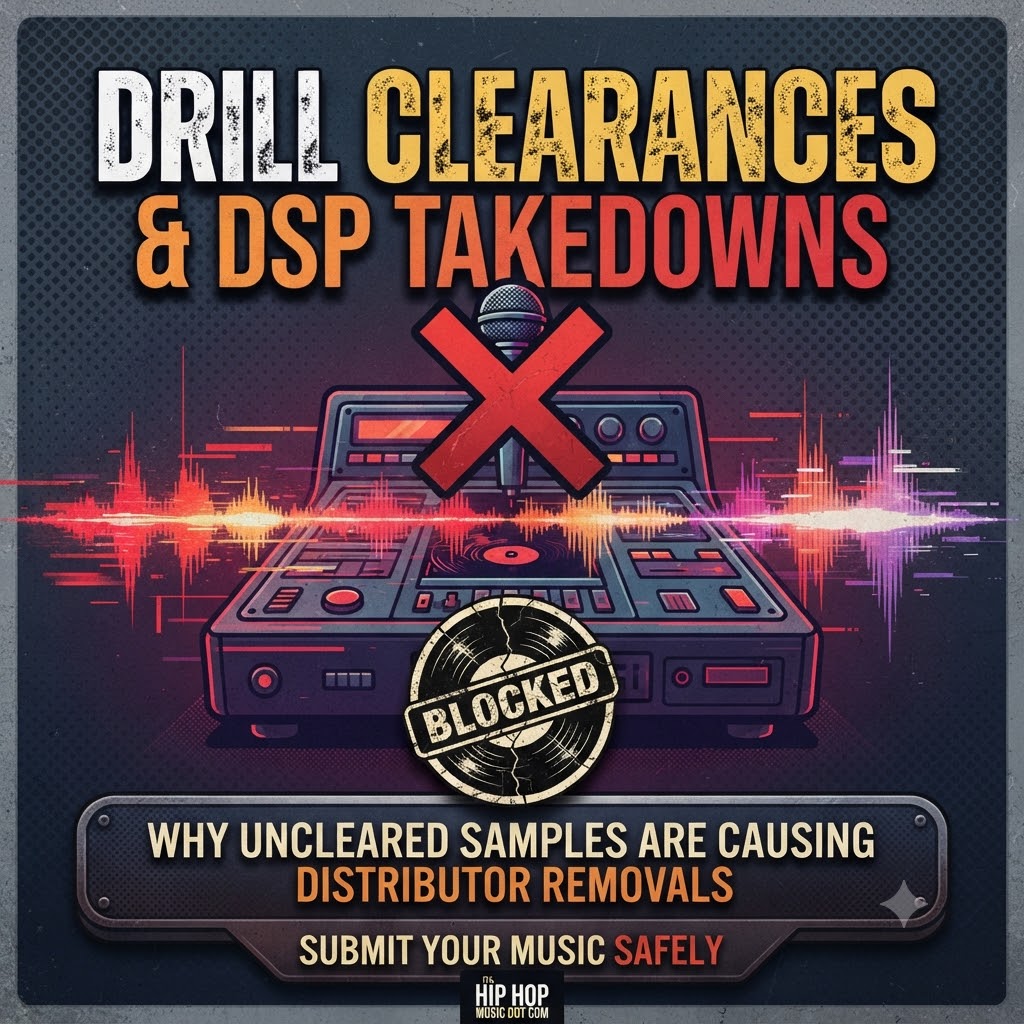
The streaming game is changing fast. Over the past year, major platforms like Spotify, Apple Music, and YouTube Music have cranked up their automated copyright detection systems. Pair that with aggressive digital fingerprinting tech like Audible Magic, and independent artists everywhere are getting hit with sudden, automated distributor takedowns.
At the center of this storm? Uncleared vocal loops.
Let’s break down why drill beats are getting flagged, how these takedowns actually happen, and how you can protect your catalog while getting your music heard.
The Drill Producer’s Dilemma
Drill music lives and dies by its mood. Between the sliding 808s, eerie minor-key synths, and echoing vocal chops haunting the background, atmosphere is everything.
To lock in that sound quickly, a lot of producers lean on a few shortcuts:
-
Splice and Loop Libraries: Royalty-free packs are lifesavers, but popular vocal loops get downloaded and reused by thousands of producers globally. When too many tracks share the exact same unedited snippet, algorithms get confused and start throwing false flags.
-
YouTube A Cappella Rips: Pulling vocals from classic R&B tracks, old soul records, or random online acapellas is basically playing with fire.
-
Movie and Interview Snippets: Dropping a gritty mob movie quote or a viral interview intro adds instant character, but it’s still protected copyright material.
Here’s the harsh reality: chopping, pitching, or drowning a vocal loop in reverb doesn’t make it legally safe. Modern audio-matching tools can spot a vocal stem even if you’ve shifted it up or down three semitones.
What Happens When a DSP Takedown Hits?
When an automated filter or a copyright holder flags an uncleared sample, it can derail your entire rollout in seconds:
-
Instant Removal: Your track vanishes from Spotify, Apple Music, and Tidal overnight, killing your playlist momentum and streaming numbers.
-
Distributor Bans: Platforms like DistroKid, TuneCore, and CD Baby have zero tolerance for copyright strikes. Rack up a few, and they might suspend or ban your entire account.
-
Frozen Royalties: Any money the infringing track made can be frozen or clawed back.
How to Protect Your Beats and Releases
Building a sustainable music career means treating sample clearance with the same care as your mixing and mastering.
-
Interpolate Instead: Instead of sampling the original master recording, write your own melody or hire a vocalist to re-sing a similar hook. You’ll still need to sort out publishing splits, but you completely avoid master-side automated takedowns.
-
Work with Real Vocalists: If you use loop services, check the licensing details closely. Even better, link up with indie vocalists on platforms like Fiverr or SoundBetter, pay them a flat fee or agree on a split, and get a simple split sheet signed.
-
Clear Early: Don’t wait until a song blows up on TikTok to clear a sample. If it gains traction, copyright holders will find it.
Getting Your Music Heard Safely
Once your beats are 100% legally cleared, properly mixed, and ready for the world, the goal is getting them in front of real hip-hop fans.
Skip the shady promo routes and protect your catalog from unexpected takedowns. When you’re ready to make moves, you can promote your cleared tracks safely across stores through our official music submission portal.