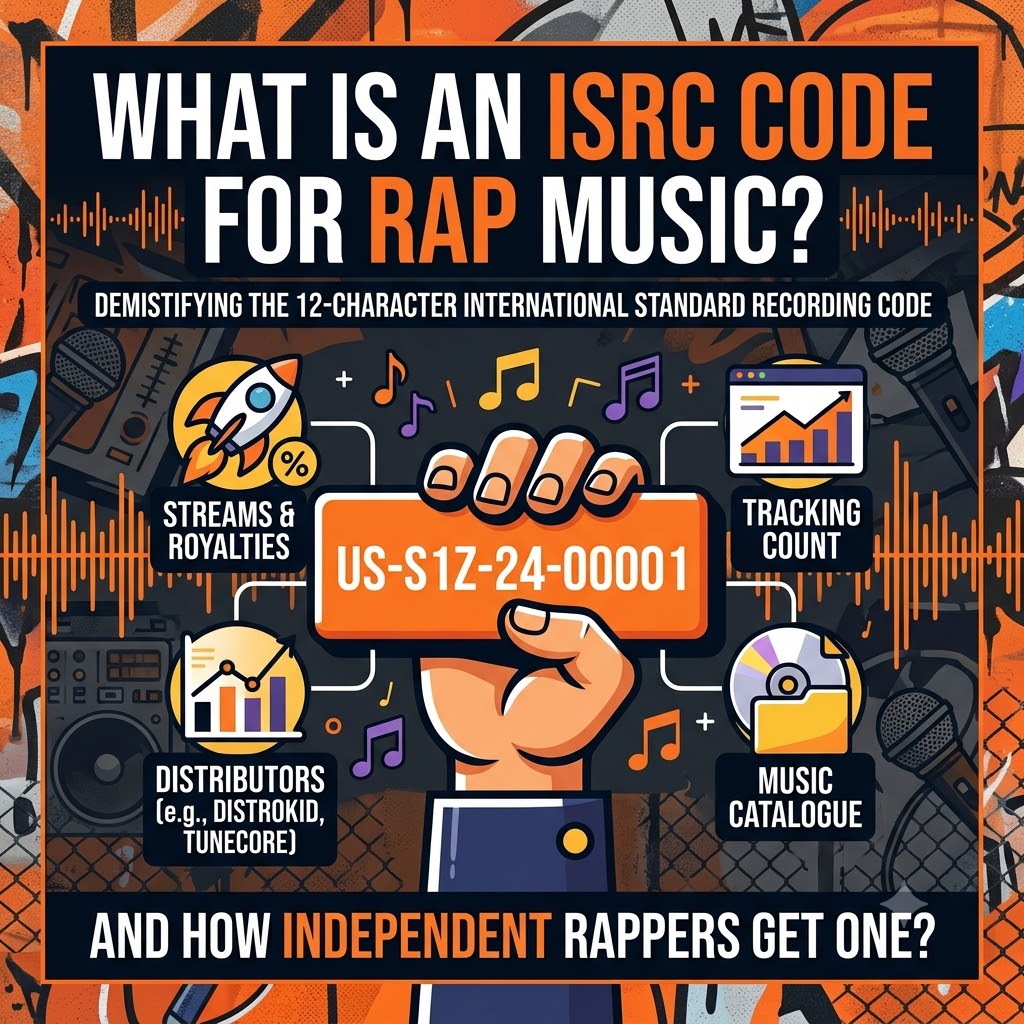
What Is an ISRC Code for Rap Music? (And How Independent Rappers Get One)
If you’ve ever sat down to upload a track to DistroKid, TuneCore, or CD Baby, you’ve probably hit a form asking for a string of numbers you didn’t recognize. Between UPCs, ISWCs, and publishing IDs, it’s easy to get lost in the administrative side of the music business. But if there’s one piece of backend data you can’t afford to gloss over, it’s the ISRC code.
For independent hip-hop artists, understanding what is an isrc code for rap music is just as important as getting the vocal mix right or securing the sample clearance. Whether you’re dropping a underground boom-bap single, a fast-paced drill track, or a melodic trap anthem, this code is the ultimate digital asset tracking your work across the globe.
In this guide, we’re going to cut through the industry jargon. You’ll learn what an ISRC code actually is, how your distributor assigns it, and the critical step almost every independent rapper misses when re-releasing or moving music between platforms—a mistake that can wipe out thousands of streams overnight.
Breaking Down the Code: What Is an ISRC?
ISRC stands for International Standard Recording Code. In plain English? It is a unique 12-character fingerprint assigned to one specific audio recording.
It does not apply to the written lyrics or the underlying melody (that’s handled by an ISWC code). It applies strictly to the master audio file you uploaded. If you record an original rap track, that recording gets an ISRC. If you do an acoustic version or drop an official instrumental, each of those distinct versions gets its own separate ISRC code.
A typical code looks something like this: US-S1Z-24-00001
Here is how those 12 characters break down:
-
Country Code (US): The two letters identifying where the owner or issuing organization resides.
-
Registrant Code (S1Z): A unique 3-character identifier assigned to the label, distributor, or person registering the track.
-
Year of Reference (24): Two numbers marking the year the code was assigned (in this case, 2024).
-
Designation Code (00001): A 5-digit sequential number chosen by the creator to keep track of individual releases throughout the year.
Think of it as a VIN number on a car. No matter where that car drives, who owns it, or what color it gets painted, the VIN stays the same so the state knows who it belongs to.
Why Is an ISRC So Important for Independent Rappers?
Streaming platforms like Spotify, Apple Music, Tidal, and Amazon Music don’t use your track title or artist name to figure out who gets paid. Song titles repeat all the time—there are thousands of tracks named “Intro” or “Dreams.”
Instead, digital stores rely entirely on metadata. Every time your beat drops, someone plays your track on TikTok, or your single lands on a user playlist, the DSP reads the ISRC code embedded in the backend.
Here is why that matters for your bank account:
-
Royalty Tracking: SoundExchange, ASCAP, BMI, and your digital distributor use this code to collect and distribute performance royalties. If the code is missing or incorrect, your money sits in an unclaimed pool or goes to someone else.
-
Chart Positioning: Official charts (like Billboard) track sales and streams through ISRC data combined with your release’s UPC barcode.
-
Playlist Persistence: When users add your song to their personal library, that save is linked directly to the ISRC code, not just the cover art or title.
How Independent Rappers Get an ISRC Code
The good news is that getting an ISRC code isn’t expensive, nor does it require a record deal. As an independent artist, you have two primary ways to get one.
Option 1: Automatic Assignment via Your Distributor (Easiest Method)
For 99% of indie rappers, this is the way to go. When you fill out your release metadata on platforms like DistroKid, TuneCore, CD Baby, or Amuse, there is usually a checkbox that asks if you already have an ISRC code.
If you leave it blank, the distributor will automatically generate a valid ISRC code for free as soon as your track is processed. You don’t have to calculate the numbers or file any paperwork—they take care of the heavy lifting.
Option 2: Buying Your Own Registrant Code
If you run an independent label and want total control over your catalog formatting, you can register directly with your national ISRC agency (in the U.S., that is managed through the US ISRC Agency).
Paying a one-time fee gives you a permanent 3-character Registrant Code. From there, you can issue up to 100,000 distinct ISRC codes every year for your own releases. While it gives your metadata a polished, official look, it is entirely optional for solo independent artists.
The Re-Release Trap: Why Copying Your ISRC Code Is Vital
This is where many independent artists run into serious trouble.
Let’s say you released a single six months ago that built up 50,000 streams on Spotify. Suddenly, you decide to change distributors because you found a better price, or maybe you want to update the master file to fix a muddy bass section in the mix.
If you take down the original upload and put the song back up through a new distributor without copying over the original ISRC code, here is what happens:
-
The streaming service views the new upload as a completely different song.
-
Your play count resets to zero.
-
The track gets removed from all fan playlists it was previously saved to.
-
Your algorithmic momentum on radio radio algorithms drops off completely.
How to Preserve Your Stream Counts During a Re-Release
To keep your hard-earned stream totals and playlist placements intact during a delisting or re-upload, you must execute a proper metadata match:
-
Find Your Original Code: Before taking down your old track, go to your previous distributor’s dashboard and copy the 12-character ISRC code.
-
Paste It Into the New Upload: When setting up the release on your new platform, select the option that says “I already have an ISRC code.”
-
Keep Metadata Identical: Make sure the song title, artist names, track length, and audio file are matching as closely as possible.
When you do this properly, the DSPs recognize the audio master as the same piece of music. The new file seamlessly replaces the old one, keeping your stream numbers, saves, and placements intact.
Take Control of Your Catalog and Scale Your Reach
Getting comfortable with your metadata is a major milestone in taking your music career seriously. Locking down your ISRC codes ensures that as your catalog grows, every single listen is accounted for and every royalty dollar finds its way back to your bank account.
Once your distribution backend is solid and your metadata is clean, your focus needs to shift toward building real traction and driving listeners to those tracks.
To turn your catalog into a true engine for growth, ensure your tracking metadata is accurate, then scale your record across active listeners via our hip-hop playlist networks.