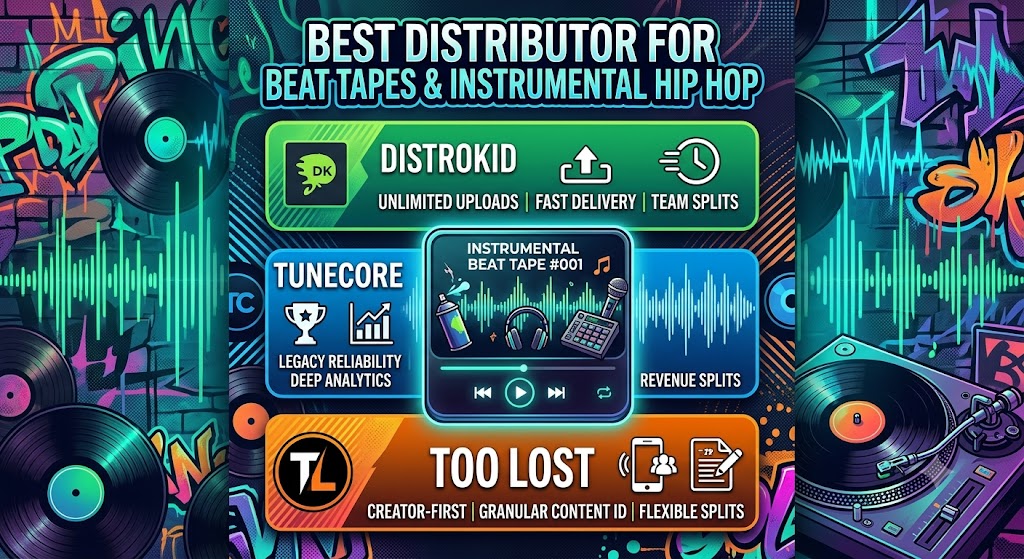
Best Distributor for Beat Tapes and Instrumental Hip Hop: DistroKid vs. TuneCore vs. Too Lost
Putting out an instrumental beat tape is a major rite of passage for any hip-hop producer. Whether you’re stringing together a dusty 90s boom-bap beat tape, rolling out cinematic trap soundscapes, or curating a lo-fi study project, putting out a cohesive tape shows off your production evolution in a way single beat uploads just can’t touch.
That said, releasing a full multi-track instrumental project comes with a set of headaches that vocal-led singles just don’t have. You’re dealing with sample clearances, loop-claiming nightmares on social media, complex tracklists, and split payouts for guest vocalists or co-producers. Finding the best distributor for beat tapes and instrumental hip hop isn’t just about picking a service to get your WAV files onto Spotify—it’s about protecting your rights and keeping your royalty streams clean.
Let’s break down the three top distribution platforms in the game right now—DistroKid, TuneCore, and Too Lost—and evaluate how they handle the exact issues hip-hop beatmakers run into every day.
What Hip-Hop Beatmakers Actually Need in a Distributor
Before jumping into the breakdown, let’s talk about why beat tapes are a different beast entirely. When you’re putting out a 10-to-15-track instrumental album, three key backend features can make or break your release strategy:
-
Multi-Track Delivery & Metadata Handling: Beat tapes often feature interludes, skits, chopped versions, and quick transitions. You need a platform that lets you upload large batches without charging per track, while keeping track titles, explicit tags, and “Instrumental” badges accurate.
-
Content ID Safety (YouTube, TikTok, Instagram): This is where most producers trip up. If your beats use non-exclusive Splice loops, free royalty-free packs, or uncleared vinyl flips, automated Content ID can accidentally flag buyers who licensed your beat, or give you copyright strikes on your own tape.
-
Automated Split Payouts: If you have guest MCs hopping on a track, a co-producer handling the drums, or an engineer taking a cut, you do not want to be manually wiring $12.40 to three different PayPal accounts every single month.
1. DistroKid: High-Volume Output for Budget-Conscious Beatmakers
DistroKid changed the entire distribution landscape by introducing a flat yearly rate for unlimited uploads. For high-output beatmakers who drop three or four beat tapes every year alongside loose beats, it remains a favorite.
Multi-Track Beat Tape Uploads
Dropping an entire album on DistroKid is straightforward. You get a single dashboard, plug in your cover art, upload your audio files, and hit send. Because you pay a single flat annual fee, dropping a 20-track beat tape costs the exact same as dropping a 2-track single ($0 extra). If you’re pumping out projects constantly, the math works out in your favor.
Content ID & The “Loop Trap”
DistroKid offers YouTube Content ID as an add-on service. Here’s the catch for beatmakers: DistroKid’s system is aggressive. If your beat tape relies on popular Splice melodies or open-source sound packs that hundreds of other producers have used, enrolling your tracks in Content ID can trigger widespread copyright claims against other creators—or even get your own upload flagged. DistroKid is strict about this, so you should only turn on Content ID if every melody and stem on your tape is 100% composed from scratch.
Split Payouts with “Teams”
DistroKid’s automated splits feature (called Teams) is easily one of its best assets. You can assign exact royalty percentages for any track to your guest rappers, co-producers, or engineers. Once set, DistroKid routes earnings directly to each person’s account. The downside? Your collaborators must create a DistroKid account to collect their money, which can annoy guest artists who use other services.
-
Best For: Producers releasing high volumes of music on a tight budget who need fast, automated split payouts.
2. TuneCore: Legacy Reliability with Deep Publishing Tools
TuneCore is one of the oldest names in the digital distribution space. While they used to charge exclusively per single or per album every year, they have revamped their structure to offer both unlimited subscription tiers and traditional releases.
Multi-Track Beat Tape Uploads
Uploading a beat tape on TuneCore feels structured and professional. Their metadata entry system is meticulously clean, making it easy to mark tracks explicitly as instrumentals, add guest artist credits, and properly tag subgenres. If you like high-level catalog organization and detailed backend reporting on where your streams are coming from, TuneCore’s analytics are top-tier.
Content ID & Social Monetization
TuneCore approaches Content ID and social monetization through its social soundtrack feature. They monetize your audio across YouTube, TikTok, Facebook, and Instagram reels. Depending on your subscription plan, they take a small commission on automated content claims rather than charging steep upfront fees per track. Just like DistroKid, though, you have to be extremely careful with non-exclusive samples before turning automated claiming on.
Revenue Splits
TuneCore Splits allows you to split earnings on any release down to the exact percentage. It supports both single-track splits (ideal for a beat tape where only Track 4 has a guest vocalist) and album-wide splits. It’s reliable, clean, and ensures you aren’t stuck handling administrative accounting at tax season.
-
Best For: Established producers who prioritize detailed data analytics, traditional catalog management, and brand longevity.
3. Too Lost: The Creator-First Modern Choice
Too Lost has exploded in popularity among modern beatmakers, underground hip-hop collectives, and electronic producers. Built ground-up for the modern digital era, it combines distribution, publishing administration, and split management under one modern roof.
Multi-Track Beat Tape Uploads
When it comes to organizing beat tapes, Too Lost’s interface is fast and modern. Adding multi-track albums, assigning alternate versions (e.g., standard vs. chopped-and-screwed beat tapes), and customizing release schedules takes minutes. They don’t penalize you for multi-track uploads, making it super friendly for producers who treat beat tapes like continuous art projects.
Content ID & UGC Tracking
Where Too Lost really stands out for hip-hop producers is how it handles User-Generated Content (UGC). A huge portion of an instrumental’s reach comes from independent YouTube vloggers, gamers, and freestyle rappers using the beat in their videos. Too Lost gives producers granular control over UGC claiming, helping you capture micro-sync revenue across YouTube and TikTok without instantly nuking your relationships with creators using your music.
Advanced Splits & Collaboration
Too Lost provides some of the most flexible split options available. You can establish complex split sheets across whole tapes or individual tracks, and collaborators can easily withdraw their funds through multiple payment methods. It removes the friction that usually happens when working with underground guest vocalists or co-producers across different countries.
-
Best For: Independent beatmakers and collective leads who want modern UI, flexible UGC monetization, and seamless collaborator tools.
Side-by-Side Comparison
| Feature | DistroKid | TuneCore | Too Lost |
| Pricing Model | Flat annual subscription | Tiered unlimited & release plans | Flat annual subscription |
| Multi-Track Uploads | Very fast & cheap | Highly structured & detailed | Modern, flexible UI |
| Content ID Safety | Strict; best for 100% original beats | Strong social ecosystem reach | Excellent UGC monetization control |
| Split Payouts | Automatic (requires user account) | Flexible track-by-track splits | Modern, multi-payment options |
How to Get Real Motion on Your Instrumental Beat Tape
Selecting the right distributor gets your audio onto streaming services, but distribution alone won’t force Spotify’s algorithm to pay attention to your tape. Instrumental hip-hop relies heavily on passive ambient listening, focus sessions, and workout routines.
To build real momentum, you need your tracks placed where people actively listen to instrumentals. Once you distribute your instrumentals cleanly, then place your beats directly into focus and workout queues through our subgenre-specific hip-hop playlisting (https://itshiphopmusic.com/submit/music-submission/) channels.
Combine smart distribution backends with targeted playlisting, and your instrumental tape won’t just sit on a server—it will build a active, loyal fanbase.