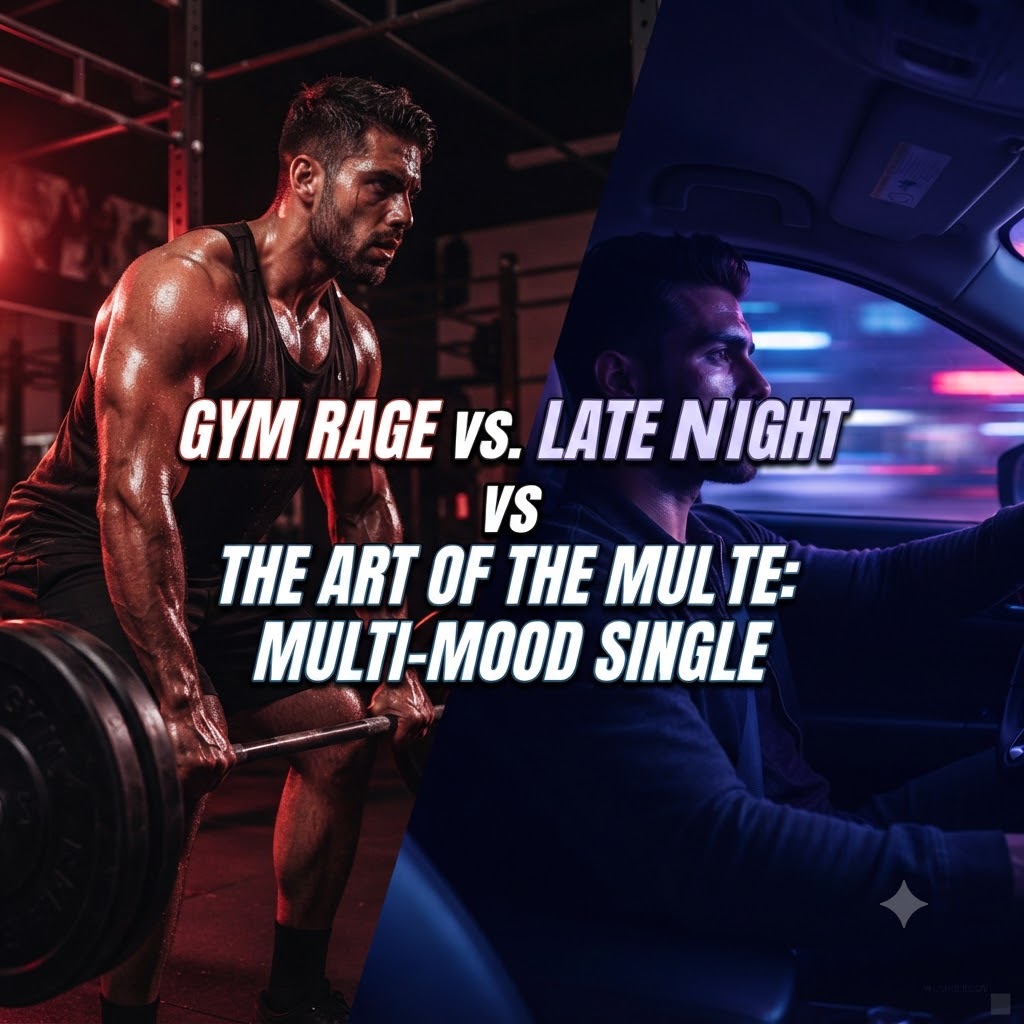
Curating Moods: “Gym Rage” vs. “Late Night Drive” – Structuring Singles for Multi-Playlist Crossover
Let’s be honest about how we actually listen to music today. Very few people wake up, open Spotify, and say, “You know what I want? A strict 120 BPM Tech-House track released in 2024.” No, we search for a vibe. We look for a feeling, a mental space, or a soundtrack for a specific activity.
One day, you might throw on an aggressive playlist to power through a heavy deadlift session at 7:00 AM. Fast forward twelve hours, and that same person is cruising down an empty highway at midnight, needing moody, atmospheric soundscapes to match the neon streetlights.
If you are an independent artist, a producer, or a songwriter trying to make waves in the streaming landscape, this psychological shift in listener behavior is your biggest opportunity. Gone are the days when a song needed to stay comfortably in one sonic lane from the first second to the fade out. Today, if you structure a single to satisfy two entirely different mindsets, you multiply your chances of landing on divergent algorithmic and editorial playlists.
Let’s dive deep into how writing songs with contrasting sections—like pairing an aggressive hook with an ambient bridge—lets a single track cross over into multiple distinct playlist worlds.
The Death of One-Dimensional Songwriting
For decades, commercial songwriting taught us consistency. You find a groove, you stick to it, you repeat it three times, and you call it a day. The tempo stays locked, the emotional tone remains flat, and the sonic palette doesn’t shift much from verse to chorus.
But modern playlist curation thrives on contrast. Playlists aren’t just collections of songs anymore; they are curated emotional journeys. Spotify’s editorial and algorithmic gatekeepers love tracks that take the listener on a micro-journey because it keeps retention high.
When you design your track with distinct, compartmentalized sections, you give curators a versatile tool. You aren’t just handing them a song—you are handing them a Swiss Army knife that can fit into a high-intensity workout session or a lonely late-night cruise.
1. The Hook: Engineered for “Gym Rage”
To capture high-octane workout, lifting, and running playlists, your hook needs immediate, undeniable impact. This is where high-energy production isn’t just an option—it’s a requirement.
When a listener is trying to squeeze out that last rep, they aren’t listening for subtle lyrical metaphors. They want punch, drive, and adrenaline. Here is how you build a hook that dominates the “Gym Rage” category:
-
The Rhythm and Low End: Drive the track with saturated 808s, heavy transient-focused kick drums, and a tempo that sits comfortably in high-energy zones. If it’s a half-time beat, you need aggressive double-time hi-hats or rolling snare fills that force the head to nod.
-
The Vocal Delivery: Your vocal needs to be commanding, forward in the mix, and dripping with attitude. Think punchy phrasing, heavy compression, and ad-libs that cut straight through wall-to-wall instrumentation.
-
The Vibe: Relentless, confident, and confrontational. This section serves as the anchor for heavy-rotation fitness lists, hype rap mixes, and aggressive electronic workouts.
If your hook doesn’t make someone want to throw a weight plate or run an extra mile, it’s missing the mark for this specific playlist audience.
2. The Bridge: Transitioning to the “Late Night Drive”
Here is where the magic happens—and where most songwriters drop the ball. Just as the listener’s energy peaks from that heavy hook, you pivot. The bridge is your secret weapon for crossover potential. It is the moment where you strip away the aggressive percussion and introduce an atmospheric, nocturnal aesthetic.
Think about how a movie scene shifts from an action sequence to a quiet, reflective car ride at night. Your song needs that exact same cinematic pacing.
-
The Production Shift: Drop the heavy drums entirely or filter them out through a dramatic low-pass sweep. Bring in lush analog pads, detuned tape-saturated synth leads, or reverb-drenched electric guitar plucks that feel vast and open.
-
The Vocal Treatment: Pull the vocal back in the stereo field. Add generous amounts of plate reverb, subtle delay, and pitch-shifting to create an intimate, floating sensation. It should feel like the artist is singing directly to the passenger seat of a car cutting through the dark.
-
The Vibe: Introspective, hypnotic, and moody. This sudden tonal shift makes the song prime real estate for late-night phonk, ambient hip-hop, dark synthwave, or rainy-day driving playlists.
By creating this stark contrast within the same arrangement, you give the track a split personality—in the best possible way.
Why Multi-Playlist Strategy Wins the Streaming Game
Targeting a single niche can sometimes box an independent release into a corner. If you market a track strictly as a “rap banger” or a “lo-fi chill track,” you are competing with thousands of other tracks doing the exact same thing.
When you intentionally design structural duality into your songwriting, you unlock several major industry advantages:
Smarter Algorithmic Discovery
Spotify’s recommendation engine (Discover Weekly, Daily Mixes, Release Radar) maps listener behavior down to the second. If your track is being saved to high-energy workout lists by day and chill nocturnal rotation lists by night, the algorithm learns to test your music across broader, unexpected listener pools. It stops trying to pigeonhole your track and starts seeing it as a versatile piece of audio content.
Extended Shelf Life
Songs with one-dimensional moods often burn out quickly once a specific micro-trend fades. A track that serves multiple psychological functions stays relevant across different parts of a listener’s daily routine. They don’t skip it when it comes on shuffle because it adapts to whatever mood they happen to be in at that exact hour.
Cross-Genre Appeal
When you blend an aggressive, street-level hook with a dreamy, ethereal bridge, you naturally cross genre boundaries. Hip-hop elements bleed into electronic music structures, or alternative rock aesthetics merge with urban production styles. This opens doors to curated lists and editorial tastemakers you might otherwise be locked out of.
Crafting a brilliant track with crossover potential is only half the battle, though. Getting it in front of the right curators is where momentum truly builds. You can maximize your crossover potential by targeting dedicated listener mood channels through our Spotify playlist submission services.
How to Produce and Mix for Duality
Pulling this off in the studio requires careful attention to arrangement and mixing choices. You can’t just slap a slow ambient pad onto a trap beat and hope it flows naturally. The transition needs to feel earned.
-
Use Automation Wisely: Build tension leading out of the hook by pulling out high frequencies, adding white noise sweeps, or dropping out the bass entirely for a single beat before the bridge hits. That sudden drop in energy creates a vacuum that pulls the listener right into the late-night atmosphere.
-
Keep the Lyrical Theme Adaptable: Write lyrics that deal with internal conflict, drive, ambition, or isolation. Themes of perseverance or late-night reflection fit just as well under gym lights as they do staring out a foggy car window.
-
Master the Transition: The transition back from the ambient bridge to the final hook is where you win the listener back. Use a heavy snare roll, a vocal chant, or a rising synth filter to build the tension back up so the final drop hits twice as hard.
Final Takeaway: Write for the Moment, Not Just the Genre
When you head back into the studio for your next session, try stepping away from the traditional songwriting checklist. Stop asking yourself, “What genre does this fit into?”
Instead, ask: “Where is the listener when this drop hits, and where are their heads at when the beat strips away?”
By mastering the art of the dynamic bridge and the high-impact hook, you create music that doesn’t just sit passively inside a single playlist—it defines a mood, no matter where the listener happens to be or what they are going through.