From Algorithm to Airwaves: How Regional Radio DJs Use Spotify to Scout Local Underground Rap Talent
Let’s be honest for a second: the way we discover music has completely flipped on its head. If you are an independent underground rapper trying to break your latest single, the playbook your favorite 90s or 2000s artists used simply doesn’t work anymore.
You aren’t mailing bulky demo CDs to station directors or handing physical mixtapes out of the trunk of your car outside a local club (well, maybe you still are, but that’s not what’s landing you heavy rotation). Today, the hunt for the next big underground rap sensation starts digitally. And more often than not, the people doing the heavy lifting aren’t just algorithms—they are regional mixshow DJs sitting at home, scrolling through Spotify.
If you’ve ever wondered how a track goes from a zero-follower playlist to blasting through car speakers across an entire state via FM radio, you need to understand the modern pipeline. Let’s pull back the curtain on how regional radio DJs actually use Spotify to scout local underground talent, and more importantly, how you can position your next drop to get caught in their net.
The Death of the Traditional Demo Drop and the Rise of Digital Digging
Back in the day, regional radio DJs—especially the ones running Friday night mixshows or specialty underground hip-hop hours—were local gatekeepers by default. They had to be. They stood at the center of a physical ecosystem, waiting for promoters to slide them new music or hitting up local record stores to see what was moving.
Fast forward to today, and the physical local scene has merged with the digital underground.
Regional DJs still carry the exact same responsibility they’ve always had: they need to capture the hyper-local pulse of their city. They need to know what kids in the local high schools are vibing to, what’s bumping in the sneaker boutiques, and what underground anthem is about to blow up next weekend. But they don’t have time to sift through tens of thousands of random uploads hitting streaming platforms every single day.
Instead, they’ve turned Spotify into their ultimate digital crate-digging tool. But they aren’t searching the Billboard charts or major corporate editorial lists. They are digging deep into the trenches of user-curated regional playlists.
Anatomy of the Underground Pipeline: From User Curators to Mixshow Booths
To understand how a regional DJ finds your track, you have to look at the three-step pipeline connecting everyday hip-hop heads to commercial and college radio airwaves.
Step 1: The Underground Grassroots Curators
Long before a track ever lands on a major streaming editorial list, it usually lives on an independent, user-curated Spotify playlist. These aren’t corporate playlists put together by algorithms in Los Angeles or New York. These are built by local tastemakers, underground beatmakers, regional bloggers, and hyper-local hip-hop nerds.
Think of playlists with names like Underground Atlanta Trap, Chi-Town Drill & Lofi, or Bay Area Slaps Underground. These curators are obsessed with the culture. They spend hours scrolling through SoundCloud, Bandcamp, and TikTok to find raw talent. They aren’t looking for major label polish; they are looking for authenticity, energy, and that raw local bounce.
Step 2: The Radio DJ’s Late-Night Crate Digging
This is where the magic happens for independent artists. When a weekend mixshow DJ or a specialty show host sits down to curate their two-hour set, they want to play things that nobody else has yet. They want exclusive local flavor that keeps listeners locked in.
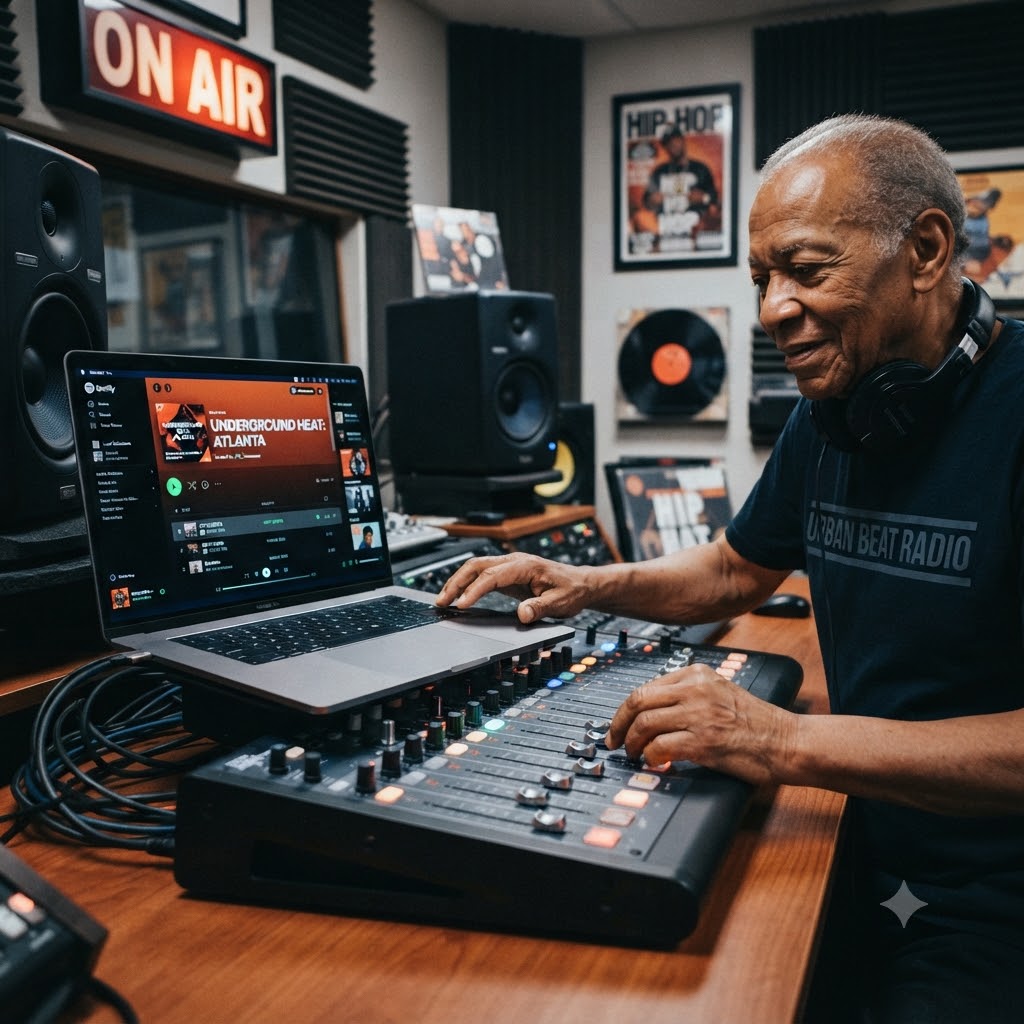
Instead of searching broadly, these DJs pull up Spotify and search specific regional sub-genres, city names, and niche underground keywords. They actively hunt down those user-curated playlists we just talked about. Why? Because they know those lists filter out the corporate machine. When a DJ sees a track sitting comfortably on a respected local playlist getting steady organic movement, it acts as a massive stamp of approval. It tells the DJ: “Real people in the city are already bumping this.”
Step 3: The Scramble for the “Radio Edit”
Here is where a lot of talented underground artists drop the ball.
Once a regional DJ finds a hard-hitting track on Spotify, the immediate next step is figuring out how to play it legally on the radio. Broadcast standards require clean radio edits—versions completely stripped of explicit profanity, vulgarity, or sensitive references that could trigger hefty FCC fines for the station.
If a DJ finds your song on Spotify, loves it, wants to drop it in their live mix that night, but can’t find a clean version anywhere online, they will usually just move on to the next track. The artists who successfully make the leap from streaming playlists to radio rotation are the ones who make this transition completely frictionless.
How to Position Your Underground Rap Music for Radio Scouts
Knowing how the system works is half the battle. The other half is making sure your music is actually optimized for these tastemakers to find, love, and play. If you want your local anthem to make the jump from a Spotify playlist to FM and digital radio waves, keep these strategies in mind:
-
Target Regional Curators Directly: Stop obsessing over global playlists that you have no business being on yet. Instead, build relationships with independent curators who specialize in your specific city, state, or regional sound. They are the exact gatekeepers that radio DJs stalk when they are looking for fresh talent.
-
Treat Your Clean Edit Like Gold: Always upload a clean radio edit to your distributor alongside your explicit master. Make sure it’s easily accessible. If a DJ or music director has to hunt you down on Instagram to ask for a clean MP3, you’ve already lost momentum.
-
Leverage Strategic Placements: Visibility is everything in the digital underground. Getting your music into active, genre-specific rotation helps trigger the algorithmic signals and community buzz that draw regional tastemakers in.
Want to skip the guesswork and get your music directly into the right hands? Stop waiting around for luck to strike and put your local anthems in front of active tastemakers with our targeted rap playlist placements.
Closing Thoughts: Bridging the Gap to Airplay
The pipeline from user-curated Spotify playlists to live radio mixshows is very real, very active, and constantly hungry for fresh underground talent. Regional DJs are always searching for the next local hero, but they rely on digital ecosystems to do the initial screening.
By understanding how these tastemakers dig for music, keeping your metadata clean, and ensuring your radio edits are ready to go, you can bridge the gap between underground obscurity and heavy local airplay. Your city has the culture—now make sure the airwaves can hear it.