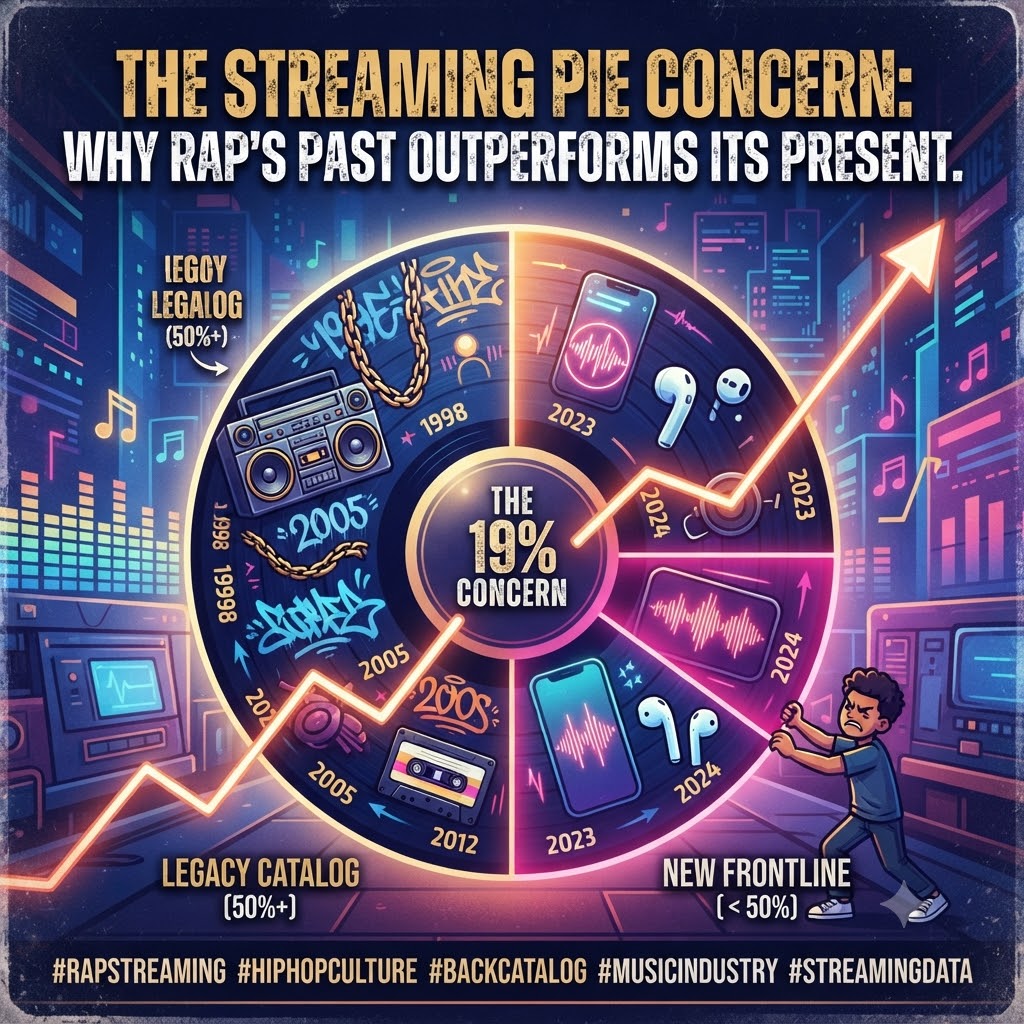
The Streaming Pie Dilemma: Why Rap’s Back-Catalog Boom Is Changing the Game
If you spend any time scrolling through music Twitter or reading deep-dive industry roundups, you’ve probably noticed a quiet panic setting in behind boardroom doors. For years, the streaming economy ran on a simple promise: drop new music, feed the algorithm, watch the numbers spike, and repeat.
But the latest data from entertainment analytics giants like Luminate tells a wildly different story. In spaces like hip-hop and rap—genres built on youth culture, shifting trends, and the relentless pursuit of the “next big thing”—over half of all streams now belong to older back-catalog releases.
We aren’t just talking about a slight tilt toward nostalgia. We are looking at a structural shift where yesterday’s playlist staples routinely overshadow today’s frontline drops. Why is this happening, what does it mean for the “streaming pie,” and is hip-hop losing its appetite for new blood? Let’s unpack it.
1. What Is the “Streaming Pie” Concern, Anyway?
To understand the anxiety, you have to look at how money flows in the modern digital streaming ecosystem. Imagine the total revenue generated by digital service providers (DSPs) like Spotify and Apple Music as a giant pie. Every single stream acts as a slice.
For the longest time, new releases (“frontline” music) commanded the lion’s share of those slices because the industry machine was optimized to push new projects. Labels spent heavily on release-week marketing, radio campaigns, and banner ads to capture immediate attention.
However, as catalog consumption creeps past the 50% mark—and in some sub-genres, climbs much higher—that pie is being carved up differently. When older rap albums from 2012, 2015, or 2020 continue to pull millions of daily streams, they crowd out current releases.
New artists are no longer just competing with each other; they are fighting an uphill battle against culturally cemented classics that already own permanent real estate in listener habits.
2. Why Are Older Rap Catalogs Winning?
It’s easy to point fingers at lazy algorithms, but the reality is multi-layered. Several distinct factors are keeping older rap records glued to the top of the charts:
-
The Comfort of Familiarity: In a world saturated by tens of thousands of daily uploads, listeners often default to what they know. When you have five minutes to pick a song during your morning commute, clicking play on a certified classic feels like a safe bet.
-
The “Shallow Catalog” Phenomenon: Unlike rock or pop, which stretch back many decades, hip-hop’s catalog power is heavily concentrated in its modern eras—specifically the 2000s and 2010s. These are tracks created by artists who are still active, touring, and culturally relevant today.
-
Algorithmic Feedback Loops: Streaming algorithms are designed to maximize retention. Because older tracks already possess massive historical data (high skip-to-complete ratios, widespread playlist adds), the algorithm gladly feeds them back to users who enjoy related sounds.
-
Cross-Medium Moments: TikTok trends, sync placements in TV shows, milestone album anniversaries, and high-profile festival runs routinely pull dusty deep cuts straight back into the global top 50.
3. The Bottleneck for Emerging Artists
This shift presents a massive paradox for the culture. On one hand, it proves that hip-hop has matured. Rap music is now treated with the same generational reverence as classic rock; people don’t stop listening to great rap albums just because they turned five or ten years old.
On the other hand, it creates a severe bottleneck for artist development.
When legacy catalogs soak up a massive percentage of everyday listener consumption, new artists find it increasingly difficult to break through the noise. Securing initial momentum requires more capital, sharper marketing, and immediate viral luck than ever before. If an emerging rapper drops a debut project, they aren’t just fighting for algorithmic oxygen against their peers—they are competing with the entire historical discography of household names.
“When the baseline expectation is that old music outperforms new music, labels are forced to rethink where they allocate their marketing dollars. Catalog isn’t a retirement plan anymore; it’s the main engine.”
4. How the Industry Is Adapting to the Shift
Major and independent labels alike are recalibrating. Rather than treating catalog music as an afterthought that sits passively on a hard drive, companies now employ dedicated legacy marketing teams. They treat old albums like new frontline releases—refreshing metadata, creating localized anniversary editions, packaging vinyl variants for superfans, and pitching tracks for sync opportunities.
At the same time, platforms are experimenting with ways to give new music a fighting chance. Features designed to highlight discovery, hyper-targeted local playlists, and short-form video integration are all attempts to grease the wheels for fresh talent.
Final Thoughts: Where Does Rap Go From Here?
The back-catalog boom isn’t a sign that rap music is dying or running out of ideas. Instead, it’s a natural symptom of a genre aging gracefully into maturity. Hip-hop has a rich history, and fans love exploring it.
However, the “streaming pie” concern serves as a loud wake-up call for the industry. If streaming services and labels want a vibrant future, they have to build pathways that allow new generations of artists to build sustainable careers—ensuring that tomorrow’s classics have a chance to be made today.
Related Reading & Resources
-
To dive deeper into how streaming algorithms handle discovery versus familiarity, check out this breakdown on modern music consumption data.
-
Interested in how independent artists are navigating platform saturation? Read up on strategies for breaking through algorithmic bottlenecks.
What are your thoughts on this streaming shift? Are you finding yourself leaning more toward classic rap albums from years past, or are you constantly hunting down brand-new underground drops?