How to Open for a Major Rapper on Tour: Local Opener vs. Tour Buy-On Reality Check
Every independent artist dreams about the night they step out in front of a sold-out theater, rock the crowd, and watch their streaming numbers double before the headliner even touches the mic.
If you have been searching how to open for a major rapper, you have probably already run into a wall of vague advice about “networking” and “grinding.” The truth is a lot less romantic and a lot more financial. A&Rs aren’t scrolling through SoundCloud looking to hand out free tour slots to whoever has the cleanest mix. In the live music business, opening slots are straight-up transactions. Whether you are trying to get on a single hometown date or jumping on a multi-city bus run, booking agents and promoters only care about one thing: can you bring bodies or cash to the table?
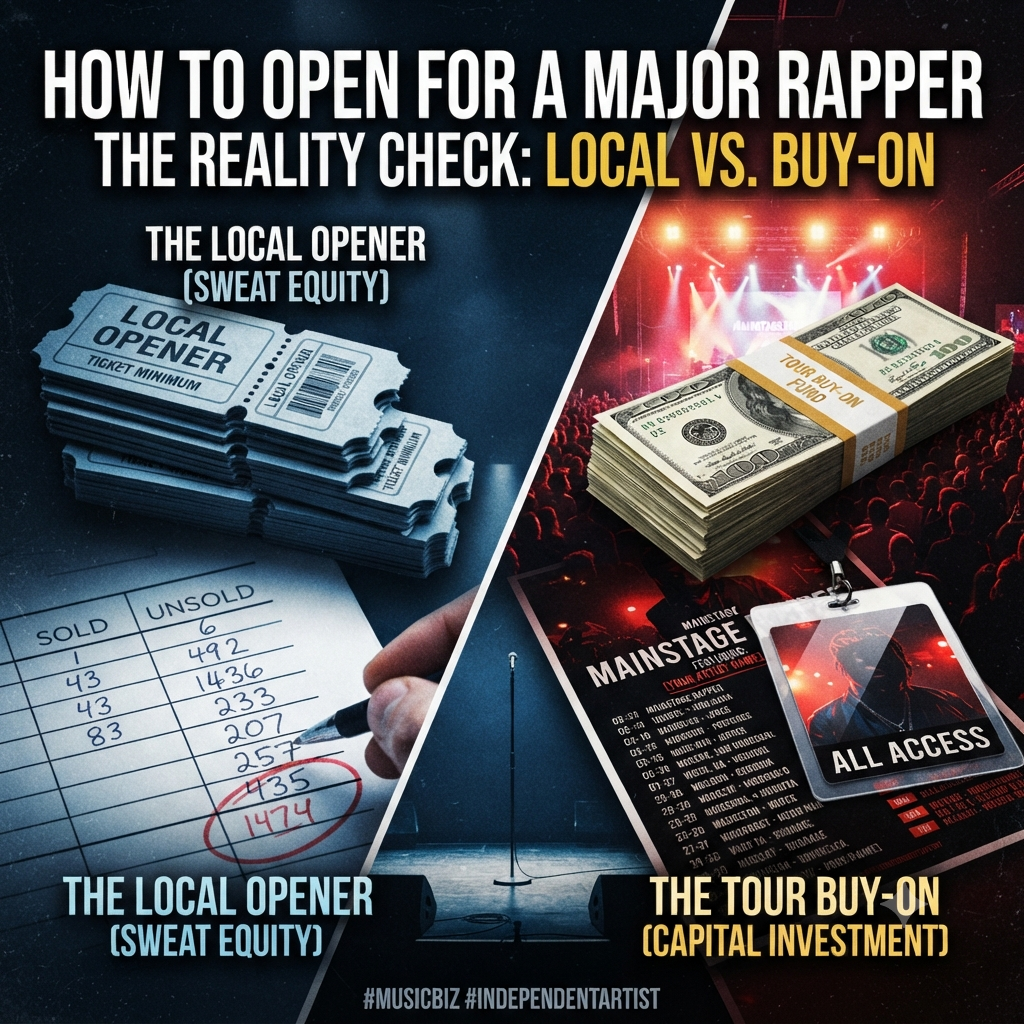
Right now, there are really only two ways an independent rapper gets placed on a major tour bill: unpaid local promoter slots and paid tour buy-on packages. If you don’t know how the math works behind both, you are either going to get stuck holding a stack of unsold tickets at 7:00 PM on a Tuesday, or you are going to wire thousands of dollars to a middleman and lose your shirt on the road.
Here is the real breakdown of how both paths work, what they actually cost, and how to set yourself up so you don’t get played.
Path 1: The Local Opener (Unpaid Slots & Ticket Minimums)
When a major rapper announces a 25-city club or theater tour, their booking agency usually sells each individual show to a local promoter in that city. The headliner brings their own direct support—the middle acts you see on the main tour poster—and the local promoter gets 2 to 4 local opening spots to fill out the early part of the night.
How the Promoter Math Works
Local promoters almost never pay local openers. From their perspective, you are there to act as a street team that guarantees the bar sells drinks before the headliner walks out at 11:00 PM.
To lock in one of those spots, a promoter will usually hand you 30 to 50 hard tickets (or a custom Ticketmaster/Eventbrite tracking link) priced around $20 to $40 each.
-
The Upside: If you sell 40 tickets at $25 apiece, you just brought $1,000 in gross box office revenue to the venue. You get a 10-to-15-minute set around 8:15 PM, your name gets printed on the local city flyer, and you get real stage reps on a professional sound system. Some promoters will even kick you back 10% to 20% on every ticket you move past your 40-ticket minimum.
-
The Trap: If you agree to a 40-ticket minimum and only sell 18, you are on the hook for the remaining 22 tickets out of your own pocket. If you refuse to pay the difference, you get pulled from the lineup hours before doors open, and that promoter will never book you again.
When You Should Say Yes
Local opening slots only make sense if you actually have people in your city who will pay to see you perform. If you have to beg your cousins, coworkers, and barber just to scrap together 25 ticket sales, pass on the show. You are paying to perform in front of your own friends while the headliner’s fans are still tailgating in the parking lot. On the flip side, if you can move 50+ tickets without breaking a sweat, local talent buyers will start calling you first—and eventually drop the ticket minimums altogether.
Path 2: The Tour Buy-On ($2,500–$10,000+ Support Runs)
If you want to travel from city to city with the headliner and see your name on the official tour graphic alongside the main acts, you are looking at a tour buy-on.
How Buy-Ons Actually Work
Touring in hip-hop is brutally expensive. Between tour bus leases, diesel, front-of-house sound engineers, security, and road managers, a mid-tier headliner can easily burn $3,000 to $5,000 every single day just keeping the wheels turning. To offset that overhead, the headliner’s management will often sell 1 or 2 “buy-on” slots for a leg of the tour.
-
The Price Tag: Expect to pay anywhere from $2,500 to $10,000 for a 10-city support run (roughly $250 to $1,000 per show), depending on how big the headliner is and the room capacities.
-
What You Get: You get guaranteed stage time right before direct support—meaning the room is actually full—plus placement on the official tour poster and exposure to thousands of hip-hop fans in markets where nobody has ever heard your music.
-
The Hidden Costs Nobody Mentions: A tour buy-on almost never covers your travel, hotels, food, or a bunk on the headliner’s bus. You and your DJ are driving a rented Sprinter van or SUV, paying for gas, and splitting cheap motel rooms every night. A $5,000 buy-on easily turns into a $9,500 out-of-pocket expense once you factor in two weeks on the road.
Watch Out for Fake Buy-On Scams
Hip-hop DMs are flooded with fake “tour managers” selling opening slots they don’t own. Before you send a deposit to anyone, do two things:
-
Cross-check the routing: Make sure the exact dates and venues are listed on the headliner’s verified website and official ticketing pages.
-
Call the venue or agency: Reach out to the local venue’s talent buyer or the headliner’s listed booking agent to confirm the person pitching you actually represents the tour. Scammers love selling fake buy-ons for major tours and vanishing the week before load-in.
Local Opener vs. Tour Buy-On: How They Stack Up
| What Matters | Local Promoter Opener | Tour Buy-On Package |
| Upfront Cash Needed | $0 (Backed by 30–50 ticket commitment) | $2,500 – $10,000+ (for ~10 dates) |
| Hidden Costs | Paying out of pocket for unsold tickets | Van rental, gas, hotels, food, merch inventory |
| Set Time | Early (Doors open / 8:00 PM – 9:00 PM) | Prime warm-up (9:30 PM – 10:30 PM) |
| Flyer Placement | Local city flyer only | Official multi-city tour poster |
| Who Is Watching | Mostly your own guests + early arrivals | Packed rooms of the headliner’s core fanbase |
| Best Used For | Proving local draw & getting stage reps | Expanding into new cities & filming tour content |
How to Put Yourself in Position to Get Booked
Cold-DMing a promoter with “Yo check my Spotify link, I guarantee I’ll shut the stage down” is the fastest way to get left on read. Booking agents and tour managers work with artists who reduce their risk, not artists asking for favors.