Tay-K’s First Interview in Almost 10 Years & #MonstersUnderMyBed: Why Prison Rap Hits Different in 2026
If you were on the internet in the summer of 2017, you remember where you were when “The Race” took over everything. A 17-year-old kid from Arlington, Texas, literally on the run from a capital murder charge, drops a music video posing next to his own wanted poster—and the song goes platinum. It felt like a glitch in the matrix. Then the handcuffs clicked, the 55-year sentence came down, and Tay-K basically vanished into the Texas prison system.
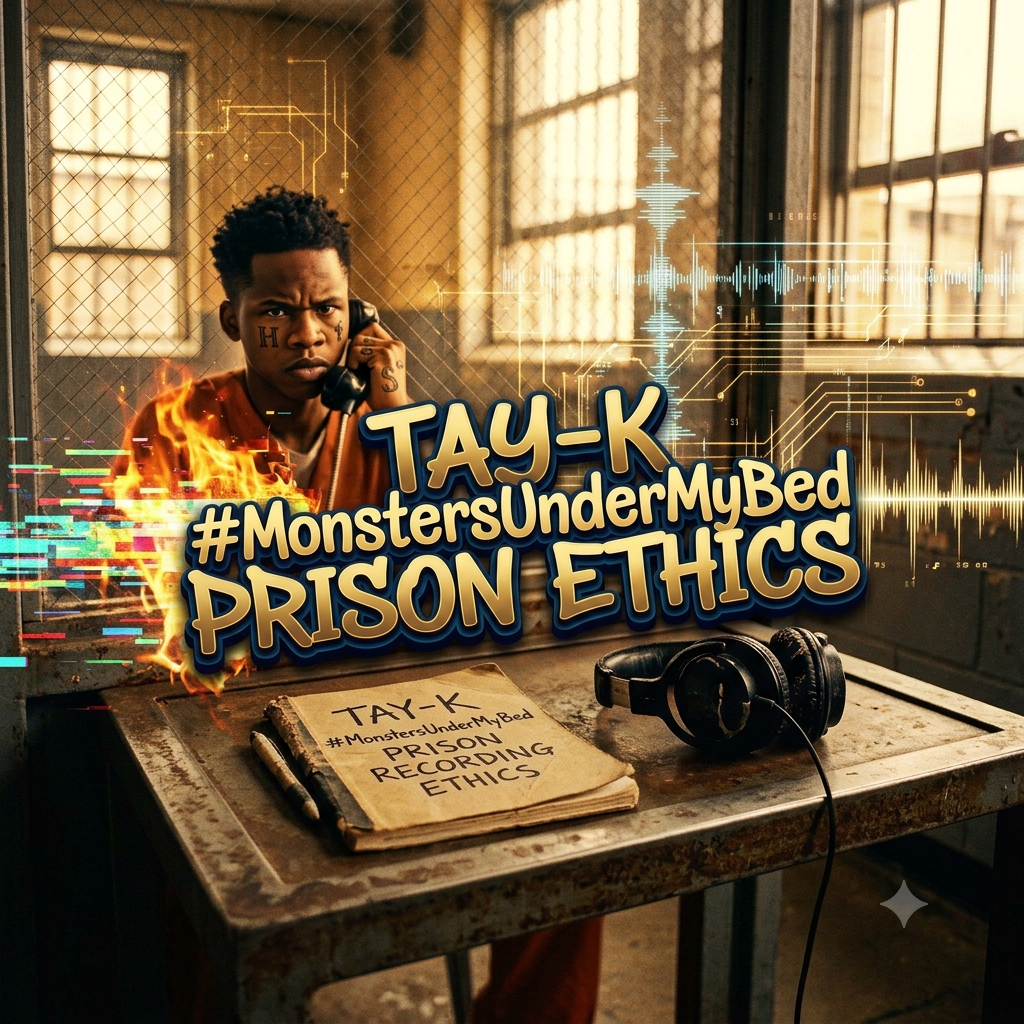
Fast-forward nearly a decade. Out of nowhere, Tay-K breaks years of dead silence with a jailhouse Complex interview to roll out a brand-new project, #MonstersUnderMyBed, recorded straight from behind bars with heavy-hitting producers John Cunningham and Warpstr.
Within minutes, timelines were flooded. Some fans treated it like the return of a fallen legend; others pointed out the uncomfortable reality of a man serving decades in prison (with a second murder conviction added in 2025) getting a major media rollout. If you’re looking for a standard Tay-K #MonstersUnderMyBed prison album review, you’re going to miss the bigger picture. You can’t really talk about the beats and the bars here without talking about the weird, messy ethics of how hip-hop media covers incarcerated artists—and why we can’t seem to look away.
How Prison Rap Went From Collect Calls to DSP-Ready Albums
Not that long ago, recording music in prison meant rapping into a wall-mounted payphone while a producer on the outside held a mic up to a speaker. Think about Shyne’s verses on Godfather Buried Alive or Max B’s classic Public Domain mixtapes. They sounded grainy, distant, and raw—you could practically hear the fluorescent lights buzzing in the background. That lo-fi distortion was part of the charm, a reminder that the artist was locked away from the real world.
That era is dead. Between smuggled smartphones, prison-issued tablets, and crazy advancements in vocal isolation software, producers can now take a voice memo recorded in a cellblock and polish it until it sounds like it was tracked at Electric Lady Studios.
With #MonstersUnderMyBed, Tay-K isn’t working with random SoundCloud beatmakers. He’s locked in with John Cunningham—the guy who helped architect XXXTentacion’s biggest records—and Warpstr, a go-to name in modern underground and rage production. On paper, that’s a major-label-caliber team. In practice, it highlights a massive gray area in the music business: everyone knows inmates aren’t allowed to run commercial recording sessions from inside state prison, yet labels, distributors, and streaming platforms have no problem monetizing the finished product once it hits Spotify and Apple Music.
Breaking Down #MonstersUnderMyBed: The Music vs. The Reality
Put the headlines aside for a second and just listen to the audio. Musically, #MonstersUnderMyBed is way more layered than the bouncy, minimalist Texas trap that made Tay-K famous as a teenager. Cunningham and Warpstr build a dark, claustrophobic soundscape—heavy bass, eerie synths, and sharp percussion that actually fit the setting.
Vocally, Tay-K still has that effortless, conversational pocket that made “The Race” and “I Love My Choppa” so sticky in the first place. He doesn’t sound rusty. What’s different is the energy. The reckless, untouchable bravado of a 17-year-old kid who thought he could outrun the law has been replaced by something heavier. You can hear the passage of time in his delivery. There’s a cold, grounded awareness that comes with spending your entire young adulthood inside a concrete box.
Still, reviewing a project like this purely on “vibes” or replay value feels dishonest. Art doesn’t exist in a vacuum, especially when the backstory involves real people losing their lives. Tay-K isn’t locked up on a technicality or a non-violent offense; his convictions stem from the deaths of Ethan Walker and Mark Saldivar. For the families dealing with that permanent loss, watching the person responsible trend on social media, get glossy interviews, and generate streaming revenue is a brutal pill to swallow. Even if “Son of Sam” laws stop inmates from pocketing certain profits directly, the cultural reward—clout, relevance, mythology—is very real.
Hip-Hop Media’s Addiction to the “Jailhouse Comeback”
This brings us to the uncomfortable mirror hip-hop media has to look into. When Complex dropped that interview ahead of #MonstersUnderMyBed, the internet reacted exactly how the algorithm wanted it to: clicks, quote-tweets, debate threads, and reaction videos.
Hip-hop journalism has a long habit of treating prison like an aesthetic or a promotional rollout tool. When a rapper goes away, outlets cover the trial like a sports match. Years later, when that same rapper manages to sneak a verse out, the media frames it as a triumphant “comeback” or a “shocking return,” glossing over the human wreckage that put them there in the first place. It’s easy content. Outlaw narratives sell, and the line between real-life tragedy and entertainment has been blurry in rap since the 1990s.
There’s a middle ground that music critics rarely take. You don’t have to act like the morality police and pretend Tay-K has zero talent, because that’s obviously not true. At the same time, treating #MonstersUnderMyBed like any other Friday night album drop ignores the elephant in the room. Good coverage holds both things at once: it breaks down why the music connects while being honest about the real-world cost behind it.
For artists grinding on the outside, there’s actually a bigger lesson here. Viral shock value and real-life chaos might get you fast attention, but it’s a dead-end street—literally. Real longevity in hip-hop doesn’t come from sensational headlines; it comes from showing up, sharpening your pen, and earning respect over time. Instead of chasing clout through controversy, independent artists can build a documented, credible artistic narrative on our hip-hop music review blog where the focus stays right where it belongs—on the craft.
✍️ Build Lasting Media Credibility: Let your music and pen game speak for itself. Submit your release for a Guaranteed Blog Feature & Music Review.
What Happens Next?
Tay-K’s return to the timeline proves one thing beyond a shadow of a doubt: almost ten years behind bars hasn’t erased his footprint on modern rap. Kids who were in elementary school when “The Race” dropped are discovering #MonstersUnderMyBed on TikTok right now, drawn in by the same dark mystique that captivated the internet in 2017.
As long as streaming platforms reward viral intrigue and fans crave unfiltered stories, prison recordings aren’t going anywhere. #MonstersUnderMyBed is a fascinating, unsettling time capsule—a reminder of how talented Tay-K was before he threw his freedom away, and a mirror showing just how willing the music industry is to hit “publish” no matter where the vocals come from.