


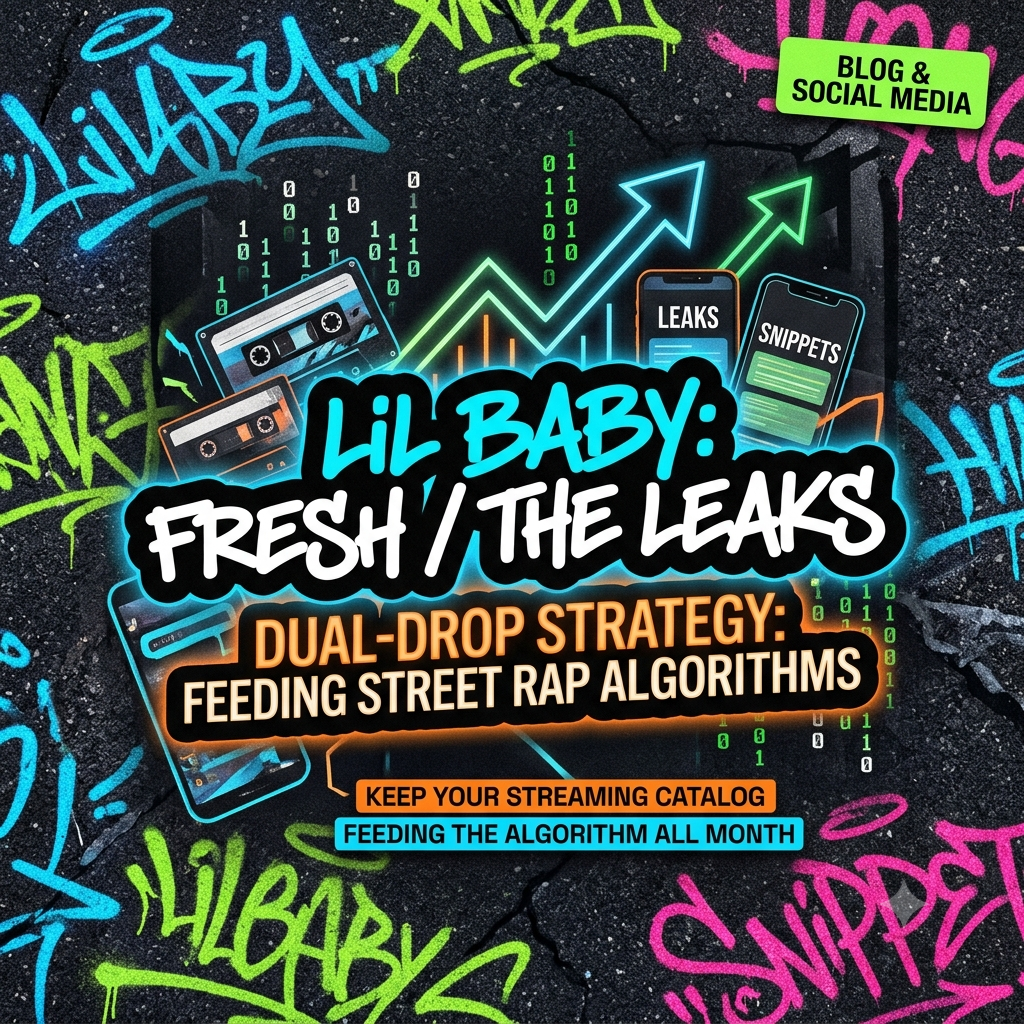
Lil Baby’s FRESH & The Leaks Dual-Drop Strategy: How Street Rap Feeds the Algorithm
Ten years ago, an album leak was a label’s worst nightmare. An unfinished MP3 hits a forum, people burn it or rip it onto their phones, and suddenly a million-dollar rollout loses all its steam before release week even starts.
In the streaming era, though, the rules have completely flipped. Leaks and grainy Instagram Live snippets aren’t death sentences anymore—they’re free market research. And if you look at how Lil Baby rolled out his studio album FRESH alongside The Leaks, you get a textbook example of how modern street rap turns bootleg hype into real money.
Instead of fighting the internet with endless copyright strikes, Baby leaned into the chaos. By dropping loosies and leaks before a rap album, he kept his fanbase fed, swept up royalties that would have otherwise gone to random YouTube uploaders, and warmed up the Spotify and Apple Music algorithms right before his main event.
Turning Bootleg Hype Into Official DSP Checks
If you spend any time on TikTok, Discord, or hip-hop Twitter, you know how fast a 12-second studio clip can take on a life of its own. Fans screen-record a live stream, loop the hook, and upload it to YouTube under a fake burner account. Before you know it, a song that technically doesn’t exist has two million plays—and the artist hasn’t seen a dime of it.
Lil Baby and his team clearly saw the writing on the wall. Rather than letting unofficial uploads siphon off his momentum while fans waited on FRESH, he rounded up the heavy-hitting vault records and fan-favorite leaks and packaged them into The Leaks.
It sounds simple, almost obvious, yet so many artists still fumble it. When you put an official, properly mixed version of a leaked song onto Spotify, Apple Music, and YouTube Music, two things happen right away:
-
You stop the bleeding: Fans don’t want to hunt down a muffled, bass-boosted rip on SoundCloud if the real thing is sitting right on their main playlist. Giving them the official file pulls all those scattered streams back under one roof.
-
You get paid for the hype: Every play on a vault compilation generates mechanical and performance royalties. More importantly, those numbers count toward your official artist metrics, monthly listeners, and catalog velocity.
Instead of treating vault tracks like scrap metal, Lil Baby treated them like an appetizer that paid for the whole dinner.
Breaking Down “Let’s Do It” with Playboi Carti and Skooly
If you want to see this dual-drop strategy working at full throttle, look no further than “Let’s Do It.”
Bringing together Lil Baby, Playboi Carti, and Skooly over a flip of a classic Rich Kidz sample already had Atlanta rap fans buzzing before the track ever saw an official release date. Snippets had been floating around, sparking debates and building the kind of organic anticipation money can’t buy.
Dropping “Let’s Do It” as a centerpiece of The Leaks ahead of FRESH was a calculated move on multiple fronts:
-
Algorithmic Cross-Pollination: Lil Baby’s core audience, Playboi Carti’s rabid cult fanbase, and longtime fans of Skooly and the Rich Kidz era don’t always overlap in the exact same playlists. Putting all three on a high-profile official drop forced Spotify’s recommendation engine to connect those listener pools. When Carti fans streamed the track, Lil Baby’s profile got pushed right into their Release Radar and Daily Mixes.
-
Protecting the FRESH Tracklist: One of the biggest mistakes rappers make is stuffing leaks onto their main studio album just to pad the stream count. The problem? Hardcore fans have already played those songs to death for six months, which makes the actual album feel stale on day one. By giving “Let’s Do It” and other vault tracks their own home on The Leaks, Baby kept FRESH sounding brand new—leaving room for fresh records like the Pharrell-produced “Dead Fresh” and “All My Partnas” with Future, Young Thug, and Rylo Rodriguez to hit with full impact.
-
Turning Clips Into Real Chart Momentum: By the time the official audio and visuals hit YouTube, the song already had a built-in chorus of fans who knew the words. That immediate day-one engagement signals to DSPs that a record is hot, pushing it onto flagship rap playlists faster than a cold single starting from zero.
Why Dropping Loosies and Leaks Before a Rap Album Works So Well
Streaming platforms don’t care about traditional album cycles. Spotify’s algorithm doesn’t pause and wait patiently while an artist disappears for eighteen months to “lock in” at the studio. If you go dark, your algorithmic momentum cools off. When you finally return with a lead single, you’re fighting uphill just to get back in front of your own followers.
Dropping loosies and leaks before a rap album keeps the engine idling at high RPMs.
1. Consistent Data Signals
Between weekly drops like his “Wham Wednesdays” series and compiling The Leaks, Lil Baby kept a steady drip of new audio hitting DSPs. Every upload triggers notifications, refreshes Release Radar placements, and tells the platform’s backend that the artist is active. By the time FRESH landed, the algorithm was already primed to serve Lil Baby’s music to millions of active listeners.
2. Real-Time A/B Testing
Labels used to spend fortunes on focus groups to figure out which single would stick. Today, a vault drop does that job for free. Releasing loosies lets an artist watch the backend data in real time: Which track has the lowest skip rate? Which song are people saving to their personal libraries and replaying three times in a row? Which city is streaming a specific sound the hardest? That data takes the guesswork out of sequencing and promoting the flagship album.
3. The Catalog Halo Effect
When a fan searches for a leaked track on Apple Music and clicks onto an artist’s profile to play it, they rarely stop after one song. Autoplay kicks in, older hits get queued up, and pre-save links for the upcoming studio album sit right at the top of the page. One hot loosie lifts the floor for an artist’s entire back catalog.
What Independent Rappers Can Steal From This Playbook
You don’t need QC backing or a Playboi Carti feature to run this exact same play on a smaller scale. In fact, independent artists arguably stand to gain even more from it.
Think about how many unreleased demos, freestyle verses, or rough mixes are sitting on your hard drive right now. Maybe you posted a 15-second car test on Instagram Reels or TikTok, and it pulled ten times your usual views. Most indie artists either leave that song rotting in their camera roll while they try to finish a 12-track project, or they rush out a sloppy, unpromoted upload that dies after forty-eight hours.
Instead, treat those moments like Lil Baby treated The Leaks:
-
Pay attention to what fans actually ask for: If people are in your comments asking when a specific snippet is dropping, stop sitting on it. That’s your easiest win.
-
Bundle your vault: Take three or four of your strongest unreleased tracks, throwaway freestyles, or remixes, get them mixed cleanly, and drop them as a tight, intentional Loose Ends or From the Vault EP a month or two before your main project.
-
Put real push behind the official upload: Don’t just upload a loosie to DistroKid and hope the algorithm magically finds it. Give it a real push while the social media clip is still warm so the streaming numbers match the social buzz.
If you have snippets gaining traction on your socials and want to turn that attention into real numbers, you can monetize your fan-favorite snippets and drive official stream counts through our hip-hop music promotion portal.
Keep your streaming catalog feeding the algorithm all month. Submit your track via our Music Submission Portal.
At the end of the day, fans don’t care about industry rollout schedules—they just want the music they heard in the clip. By meeting listeners where they already are and turning leaked demand into official streams, Lil Baby showed that the smartest way to protect a major album release is to give the streets what they want first.







 and why dropping loosies and leaks before a rap album feeds streaming algorithms.)