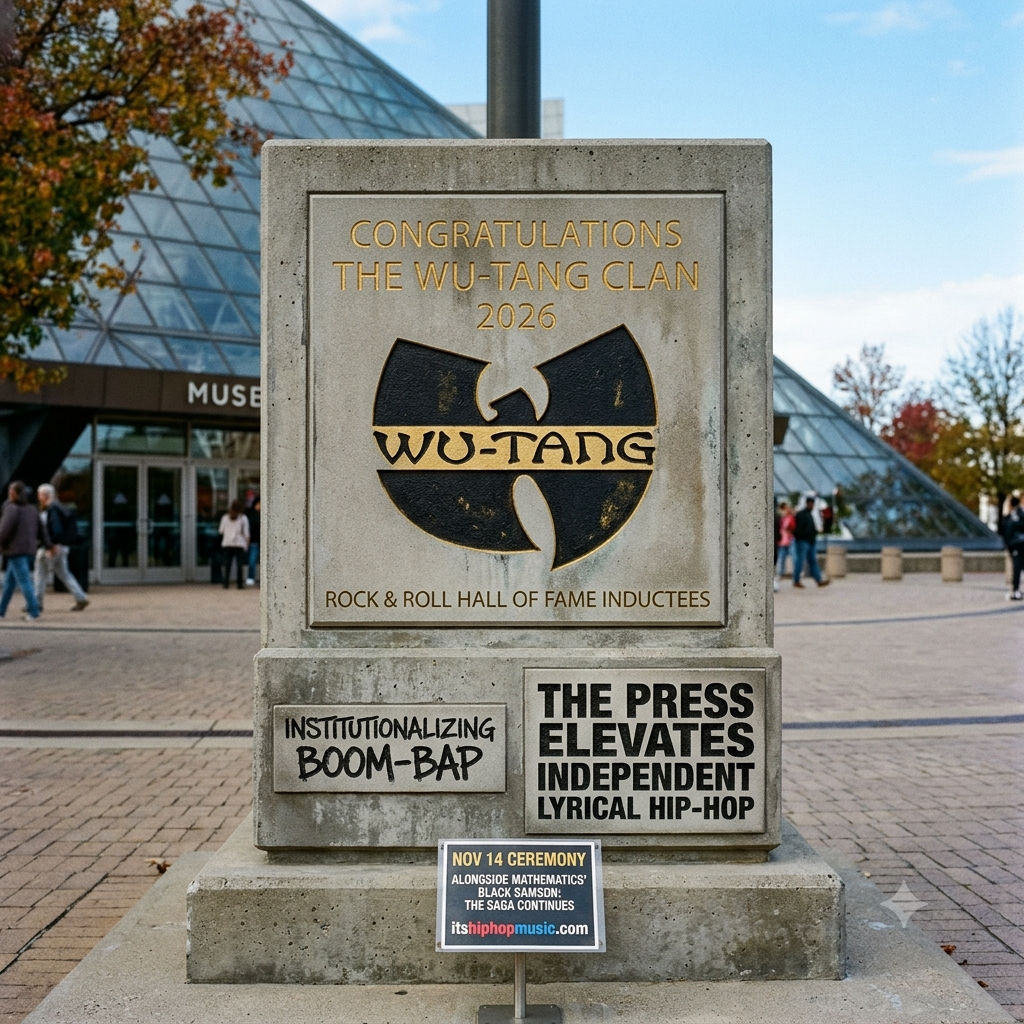
Wu-Tang Clan Rock and Roll Hall of Fame Induction: Institutionalizing Boom-Bap
Tomorrow night, November 14, 2026, a group of guys who started out pressing vinyl out of the trunk of a car in Staten Island will walk up to a podium in Cleveland to accept one of the music industry’s highest establishment honors. For anyone who grew up rewinding cassette tapes to catch a stray Inspectah Deck line or studying RZA’s gritty drum breaks like scripture, the Wu-Tang Clan Rock and Roll Hall of Fame induction feels surreal.
More than that, it feels like a reckoning.
For over thirty years, Wu-Tang existed as the ultimate symbol of anti-industry defiance. They didn’t chase radio play, they didn’t soften their edges for television, and they certainly didn’t ask permission from gatekeepers. Seeing them officially enshrined alongside rock and pop royalty—right as longtime DJ and producer Mathematics rolls out Black Samson: The Saga Continues—isn’t just a nostalgic victory lap. It is a massive cultural shift that changes how the music press treats independent, lyric-driven hip-hop today.
From the Basement in Shaolin to the Hall of Fame
To understand why the Wu-Tang Clan Rock and Roll Hall of Fame induction carries so much weight, you have to remember what hip-hop sounded like in late 1993. The charts were dominated by slick, synth-heavy G-funk out of the West Coast and glossy, radio-friendly R&B crossovers. Then Enter the Wu-Tang (36 Chambers) hit the streets like a brick through a storefront window.
RZA’s beats sounded purposefully dirty—hissing tape loops, chopped-up soul records, kung-fu movie dialogue, and drums that hit like concrete. Over top of that chaos, nine distinct MCs traded verses with zero regard for traditional song structures or catchy pop hooks.
When previous hip-hop acts entered the Rock Hall—artists like Jay-Z, Eminem, or LL Cool J—they were legends who also happened to conquer mainstream pop radio early on. Wu-Tang was different. They forced the mainstream to come to them. They revolutionized the business side of music by signing a group deal with Loud Records while keeping every member free to sign solo deals across competing labels like Def Jam, Elektra, and Geffen.
By putting Wu-Tang in the Hall of Fame, the institution is finally validating:
-
Unfiltered Boom-Bap Aesthetics: Dusty samples, raw vocal takes, and rugged drum programming are no longer treated as “lo-fi” stepping stones—they are recognized as high art.
-
Complex, Dense Lyricism: Multi-syllabic rhyme schemes, street slang, and Five-Percent Nation philosophy are officially sitting on the same cultural shelf as classic rock songwriting.
-
Guerrilla Independence: Street-team marketing, self-owned apparel brands, and grassroots distribution are acknowledged as the blueprint for modern independent artists.
Black Samson: The Saga Continues Proves Boom-Bap Isn’t a Museum Piece
The timing of this weekend’s ceremony couldn’t be better, largely because Wu-Tang isn’t showing up to Cleveland as a retired legacy act. The induction lands right alongside the rollout of Black Samson: The Saga Continues, helmed by longtime Wu-Tang architect Mathematics.
If you know Wu history, you know Mathematics isn’t just a tour DJ—he’s the guy who literally drew the iconic Wu-Tang “W” logo and produced the Clan’s 2017 compilation The Saga Continues. With Black Samson, he keeps that authentic, sample-heavy, neck-snapping boom-bap sound alive in 2026.
Having a brand-new, hard-hitting project circulating in the press during the exact week of the Wu-Tang Clan Rock and Roll Hall of Fame induction sends an unmistakable message to music journalists: boom-bap is not a relic from the nineties. It is a living, breathing standard of craftsmanship. When the architects of the sound prove they can still out-rap and out-produce artists half their age, it forces critics to pay closer attention to everyone else operating in that lane.
How Institutional Recognition Changes the Game for Indie Hip-Hop Press
If you are an independent MC or beatmaker making boom-bap or lyric-focused rap right now, you already know how frustrating it can be to get legitimate press coverage. Over the last decade, mainstream music websites have become obsessed with chasing whatever is trending on short-form video apps. If your track doesn’t have a built-in dance challenge or a major-label PR budget behind it, getting an actual human being to sit down, listen to your bars, and write an honest review can feel impossible.
Moments like this shift the editorial tide. When major publications spend weeks writing retrospective essays and features on Wu-Tang’s legacy, it creates a ripple effect across music journalism:
-
Editors Start Looking for the Next Torchbearers: Every time a legendary subgenre gets major mainstream validation, music editors inevitably ask, “Who is keeping this alive right now?” Suddenly, traditional lyricism, storytelling, and boom-bap production become top-of-mind topics in editorial meetings.
-
Real Craft Gets Respected Again: Tracks built on sharp 16-bar verses, clever wordplay, and classic sample flips stop being dismissed as “throwback” and start being covered as part of an honored musical tradition.
-
Stronger Angles for Your Press Kit: Pitching your music to blogs and curators is all about giving the writer an easy hook. With Wu-Tang dominating headlines, independent artists who prioritize lyricism have an immediate cultural anchor to reference when pitching their releases.
Of course, mainstream outlets won’t magically stumble onto your SoundCloud or Spotify page on their own. To take advantage of this renewed respect for real hip-hop, you need credible coverage from platforms that actually understand the culture. You can align your lyrical releases with hip-hop’s golden-era standards through an official write-up on our blog review service.
How Independent Artists Can Capitalize on the Moment
Watch how Wu-Tang turned a gritty Staten Island basement sound into an untouchable brand, and you’ll see lessons that still apply to every independent release today. As the spotlight swings back toward pure lyricism this weekend, make sure your rollout is tight enough to catch the attention of writers, playlist curators, and fans:
-
Build a Cohesive World: Wu-Tang didn’t just drop songs; they built an entire universe with its own slang, visual identity, and mythology. Make sure your cover art, artist bio, and music videos all feel like pieces of the same puzzle.
-
Give Writers Something to Dig Into: Never send a lazy email with nothing but a streaming link. Share the story behind the beat, break down a couple of key verses, and let the reviewer know what inspired the record.
-
Stack Credible Third-Party Validation: When booking agents, radio hosts, or bigger blogs look at your profile, they want to see that respected hip-hop voices already co-sign your work. Pulling sharp quotes from established music blogs gives your social media promos and Electronic Press Kit (EPK) instant weight.
Wu-Tang spent three decades proving that you never have to dumb down your lyrics or water down your drums to earn lasting respect. Now that the Rock & Roll Hall of Fame has finally caught up to what hip-hop heads knew back in ’93, the door is wide open for independent lyricists to claim their space in the press.
Ready to Elevate Your Next Release? Get official press quotes to place on your promotional materials. Order a custom write-up via our Music Review Submission Page.