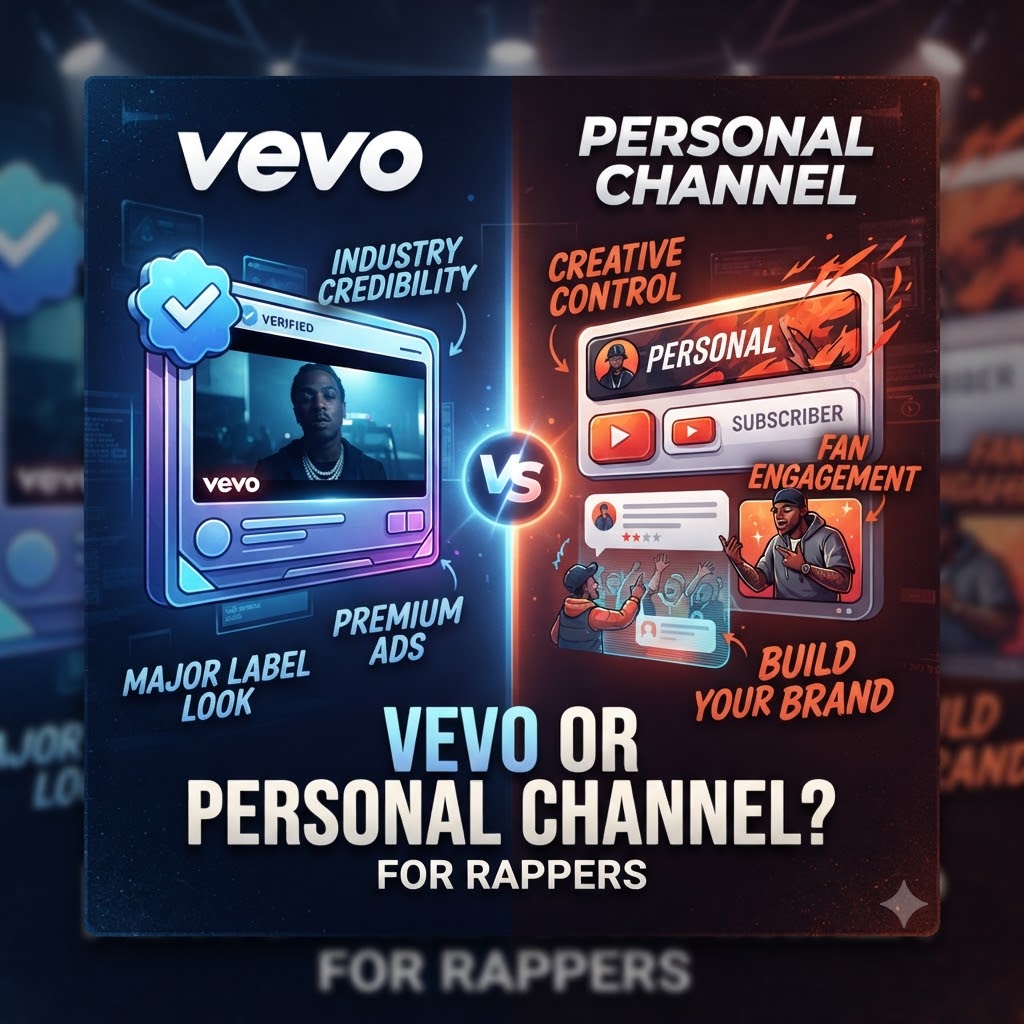
Is Vevo Better Than a Personal YouTube Channel for Rappers? The Ultimate Independent Artist Guide
Dropping a hard-hitting visual is only half the battle when you’re pushing a rap track. The other half—and honestly, the part that keeps a lot of independent artists up at night—is figuring out where to actually host the thing. Should you route your new music video through a sleek, industry-backed Vevo channel, or keep things entirely in-house on your own personal YouTube channel?
It’s a debate that’s been raging in studio sessions, group chats, and artist forums for years. Vevo brings major-label prestige, elite branding, and corporate muscle that makes people take a second look. On the flip side, running your own personal YouTube channel gives you total creative freedom, direct fan engagement, and full control over your data, comments, and monetization without a middleman taking a cut.
So, is Vevo better than a personal YouTube channel for rappers? Let’s pull back the curtain, look past the industry myths, and break down the real-world pros and cons of both options to help you choose the smartest home for your next drop.
What Actually Is a Vevo Channel?
Before we weigh the options, let’s get clear on what we’re talking about. A Vevo channel isn’t a standard YouTube account you can spin up in two clicks on a Tuesday afternoon. Vevo is a premium music video platform backed by major global entertainment entities and independent distribution networks.
When you get set up on Vevo, your artist name gets branded with a formal suffix (like ArtistNameVEVO), you secure a verified music badge, and your content automatically plugs into a massive curated ecosystem historically associated with major-label superstars. To the casual listener scrolling through YouTube, it immediately signals that you aren’t just some kid recording in a bedroom—you look like an established act.
Vevo for Rappers: The Good, the Bad, and the Reality
The Pros of Going the Vevo Route
-
Instant Industry Credibility: Let’s be real—perception is everything in hip-hop. When a tastemaker, blogger, or casual fan sees that sleek “VEVO” watermark glowing in the corner of your video, it triggers a psychological stamp of approval. It says professional, polished, and legit.
-
Higher Ad Rates and Brand Appeal: Because Vevo is heavily vetted and strictly brand-safe, it frequently attracts top-tier corporate advertisers. This can translate into higher CPMs (Cost Per Mille) compared to standard creator channels, meaning you can potentially earn more per view.
-
Automated Content ID and Rights Management: Protecting your copyright as an independent rapper can feel like a full-time job. Vevo excels at tracking down unauthorized re-uploads, claiming your music across digital ecosystems, and consolidating your metrics.
-
Clean Integration with YouTube Music: Vevo videos feed directly into your official Artist Topic channel and structured auto-generated playlists, helping the algorithm recognize you as a bonafide recording artist right out of the gate.
The Cons of Going the Vevo Route
-
Zero Branding Freedom: Vevo channels run on a strict, standardized corporate template. You can’t just change your banner layout, drop dynamic community polls, or customize things on a whim to match your current album rollout.
-
Splitting Your Audience Base: If you host your music videos on Vevo, but post your vlogs, studio sessions, and BTS footage on your personal page, you end up fracturing your audience. Instead of funneling all your growth into one unified destination, you’re dividing your watch time and subscriber count.
-
Distribution Costs and Bureaucracy: You can’t just walk up to Vevo and ask for a channel. You have to go through an approved distributor, aggregator, or label service, which often involves upfront subscription fees, annual renewals, or revenue splits.
-
A Cold, Corporate Vibe: Vevo channels can sometimes feel sterile. They lack the organic community-building atmosphere of a personal channel where you can pin fan comments, drop inside jokes, and interact natively with your core supporters.
Personal YouTube Channel for Rappers: The Good, the Bad, and the Reality
The Pros of a Personal Channel
-
Total Creative Control: Your channel, your rules. You want to change your channel art to match your new mixtape cover? Do it. You want to drop an unannounced documentary, a live freestyle, or a merch link directly into a community post? You have 100% autonomy.
-
Building a Unified Fanbase: Every single subscriber, like, comment, and share goes directly toward building your name. You aren’t building brand equity for a third-party platform; you’re building an asset that belongs entirely to you.
-
Powerful Community Tools: YouTube has evolved way past just being a video player. Features like the Community Tab, YouTube Shorts, polls, and live streaming let you forge a genuine, interactive connection with your fanbase that Vevo simply can’t match.
-
Cost-Effective and Frictionless: You don’t need a distributor’s permission or a pricey label services contract to upload a video to your personal channel today. You can film something on your phone, edit it, and drop it for the world to see in an hour.
The Cons of a Personal Channel
-
The “Amateur” Stigma: Even if your video was shot on an Arri Alexa with Hollywood lighting, some casual listeners and old-school industry gatekeepers still subconsciously associate personal channels with bedroom creators rather than professional artists.
-
Chasing Monetization Thresholds: You have to hustle hard on your own to hit the YouTube Partner Program (YPP) requirements—reaching subscriber and watch-hour milestones before you see a dime of ad revenue.
-
Scattershot Metadata: Without proper distribution and a registered Content ID, linking your personal channel to your official Google Knowledge Panel and streaming profiles can sometimes take a bit of extra bureaucratic wrangling.
Tip: Regardless of which channel format you choose for your drop, driving early velocity is crucial to ranking on search feeds using our video promo network.
Side-by-Side Breakdown: How They Compare
| Feature | Vevo Channel | Personal YouTube Channel |
| Aesthetic & Vibe | Major-label corporate polish | Authentic, creator-driven identity |
| Fan Engagement | Minimal (Standard layout, no community tab) | High (Polls, live streams, community posts) |
| Monetization | Premium brand advertiser pools | Standard YouTube Partner Program (YPP) |
| Flexibility | Rigid templates managed by distributors | Full creative control over layout and content |
| Best Used For | High-budget, cinematic flagship singles | All-in-one artist lifestyle hubs and daily content |
The Verdict: Which Route Should You Take?
So, coming back to the core question: is Vevo better than a personal YouTube channel for rappers?
The honest answer is that it depends entirely on where you are in your career right now.
-
Lean toward Vevo if: You already have a dedicated budget, high-end professional music videos, and your primary goal is to project an undeniable major-label image to industry scouts, playlist curators, and casual listeners who judge a book by its cover.
-
Lean toward a Personal Channel if: You are an independent artist who wins by building a tight-knit community, dropping consistent content (freestyles, vlogs, behind-the-scenes clips), and keeping your brand unified under one roof.
Truth be told, a lot of savvy independent rappers today aren’t choosing just one—they’re running a hybrid strategy. They use a personal channel as their main headquarters for daily engagement and all-around content, while utilizing Vevo distribution specifically for their major, high-production single releases to capture that official streaming credibility.