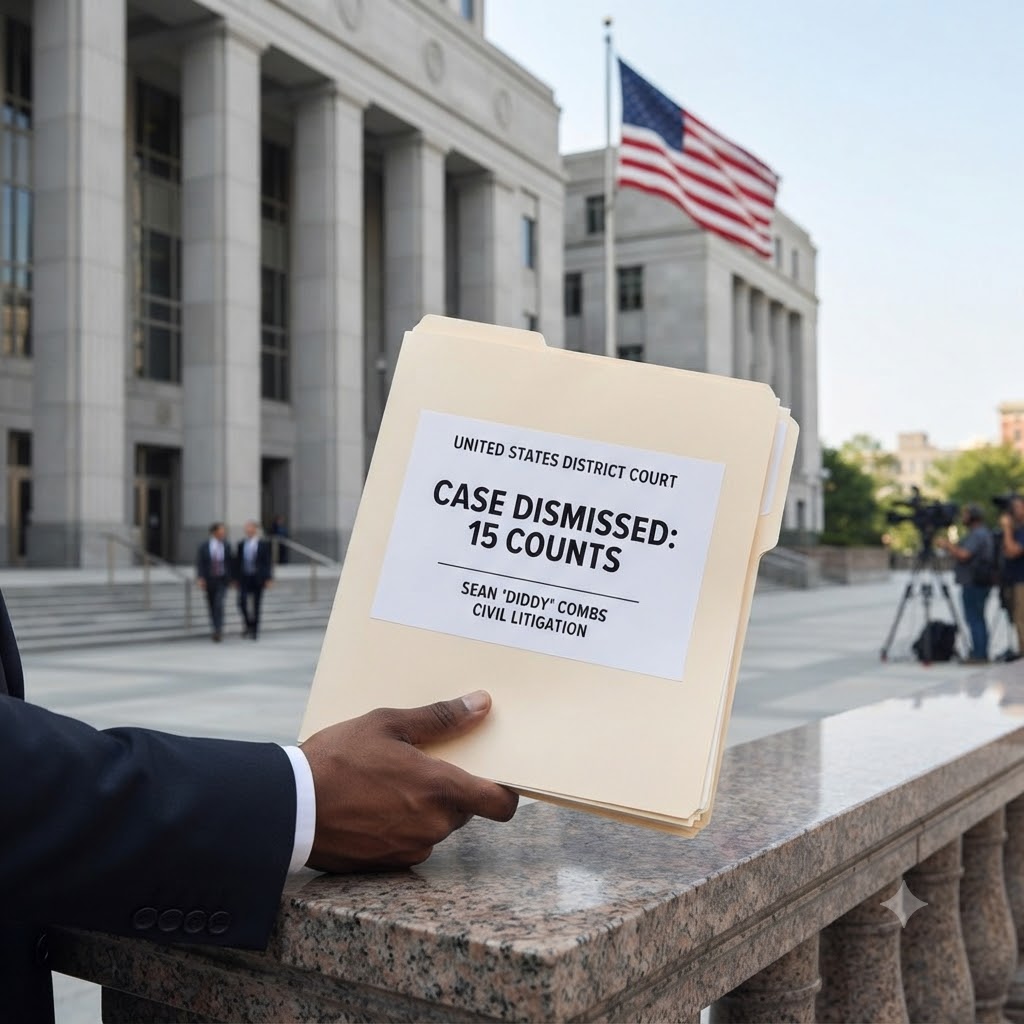
Inside Sean “Diddy” Combs’ 15-Count Case Dismissal: What It Actually Means for His Legal Battles
Let’s be honest: tracking the legal fallout surrounding Sean “Diddy” Combs feels like trying to drink from a firehose. Between an endless cycle of headlines, cascading civil suits, and intense public scrutiny, it is easy to get lost in the noise.
However, a major courtroom development recently cut through the clutter. Diddy’s legal team successfully managed to get a sprawling 15-count federal civil lawsuit tossed out entirely.
For anyone trying to make sense of the heavy machinery behind high-profile celebrity litigation, this case offers a fascinating look at how procedural rules, technicalities, and timelines can completely change the game—long before a judge or jury ever evaluates the core accusations.
Breaking Down the Dismissed 15-Count Lawsuit
To understand what just happened, we have to look at the specifics of the case itself. The federal lawsuit was originally brought forward by Las Vegas-based entertainer Julian Sapp, who lodged a massive 15-count complaint containing severe accusations against Combs.
When a multi-count federal lawsuit hits the docket with allegations of that magnitude, people naturally assume it is heading toward a high-stakes, dramatic trial. But Diddy’s defense strategy took a different route. Instead of jumping straight into a messy, heavy-evidence battle over the substance of the claims, his attorneys zoomed in on a foundational procedural weapon: the clock.
-
The Timeline Problem: The defense zeroed in on the statute of limitations. Court records and arguments pointed out a glaring chronological gap—specifically, that the plaintiff and Combs had last interacted way back in 2012, yet the lawsuit wasn’t filed until years later.
-
The Federal Ruling: U.S. District Judge Jennifer L. Rochon ultimately sided with the defense’s motion, formally dismissing the federal case. The core reasoning? The plaintiff simply waited too long to initiate legal action, pushing the claims well past the legally permitted expiration date.
-
No Ruling on the Merits: This is a crucial distinction that gets lost in social media commentary. A dismissal based on the statute of limitations is strictly procedural. The judge did not issue a factual ruling on whether the underlying accusations were true or false. Instead, the court closed the door purely because of a failure to file within the legal window.
Why This Legal Technicality Actually Matters
In the world of high-profile civil defense, a win is a win. Even though this wasn’t an acquittal after a jury trial examining the facts, wiping a 15-count federal complaint off the board carries strategic weight for Combs’ legal team.
1. Halting the Momentum of Continuous Liability
When a public figure is hit with wave after wave of civil litigation, the sheer volume of lawsuits can create an overwhelming public narrative of constant, inescapable liability. Cutting off a massive 15-count suit helps stem the bleeding. It proves that even under intense public pressure, the legal system still requires plaintiffs to play by the rules of civil procedure.
2. The Brute Force of Defense Strategy
This ruling highlights why high-powered legal defense teams earn their keep. While the public often focuses on sensational headlines and he-said-she-said arguments, defense attorneys live in the boring details: filing dates, jurisdictional boundaries, and strict chronological limitations. Finding a fatal flaw in the timeline can kill a multi-million-dollar lawsuit before it ever reaches the costly, invasive discovery phase.
3. Blueprinting Future Challenges
Every civil lawsuit stands on its own individual facts, but establishing a strict interpretation of filing deadlines gives Combs’ attorneys a functional roadmap. As they evaluate a mountain of other pending civil claims, you can bet they are scrutinizing the dates on every single one of them to see if other complaints suffer from the same chronological vulnerability.
The Broader Landscape of the Diddy Legal Saga
It is important to keep things in perspective. While securing the dismissal of a 15-count federal suit is a notable victory for the defense, it exists inside a much larger, incredibly complex web of legal battles.
Civil lawsuits operate under a different legal standard than criminal cases—relying on a “preponderance of the evidence” and frequently ending in financial settlements or technical dismissals. At the same time, they run parallel to the heavy federal scrutiny and criminal proceedings that have dominated the media cycle surrounding the Bad Boy Records founder.
For observers trying to navigate terms like Sean Combs lawsuits, statute of limitations dismissals, and celebrity defense tactics, this recent ruling serves as a reminder that the law doesn’t bend just because a case is famous. Procedural safeguards like filing deadlines apply to everyone, and sometimes, a technicality is all it takes to shut down a massive federal complaint.
As the legal gymnastics continue behind closed doors, one thing remains certain: the courtroom drama surrounding Diddy is far from finished, and procedural roadblocks will continue to dictate what actually makes it to trial.