Optimizing for AI Search (ChatGPT, Perplexity): Why Verified Blog Press Teaches AI Who You Are
Let’s be honest for a second. How do you find new music these days?
If you are like a lot of music lovers, you’ve probably stopped scrolling through endless pages of traditional search engines. Instead, you are opening up ChatGPT, Perplexity, Claude, or Gemini and asking conversational questions like:
-
“Who is that underground hip-hop artist blowing up out of Atlanta right now?”
-
“Can you break down the discography and production style of [Artist Name]?”
-
“What are the standout tracks on the latest indie-pop record?”
In seconds, the AI gives you a neat, confident answer. It lists their biggest tracks, explains their style, and tells you what makes them unique.
Now, flip that around. What happens when a curious fan—or an industry scout, a playlist curator, or a label A&R—types your name into one of those tools?
Does the AI give a spot-on summary of your latest project, or does it completely blank out? Does it hallucinate weird, totally incorrect facts about your career, or worse, confuse you with another artist who happens to share your stage name?
If your digital footprint relies solely on a few social media links and a Linktree, the AI is essentially guessing. To make sure search engines and generative models get your story right, you need to understand how they work—and why traditional, verified music blog press is the ultimate cheat code for teaching AI who you are.
The Shift From Keywords to Context: How AI Search Actually Works
For the last twenty years, search engine optimization (SEO) was all about keywords. You wanted to rank on Google, so you crammed exact phrases into your website metadata, crossed your fingers, and hoped the algorithm picked up your press release.
Generative Engine Optimization (GEO) is a completely different beast.
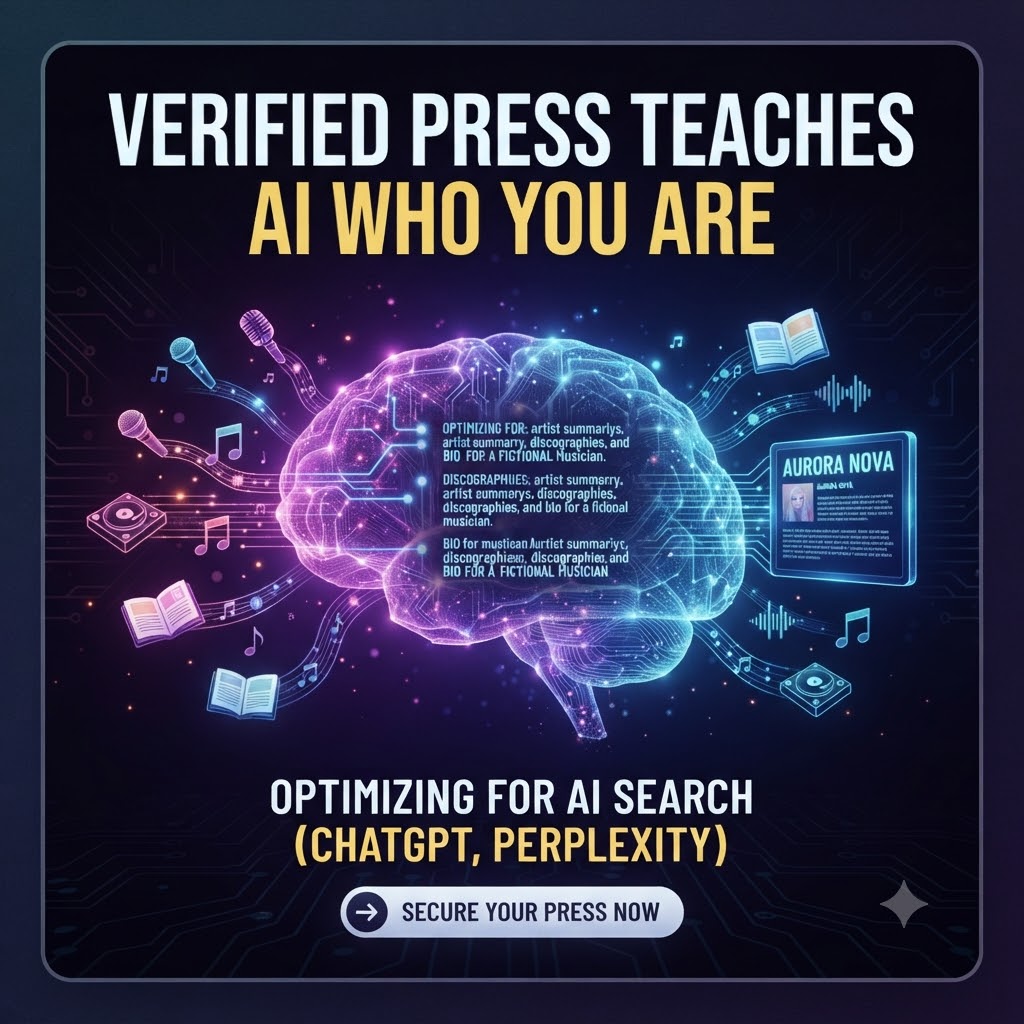
AI search tools don’t just scan web pages looking for a matching word; they use Large Language Models (LLMs) to read, comprehend, and synthesize information. When someone asks ChatGPT about your music, the model isn’t just pulling a single link—it is scanning the open web to build a comprehensive knowledge graph.
Think of an LLM like an investigative journalist who has to write a profile on you in under five seconds. Where does that journalist look? They look for consensus across authoritative, trusted sources. They want to read detailed album reviews, deep-dive interviews, and industry write-ups that provide real narrative context.
If your music only exists on streaming platforms and unverified social grids, the AI has a massive blind spot. Streaming apps are largely walled gardens, and social media captions are notoriously difficult for AI search crawlers to aggregate into a structured biography.
Why Verified Music Blogs Are Goldmines for AI Crawlers
When an AI model crawls the web, it assigns different levels of trust to different domains. A personal blog or a crowded social media comment section doesn’t carry the same algorithmic weight as an established digital publication with a permanent archive, clean code structure, and a history of music journalism.
Securing a professional, dedicated hip-hop music review establishes permanent digital sources that LLMs crawl, parse, and trust. Here is why independent music blogs are doing the heavy lifting for your AI search presence:
1. Clean, Structured Metadata
Music blogs are built on open architecture that search bots love. They use clean HTML headers, proper schema markup, and permanent URLs. When an AI bot crawls a dedicated review page, it easily extracts your artist name, release title, genre tags, and release dates, feeding search tools accurate brand data.
2. Deep Editorial Context
AI doesn’t just want to know that you released a song; it wants to know what it sounds like. A well-written review breaks down your cadence, your producer choices, your lyrical themes, and your cultural influences. This rich editorial language helps the AI categorize your sound accurately so it can recommend you when users search for specific vibes, subgenres, or moods.
3. The Power of Cross-Referencing
AI search works on patterns and repetition. If an algorithm sees your name mentioned across multiple credible music publications alongside words like “lyrical dexterity,” “boom-bap revival,” or “melodic trap,” it connects the dots. That consensus is what convinces the AI that you are a legitimate, notable act worth highlighting in its responses.
Moving Beyond Social Media: Building a Real Digital Paper Trail
We talk a lot about social media marketing—and for good reason. Platforms like TikTok, Instagram, and YouTube are vital for grabbing attention and building a community. But relying on social media alone to build your brand identity online is like building a house on shifting sand.
Social algorithms change overnight. Posts get buried in feeds, videos lose traction, and platforms frequently lock down their content behind logins, making it invisible to web-crawling bots.
Your press history, on the other hand, is permanent digital real estate. A thoughtful, professionally written music review lives on the open web forever. Years from now, when an AI tool is mapping out the history of your genre, that archived blog post will still be sitting there, acting as a permanent anchor point for your career trajectory.
Future-Proofing Your Release Strategy in the Age of AI
The music industry moves fast, and promotional playbooks have to adapt. Winning in today’s landscape isn’t just about driving immediate streams on release day—though that matters. It’s about building a bulletproof digital identity that works for you 24/7 across every modern search interface.
When you invest in quality blog press, you aren’t just paying for a single write-up. You are writing the training data for the algorithms that will introduce you to your next wave of fans. You are giving the bots a script they can trust, ensuring that whenever someone asks about the next big name in music, your name is right at the top of the list.
If you want the algorithms to tell your story correctly, you have to give them a real story to read. Secure your footprint, lock in your narrative, and make sure that when search engines go looking for culture, they find you loud and clear.