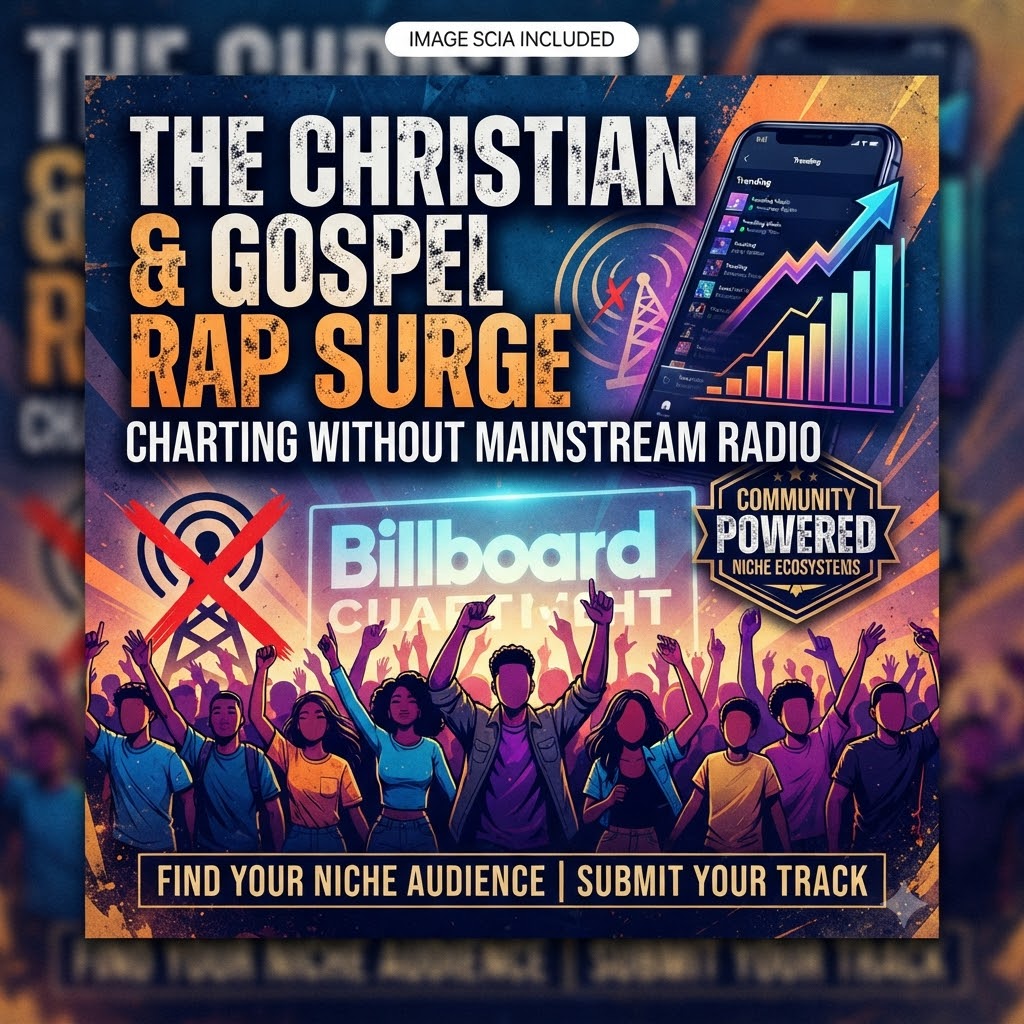
The Christian & Gospel Rap Surge: How Artists Are Dominating the Billboard Charts Without Mainstream Radio
If you grew up watching MTV or listening to terrestrial radio back in the 2000s, you probably have a mental blueprint of how a song becomes a hit. The formula was rigid: a major label would spend thousands—sometimes millions—securing spins on top-40 radio stations, buying ad space, and courting the handful of gatekeepers who controlled what the masses were allowed to hear. If you weren’t on commercial radio, you practically didn’t exist.
Try telling that to today’s Christian and Gospel rap community.
Over the past few years, we have witnessed a massive cultural and commercial shift. Christian hip-hop (CHH) and gospel rap artists aren’t just surviving outside the traditional music industry machine; they are thriving. They are debuting on the Billboard charts, selling out massive tours, and pulling in hundreds of millions of streams—all while completely bypassing mainstream commercial radio.
How are they doing it? The answer lies in a powerful, hyper-engaged ecosystem that traditional music executives are still struggling to understand: niche, faith-based community building.
The Death of the Traditional Gatekeeper
For a long time, Christian rap was treated like an afterthought by the mainstream music industry. If artists wanted a shot at commercial success, they felt pressured to water down their message, sand off the edges of their faith, and appeal to a secular, broad-stroke demographic.
Fortunately, that era is behind us.
Artists realized that trying to squeeze into a mainstream format meant alienating the exact people who wanted to support them. Instead of playing the old game, they changed the rules entirely. They stopped looking for validation from terrestrial radio programmers and started looking directly at their audience.
And that audience was massive.
Instead of waiting for a DJ to spin their track on a Friday night drive-time slot, Christian and gospel rappers tapped into an infrastructure that has existed for decades, just waiting to be mobilized: the modern church ecosystem.
Inside the Church-Based Ecosystem: The Ultimate Grassroots Machine
What makes the CHH surge so fascinating from a marketing and SEO perspective is how organic it is. It operates on a level of community trust that money simply cannot buy.
Think about how music moves in these tight-knit circles:
-
The Youth Group Effect: A Wednesday night youth ministry meeting or a Friday night church youth event acts as an immediate testing ground for new music. Word travels fast when hundreds of teenagers discover a track that matches their vibe and their values.
-
Campus Ministries and Conferences: Christian colleges, winter retreats, and national faith conferences draw millions of young adults. When an artist’s song becomes the anthem of a major conference, the digital streaming numbers spike overnight.
-
The Word-of-Mouth Digital Network: Fans of positive and faith-based rap don’t just passively consume music; they advocate for it. They share tracks on social media, create reaction videos, and intentionally stream albums to support independent artists who reflect their lifestyle.
When you combine a passionate listener base with the power of modern digital algorithms, you get a self-sustaining loop. Streaming platforms notice when a track experiences a sudden, high-velocity surge of complete listens from dedicated profiles, which pushes that music into algorithmic recommendations for broader hip-hop fans.
The Lecrae & KB Blueprint: Authenticity Over Crossover Compromise
You cannot talk about this movement without looking at the pioneers who laid the groundwork. Leaders like Lecrae and KB didn’t just carve out a lane; they built a multi-lane highway where independence and uncompromised faith could coexist.
Lecrae made history by proving you could top the Billboard 200 chart without compromising your core message. He didn’t transition into mainstream pop; instead, he brought the mainstream hip-hop audience over to his world through sheer lyrical excellence and brutal honesty about life, faith, and struggle. He famously addressed the tension of operating outside traditional systems, showing a whole generation of younger artists that you don’t need a massive commercial radio sponsor to make a global impact.
Similarly, KB leaned completely into high-energy production, sharp theological depth, and a vibrant cultural aesthetic. He built a fanbase that wasn’t looking for a watered-down alternative to secular rap; they wanted world-class hip-hop that spoke directly to their identity. Because these artists built their houses on solid rock rather than shifting industry trends, their audiences stayed with them for the long haul.
Why Going Deep Beats Going Broad Every Single Time
In the old days of the music business, the goal was always mass appeal. You wanted everyone to kind of like your song, even if no one loved it.
Today, the internet rewards the exact opposite approach. In an ocean of infinite content, being polarizing or hyper-specific is often better than being generic. If you try to make music for everybody, you end up making music for nobody.
Christian and gospel rap succeed because they know exactly who they are talking to. They aren’t trying to convince a secular radio programmer in Los Angeles to take a chance on a faith-based track. They are going straight to the listener who wakes up looking for encouragement, depth, and heavy 808s all at once.
This is where smart digital strategy comes into play. If you are an independent artist releasing faith-based or positive rap, throwing your budget blindly at broad, generic playlists is a recipe for burning cash. The real secret to sustainable growth is finding and nurturing niche subcultures.
When you target highly engaged religious and positive rap subcultures using our specialized subgenre-specific hip-hop playlisting channels, you are bypassing the noise. You are putting your art directly in front of active listeners who actually read the lyrics, save the songs to their personal libraries, and share them with their friends.
What the Mainstream Music Industry Can Learn From CHH
The rapid rise of Christian hip-hop holds a mirror up to the entire modern music industry. It proves that the old power structures—radio stations, gatekeepers, and traditional label PR machines—are no longer the ultimate arbiters of success.
Today, the artist who owns their audience owns their destiny.
As streaming algorithms become more sophisticated at recognizing genuine engagement over manufactured hype, subcultures will continue to dictate the charts. Faith-based rap has written the playbook on how to build a loyal, self-sustaining ecosystem that thrives completely independently of legacy media.
For independent creators watching from the sidelines, the message is clear: stop waiting for permission from mainstream gatekeepers. Build your community, honor your core audience, and put your music where the people are actually listening.
Final Thoughts: The Horizon of Independent Hip-Hop
The Christian and gospel rap surge isn’t a temporary trend or a genre fad; it is a structural shift in how music is consumed, shared, and celebrated. By anchoring themselves in community, authenticity, and digital grassroots networks, these artists have proven that you don’t need a nod from terrestrial radio to make cultural history.
As more creators realize the power of owning their niche, the charts will continue to reflect a wider, more diverse landscape of independent voices. The future belongs to the connected, and the movement is only just getting started.