10-Year Anniversary Rollouts: How to Re-Market and Re-Release Your First Mixtape on Streaming
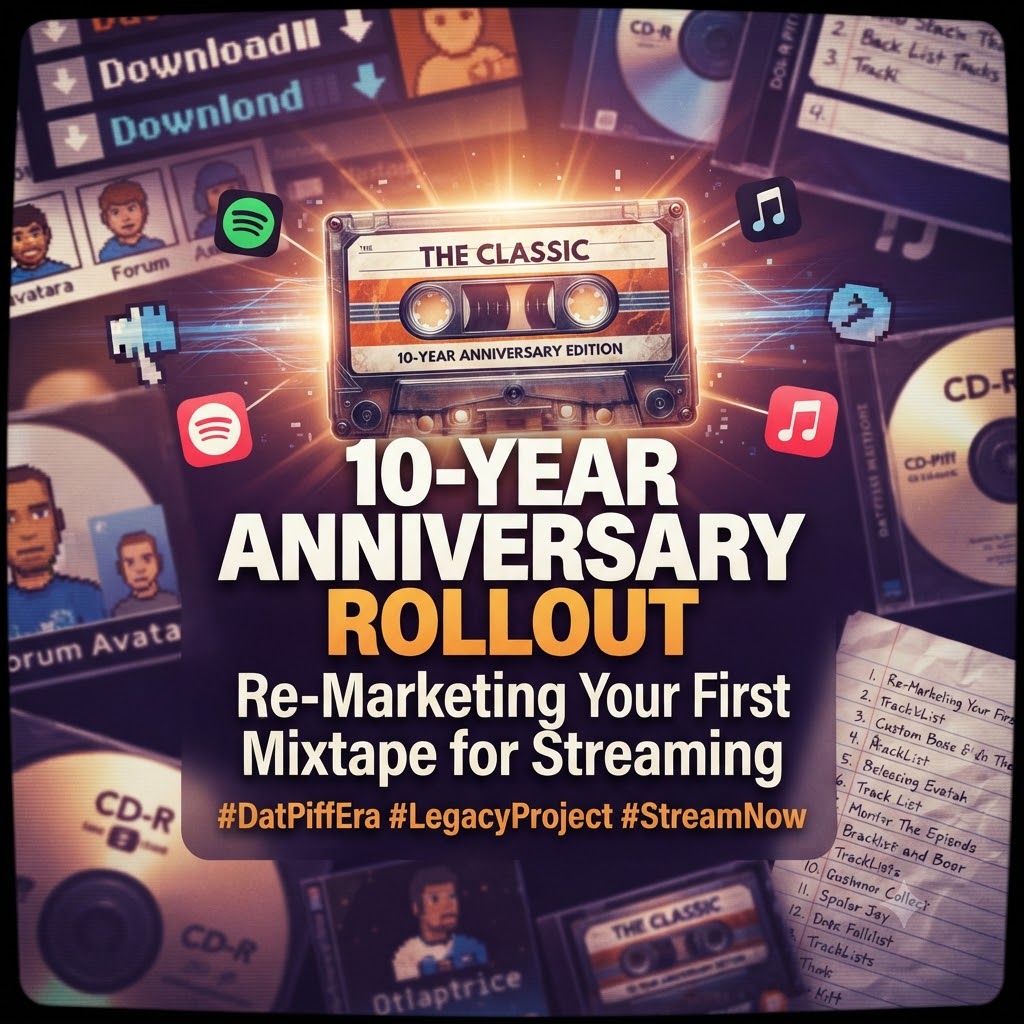
Think back to the DatPiff era. The internet moved a little slower, forums were where communities actually lived, and dropping a mixtape meant uploading a raw ZIP file, crossing your fingers, and hoping enough people downloaded it before the file hosting links expired. If your very first project dropped around a decade ago, you aren’t just looking at an old folder of mp3s—you’re sitting on a goldmine of nostalgic, highly marketable intellectual property.
Most independent artists treat their early catalogs like a closed chapter. They drop a project, move on to the next album, and leave their formative work buried on defunct blogs and dead media links. That is a massive missed opportunity. Celebrating a ten-year milestone with an official anniversary rollout is one of the smartest, most organic ways to wake up a dormant fanbase, capture high-intent search traffic, and re-ignite your catalog’s legacy by pushing your anniversary project through our artist submission networks.
Let’s break down how to take that old, dusty DatPiff classic, bring it up to modern streaming standards, and turn an anniversary into a major career moment.
Why the 10-Year Mark is a Goldmine for Independent Artists
Music history moves fast. A decade in the independent rap and underground scene is practically a lifetime. The kids who were bumping your first mixtape in their dorm rooms or high school hallways are now working adults with disposable income, a deep sense of nostalgia, and a craving for the music that soundtracked their youth.
When you re-market a 10-year anniversary project, you are tapping into a psychological sweet spot. Nostalgia sells because it feels safe, authentic, and emotionally heavy. At the same time, younger listeners who discovered you through your latest albums love digging backward to find out where an artist’s sound originated.
However, you can’t just slap the old files onto Spotify and hope for the best. Platforms have evolved, listener expectations for audio quality are miles ahead of where they were in 2016, and the streaming ecosystem demands a strategic approach to metadata, distribution, and marketing.
Step 1: The Remastering Process (Fixing the Vibe Without Losing the Soul)
Let’s be completely honest about early independent mixtapes: they usually sounded rough. Recorded in bedrooms, closets, or budget basement studios, they often suffered from muddy low-ends, distorted vocals, and terrible master levels because streaming loudness standards weren’t a thing yet.
Before you push that project to digital service providers (DSPs), you need to give the audio a face-lift. But you have to tread carefully.
-
Don’t Over-Sanitize: The raw, hungry energy is the entire point of a throwback project. If you polish it until it sounds like a clinical pop record, you kill the nostalgia. Fans want to hear the hunger they fell in love with a decade ago.
-
Fix the Translation Issues: Old mixes often sound terrible on modern car stereos or high-end Bluetooth speakers because they were balanced for cheap laptop speakers or dollar-store earbuds. Have an engineer clean up the mud in the low-mid frequencies and tame harsh vocal peaks.
-
Loudness Normalization: Modern streaming services automatically turn tracks down if they are pushed too hard into the limiter. Make sure your remaster is balanced to hit modern streaming LUFS targets so it doesn’t sound weak when it plays right after a major-label track.
Step 2: Clearing Samples and Beats (The Hard Truth)
The elephant in the room for any DatPiff-era re-release is sample clearance. Back then, nobody worried about copyright strikes or publishing splits; you grabbed an instrumental from a popular industry beat tape, downloaded an acapella, or sampled an obscure soul record, threw it together, and hit publish.
Trying to put those exact files onto Spotify or Apple Music today will get your release blocked, or worse, trigger copyright takedowns that flag your entire artist profile. Here is how you navigate that minefield:
-
Track Down the Producers: Many of the underground producers who supplied beats for early 2010s mixtapes are still in the game, working as major beatmakers or running independent catalogs. Reach out to them. Most will be thrilled to officially clear the placement and split royalties on a legacy project that is finally generating official streaming revenue.
-
Replay or Remake: If an unauthorized vocal sample or a copyrighted loop can’t be cleared, look into hiring a session musician or producer to replay the interpolation legally.
-
Embrace the Alternate Version: Sometimes, a particular track simply cannot be cleared. Don’t let one blocked song stall the entire rollout. Drop the project with the tracks you can legally secure, or release a “Director’s Cut” featuring newly produced alternative joints that fit the exact same era and vibe.
Step 3: Crafting the Content Rollout and Narrative
An anniversary release shouldn’t just drop silently on a Friday morning. It needs a rollout that makes the internet feel like it’s 2016 all over again.
Unearth the Vault
People love behind-the-scenes history. Dig through your old hard drives, cloud backups, and old social media accounts to find content nobody has seen in ten years:
-
Early hand-written lyric sheets with crossed-out bars.
-
Unused alternative cover art designs that didn’t make the final cut.
-
Low-quality video footage from the very first release party or studio late-nights.
-
Early screenshots of forum hype, tweets, or blog reviews from when the project first made noise.
The “Where Were You?” Social Media Push
Build anticipation weeks before the drop. Run interactive posts on Instagram, TikTok, and X asking your core supporters where they were when the project first dropped. Share your own stories about what you were going through in life when you wrote those specific bars. When artists show vulnerability and remember their humble beginnings, it builds an unbreakable bond with the audience.
Step 4: Optimizing for Search Traffic and Digital Footprint
As an SEO strategist, I see too many artists miss out on organic search traffic because they treat their release titles like inside jokes. When you bring an old mixtape to streaming, you need to think about how people actually search for things online a decade later.
-
Smart Titling: If the original project was called something generic, make sure the metadata on streaming platforms and accompanying blog posts clearly indicates its legacy status. Use titles like [Album Name] (10-Year Anniversary Edition) so search engines and streaming algorithms immediately index it correctly.
-
Leverage Editorial and Press: Write or commission press releases and blog posts detailing the history of the release. Independent music blogs, throwback hip-hop curators, and genre-specific newsletters love a good retrospective story, especially when it’s tied to an artist who has continued to grind and evolve over the years.
Ready to Bring Your Classic Project Back to Life?
Make your catalog attractive to both old fans and new listeners. Apply via our Full Artist Submission Form to get your anniversary project in front of tastemakers and maximize your rollout impact today.
Final Thoughts
Your early work is proof of your journey. It shows the roots of your artistry, the mistakes you learned from, and the raw talent that got you noticed in the first place. By treating a 10-year anniversary re-release with the same care and strategy as a brand-new album campaign, you reward the day-one supporters who stuck with you from the start while giving a whole new generation of listeners a foundational piece of your story to discover.