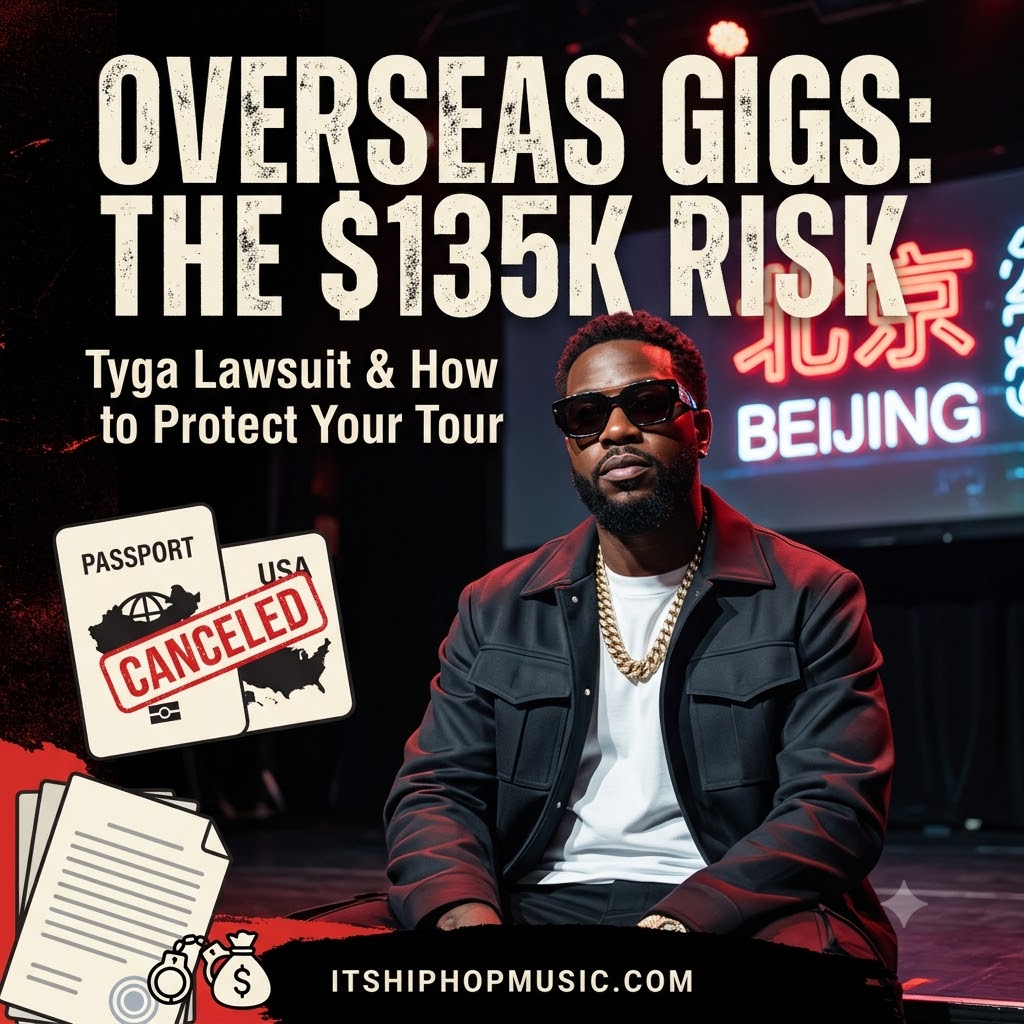
When international tour dates collapse, the legal fallout is rarely quiet. Rapper Tyga is finding that out the hard way after getting hit with a six-figure lawsuit stemming from canceled performances in Beijing, China.
The lawsuit, filed by Chinese promoter Beijing Tongxing Wanxin Catering Management, alleges breach of contract and fraud after the artist failed to appear for scheduled club dates at Beijing’s Club Pac Star back in August and October of 2023. According to court filings, the promoter paid an advance sum of $145,000 to secure the dates. After the missed appearances, the venue claimed they were promised makeup dates in early 2024. When those makeup shows never materialized, the promoter demanded a full refund. The suit claims that only $10,000 has been repaid under a preliminary settlement, leaving an unpaid balance of $135,000 plus interest, legal fees, and demands for punitive damages.
For mainstream stars, a $135,000 legal dispute is a major headache. For independent artists, mid-tier managers, and up-and-coming live acts, a contractual disaster of this scale can end a touring career overnight. Overseas touring offers huge financial upside and rapid global fan growth, but it also exposes artists to international contract laws, complex promoter deals, and unforeseen logistical traps.
Examining the mechanics behind Tyga’s Beijing situation offers crucial insights into how international live performance agreements actually work—and how artists can protect themselves when booking dates abroad.
The Reality of Booking Live Shows in Overseas Markets
Navigating domestic bookings inside your home country is relatively straightforward. You have established relationships, predictable venue standards, familiar banking systems, and clear legal remedies if a promoter fails to pay. Crossing international borders changes every element of that equation.
When an artist signs on for international dates, they are stepping into foreign regulatory frameworks, distinct tax obligations, cultural event expectations, and complex visa requirements. Promoters operating in markets like Asia, Europe, or South America frequently work under different business norms than North American or Western European booking agencies.
Without a airtight contract that accounts for cross-border logistics, small misunderstandings regarding travel arrangements, permits, or payment schedules can snowball into multi-thousand-dollar lawsuits.
The Core of International Live Lawsuits: Force Majeure
At the heart of almost every high-profile concert cancellation dispute sits a specific legal defense: force majeure.
Literally translating to “superior force,” a force majeure clause is designed to excuse a party from performing their contractual duties when extraordinary, uncontrollable events make performance impossible or impractical. Traditionally, this covers standard “acts of God”—hurricanes, earthquakes, war, or major civil unrest.
However, in modern international touring, vague force majeure language is no longer enough. If an artist misses an overseas flight, gets stuck in immigration, or experiences local permit issues, can they legally invoke force majeure to keep their advance deposit?
It entirely depends on how precisely the contract is drafted.
1. Visa Approvals and Work Permits
One of the most frequent points of failure for overseas concerts is government documentation. Most countries require specific entertainer visas or international work permits for non-resident performers. If an artist’s visa application gets delayed by foreign immigration, is that considered an uncontrollable event under force majeure, or is it considered negligence on the artist’s management team?
A well-structured agreement explicitly states which party is responsible for securing visas by a strict deadline, and whether a government visa denial triggers a full refund or excuses performance altogether.
2. Local Regulatory Approvals and Curfews
Foreign municipal governments often enforce strict local laws regarding sound levels, curfews, event licenses, and venue security protocols. If local police shut down an event or revoke a venue’s operational permit 24 hours before showtime, the promoter and artist will instantly clash over who bears the financial loss.
3. Post-Pandemic Health and Travel Restrictions
The live music landscape fundamentally shifted after 2020. Standard modern booking contracts must explicitly outline how sudden quarantine mandates, international border closures, or emergency venue capacity restrictions affect non-refundable advance deposits and rescheduled dates.
Essential Contract Clauses for Overseas Touring
To avoid getting trapped in international legal battles, independent and mid-tier artists must ensure their legal teams build specific protective clauses into every foreign booking contract before any money changes hands.
| Key Clause | Strategic Function | Real-World Application |
| Deposit Non-Refundability | Secures guaranteed income for reserved dates | Protects the artist’s schedule if the foreign buyer cancels without valid cause. |
| Choice of Law & Forum Selection | Controls legal jurisdiction | Dictates that any legal disputes must be litigated in the artist’s home state/country using familiar local laws. |
| Cure Period & Rescheduling Terms | Governs missed or postponed dates | Mandates a specific window (e.g., 60–90 days) to agree on makeup dates before cash refunds are triggered. |
| Logistics & Tax Indemnification | Places administrative duties on the promoter | Requires the local buyer to pay foreign withholding taxes, visa processing fees, and local transit expenses. |
When building your international profile and locking in foreign promoters, having a verified public track record makes a massive difference in leverage—you can strengthen your touring credentials with published press proof from our artist review services.
Actionable Lessons for Independent Artists Expanding Globally
You don’t need to be an arena-selling hip-hop artist to learn from Tyga’s $135K lawsuit. As the independent music sector grows increasingly global, artists at every tier are booking international mini-tours, festival slots, and club appearances.
Here is how you can safeguard your business before flying overseas for a gig:
1. Retain Legal Counsel Familiar with International Entertainment Law
Never sign a foreign promoter’s “standard contract” without having an entertainment attorney review the terms. A boilerplate contract written in another jurisdiction will almost always favor the promoter and leave the artist exposed to full liability if unexpected travel issues arise.
2. Require Heavy Upfront Advances
Never get on an international flight without securing a significant percentage of the performance fee upfront via verified bank wire. Experienced touring acts routinely demand 50% upon signing the contract and the remaining 50% prior to departing for the airport or stepping onto the stage.
3. Structure Clear Settlement Timelines in Writing
If a show is postponed due to flight delays, weather, or venue issues, do not rely on informal text messages or verbal agreements to fix the situation. Document every adjustment in an official addendum that defines precise makeup deadlines and exact repayment structures if the rescheduled event falls through.
4. Build a Verified Press Record
Foreign promoters want proof that an artist is professional, reliable, and capable of pulling a crowd before they wire thousands of dollars overseas. Consistent media coverage, published album reviews, and documented press write-ups build the authority needed to command higher performance fees and favorable contract terms.
Document your music’s place in modern hip-hop history. Order a write-up through our Music Review Portal.