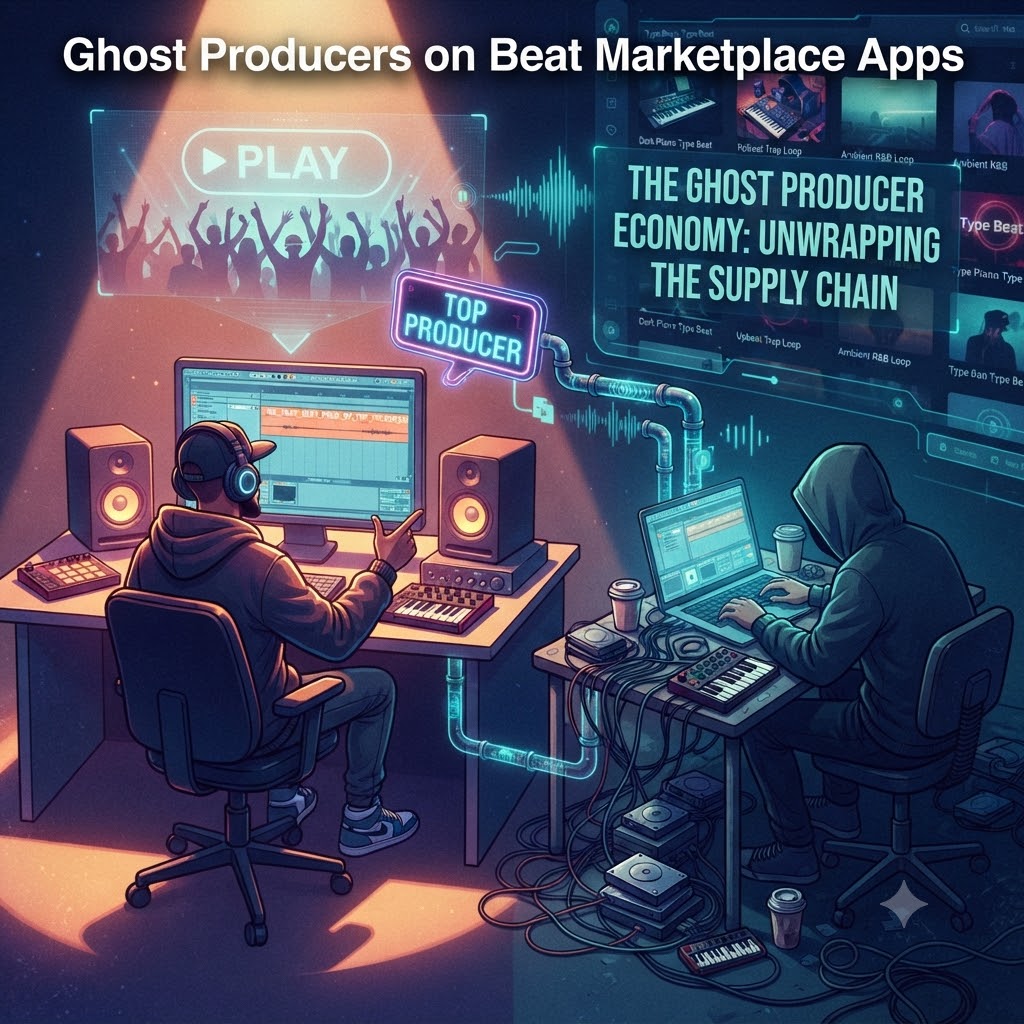
The Rise of “Ghost Producers” on Beat Marketplace Apps: Inside the Underground Machine Behind Modern Type Beats
If you spend any time scrolling through BeatStars, watching producer YouTube tutorials, or browsing modern beat subscription platforms, you notice a dizzying pace. Top-tier producers seem superhuman. Every single week—sometimes every single day—they drop fresh, radio-ready instrumentals styled after the biggest names in hip-hop. Travis Scott-style dark atmospheres, Drake-esque ambient pads, Lil Baby-style heavy bounce—they always have a fresh batch ready to go.
If you are an aspiring producer or an independent artist trying to make noise, you have probably asked yourself: How do they do it? How does one person stay consistently relevant, maintain a massive social media presence, mix and master tracks, and still drop 30 elite beats a month?
The answer isn’t a secret work ethic hack or a magical workflow template. It is an open secret running rampant through the modern music industry: Ghost production.
Behind many of the biggest names on digital beat marketplaces lies a hidden network of underground beatmakers. These anonymous creators are the invisible engine room churning out the type beats that power today’s booming subscription platforms. Here is an honest, unvarnished look at how this underground pipeline works, why it exists, and what it means for the soul of modern beatmaking.
The Brutal Math of the Modern Beat Economy
To understand why ghost production has exploded, you first have to look at how the digital music business has shifted. We live in an attention economy ruled by algorithms. Whether you are selling exclusive licenses on a marketplace or building a recurring revenue stream through a subscription app, the rule of thumb is relentless consistency.
Platforms reward volume. If a producer disappears for a month to work on a cohesive artistic project, the algorithm buries them. Subscribers cancel memberships if they don’t get fresh content to feed their own recording sessions or content creation pipelines.
A prominent producer with hundreds of thousands of followers faces a heavy operational load:
-
Content Creation: Filming TikToks, editing YouTube breakdown videos, and running Instagram ads.
-
Client Management: Handling custom requests, licensing negotiations, and licensing compliance.
-
Brand Building: Turning a producer name into a lifestyle brand with merch, drum kits, and presets.
When you factor in all those business hats, a top producer simply does not have eight hours a day left over for pure sound design, chord progression hunting, and mixing. The math doesn’t work. So, rather than letting their brand stall, they look for leverage. They outsource the creation while keeping the spotlight.
Inside the Pipeline: How the Underground Supply Chain Works
Ghost production in the beat marketplace world operates much like a corporate supply chain or a high-end fashion house. The top-tier creator acts as the creative director and the marketing machine, while the underground producer is the anonymous craftsman in the workshop.
Here is typically how the arrangement goes down behind closed doors:
-
The Outreach: An established producer—let’s call him Producer X—has built a powerhouse brand. He has an email list of thousands of hungry artists, but his vault is running dry. He discreetly reaches out to talented, under-the-radar beatmakers whose work he spots on Soundcloud or smaller Discord communities.
-
The Work-For-Hire Deal: Producer X buys unreleased project files (FL Studio
.flpfiles or Ableton sets), loop packs, or fully mixed stems from the underground beatmaker. -
The Flat Fee or Backend Buyout: The underground producer gets paid a flat rate per beat—sometimes a few hundred dollars, sometimes much less depending on their leverage—or occasionally a tiny, uncredited percentage. In exchange, they sign away all public rights.
-
The Rebranding: Producer X stamps his signature producer tag over the intro, throws a trendy visualizer on it, and titles it “Travis Scott x Don Toliver Type Beat [Prod. By Producer X]”.
To the public, Producer X is a generational hitmaker who never misses. In reality, he is operating a mini-label, curating and distributing beats crafted by a rotating roster of anonymous talent.
The Subscription App Boom: Why High Volume is Mandatory
The rise of subscription-based beat models has poured gasoline on this fire. Traditional beat marketplaces relied heavily on individual sales or leasing tiers. While those still exist, the industry has rapidly shifted toward Netflix-style subscription models where artists pay a monthly fee for unlimited or high-tier download allowances.
For a subscription app to retain members, its catalog needs to feel infinite. Users want to log in and find fresh loops and instrumentals across every trending niche sub-genre the moment a new album drops.
Top producers who partner with or launch these subscription platforms cannot possibly supply enough original material on their own to satisfy hundreds or thousands of active monthly subscribers. Ghost networks solve this bottleneck. They allow top accounts to continuously pump fresh, genre-compliant instrumentals into subscription tiers, keeping engagement high and churn rates low while masking the fact that multiple hands touched the final product.
The Pros and Cons for the Modern Creator
Like any industrial shift, the rise of marketplace ghost production comes with a massive gray area. It creates real opportunities, but it also introduces deep ethical dilemmas for the culture.
The Upside: Survival and Scalability
For an insanely talented teenager sitting in a bedroom in a small town with zero marketing skills, a ghost production gig can be a financial lifeline. While they don’t get the clout or the streaming royalties, they get guaranteed, upfront cash for beats that might have otherwise sat on a hard drive collecting digital dust.
On the flip side, front-facing producers get the scale they need to turn a solo hobby into a legitimate enterprise, employing other creatives and building sustainable businesses.
The Downside: The Credit Gap and Creative Homogenization
The drawbacks hit the culture hard.
-
The Royalty Divide: The underground creator does the heavy lifting of composition and sound design, but misses out entirely on the long-term publishing upside, major placements that stem from the beat, and industry networking.
-
The Sea of Sameness: When speed and volume dictate production, art suffers. Platforms risk becoming saturated with formulaic, algorithm-friendly “Type Beats” that lack genuine human grit, experimentation, and soul. When everything sounds engineered in a factory to fit a specific SEO keyword, the unique human fingerprint gets lost.
Where Does Beat Marketplace Culture Go From Here?
As AI audio generation tools continue to flood the internet, some might argue that human ghost producers are just an intermediate step before software takes over entirely. Yet, the human element—the subtle bounce, the accidental swing of a hi-hat, the lived-in emotion of a real melody—remains something algorithms struggle to genuinely replicate with authentic cultural nuance.
Ghost production on beat marketplace apps isn’t going anywhere. It is the natural byproduct of a hyper-commercialized digital landscape where brand value outweighs artistic transparency. Whether you view it as savvy business entrepreneurship or a quiet exploitation of underground talent, one reality remains crystal clear: the next time you drop a lease on a massive producer’s latest viral type beat, remember that there is a very good chance the person who actually made it is sitting completely in the shadows.