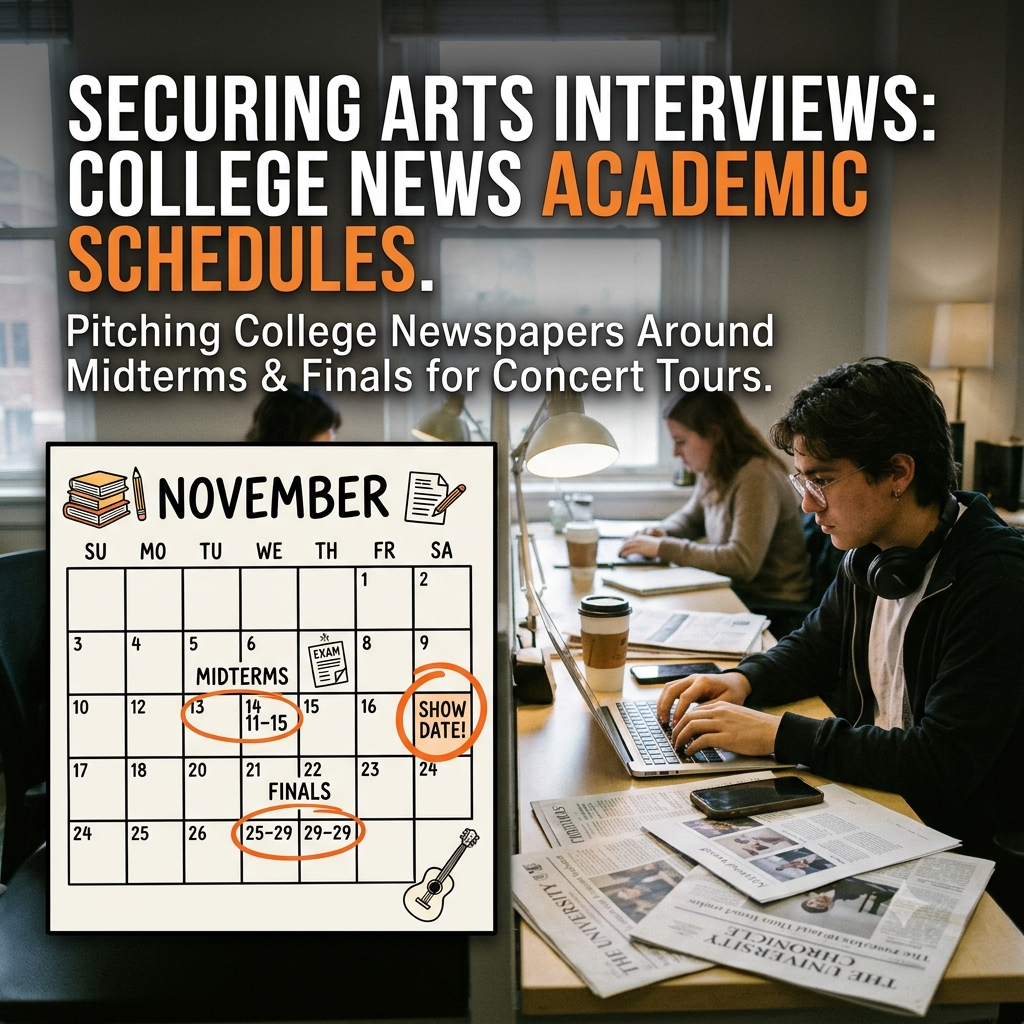
If you’ve ever launched a regional tour campaign, you already know the golden rule: college radio and campus print are absolute goldmines for filling mid-capacity venues. Student newspapers reach an audience of hyper-engaged, local 18-to-24-year-olds who actually buy physical tickets, drag their roommates to live shows, and stream music constantly.
Yet, so many publicists, indie managers, and DIY bands send out dozens of tour pitches to university arts editors only to hear crickets.
Why? Because they fail to account for the student calendar.
When you’re pitching college newspapers for concert tours, you aren’t dealing with full-time staff journalists whose entire 40-hour workweek revolves around the entertainment beat. You’re pitching 20-year-old full-time students who are juggling midterms, final exam cram sessions, group projects, and campus housing drama on top of running a news section.
If your press release lands in their inbox during exam week with a demand for a 45-minute in-person coffee chat, it’s going straight to the trash folder.
If you want to secure high-converting arts section coverage when academic stress is peaking, you have to pivot your strategy. Here is how to pitch student journalists around university schedules, remove every single drop of friction, and time your coverage so it hits campus newsstands right before your weekend gig.
The Reality of Campus Media: Understanding the Academic Calendar
Before you even write a subject line, you need to understand how a student newsroom functions during midterm and final exam blocks.
Unlike mainstream daily publications that operate on fixed, predictable editorial cycles year-round, campus newspapers experience severe shifts in bandwidth. During peak exam weeks (typically mid-semester and the final two weeks before winter or summer break), student writers face an overwhelming bottleneck of academic pressure.
Understanding these dynamics will keep your email from being instantly discarded:
-
Staff Bandwidth Shrinks by Half: Many staff writers take temporary leaves of absence during finals week to focus on studying, leaving section editors short-handed and scrambling to fill pages.
-
Page Counts Drop: Student papers frequently cut down their total print pagination during finals, meaning fewer spots are available for arts and culture features.
-
Lead Times Get Stretched: Articles that usually take two days to write and edit might take two weeks when students are balance-checking lab reports and studying for organic chemistry.
If you pitch an artist two days before a show in the middle of midterms, you’ve already lost. To win campus coverage, start outreach 3 to 4 weeks before your tour hit date. This gives an overworked editor plenty of room to assign the piece, let a writer construct thoughtful questions, and schedule the layout comfortably around their exam schedule.
Offer the “Low-Friction” 15-Minute Phone Interview
One of the biggest mistakes music publicists make when pitching college newspapers for concert tours is requesting lengthy, open-ended interview windows. Asking a student journalist for a 30-to-45-minute sit-down interview during midterms sounds like a massive assignment. They see that request and immediately visualize an hour of recording followed by three tedious hours of audio transcription.
You need to make the assignment sound fast, simple, and painless.
Position your offer as a crisp, 15-minute phone or Zoom interview, and explicitly call out that time frame in your email header or initial bullet points.
Subject: Pitch: [Artist Name] at [Local Venue] [Show Date] (15-Min Phone Feature for Arts)
How to Structure a Frictionless Pitch
To make an editor’s life as easy as possible, don’t just ask for an interview—package the whole story for them up front:
-
State the Time Commitment Immediately: Make it clear right in the first paragraph that your artist is set up for a tight, 15-minute phone call.
-
Provide 3 Ready-to-Use Story Angles: Give the student writer a head start on their prep work. Give them talking points like:
-
How the band balances independent touring with youth culture.
-
The story behind the latest single or album concept.
-
The artist’s connection to the local region or state scene.
-
-
Offer Flexible, Non-Academic Hours: Student journalists take classes during standard 9-to-5 business hours. Offer late afternoon, early evening, or weekend interview windows that fit around their lecture schedule.
-
Supply an Express Media Kit: Include links to high-res press photos (both landscape and portrait orientations for web/print layout), short bios, and direct Spotify or Apple Music links. Don’t make them search Google for basic details.
Leverage Free Guest List Spots & VIP Access
If there is one universal truth about college journalists, it’s this: they love going to shows for free. A couple of guest list passes can turn a hesitant maybe into a guaranteed yes, even during a stressful week of exams.
However, offering guest passes to student press requires a slightly different approach than pitching commercial press outlets.
Best Practices for Student Guest Lists
-
Always Offer a Pair of Tickets (+1): Never give a student journalist a single ticket. They want to bring a friend, partner, or fellow editor. Offering two spots makes covering your show feel like a fun night out rather than an extra assignment.
-
Include Photo Credentials: College newspapers often have dedicated student photo desks hungry for real-world photo pit experience. Explicitly mention that you can clear photo credentials for their staff photographer.
-
Confirm Names Early: Student writers often need to clear venue coverage with their desk editor before they commit to writing. Confirm their names on the guest list at least 48 to 72 hours before the performance so they aren’t stressing about venue access while studying.
Timing Coverage to Hit Stands Right Before Weekend Dates
Landing a great feature article doesn’t help your ticket sales if the paper runs the piece on a Monday morning after your Saturday night gig. Aligning your PR timeline with the paper’s publishing cadence is critical for driving real foot traffic to the venue box office.
Most physical college newspapers print once or twice a week—typically dropping physical bundles across campus dining halls, student unions, and dorm lobbies on Thursday mornings. Digital-first college outlets usually push their heaviest entertainment content online on Thursday and Friday afternoons when students are actively planning their weekend outings.
| Publishing Channel | Ideal Pitch Lead Time | Target Publishing Window | Goal for Your Tour |
| Print Student Newspapers | 3–4 Weeks Out | Thursday Print Run | Drive physical paper readership straight to weekend door sales. |
| Digital Campus Outlets | 2–3 Weeks Out | Thursday/Friday Drop | Capture social sharing and last-minute ticket link clicks. |
| College Radio Web Blogs | 2 Weeks Out | Mid-Week Pre-Show | Build radio rotation and online buzz ahead of the gig. |
When pitching, ask the editor directly: “What day does your arts section go to print for the week of [Date]?” This simple question shows you understand how their newsroom works and ensures your feature goes live exactly when students are looking for weekend plans.
Before pitching local campus editors, having established online press authority makes a massive difference. Editors like to see that an artist already has a track record of professional coverage before committing layout space. Independent artists can gain the verified press backing required to command respect in college markets via our music review portal, helping your pitch stand out in a flooded inbox.
The Pitch Checklist: Securing Your Next Campus Feature
When preparing your next tour outreach campaign, run your pitch through this quick sanity check to guarantee maximum pickup:
-
Empathy Check: Did you acknowledge their academic schedule if it’s midterms or finals season?
-
Time Commitment: Is your 15-minute interview window clearly stated in the pitch?
-
Friction Removal: Did you attach high-res photos, bio links, and quick streaming links?
-
Perks Included: Did you offer two guest list spots and potential photo pit access?
-
Timing: Are you giving the paper at least 2 to 3 weeks of lead time before your show date?
Mastering the college media circuit doesn’t take a massive PR agency budget—it just takes basic organization, an understanding of student life, and a pitch that makes the editor’s job as easy as possible. Treat student journalists with respect, work around their exam schedules, and you’ll build long-term media relationships that pay off every time your tour rolls through town.
📢 Ready to Boost Your Tour’s Press Coverage?