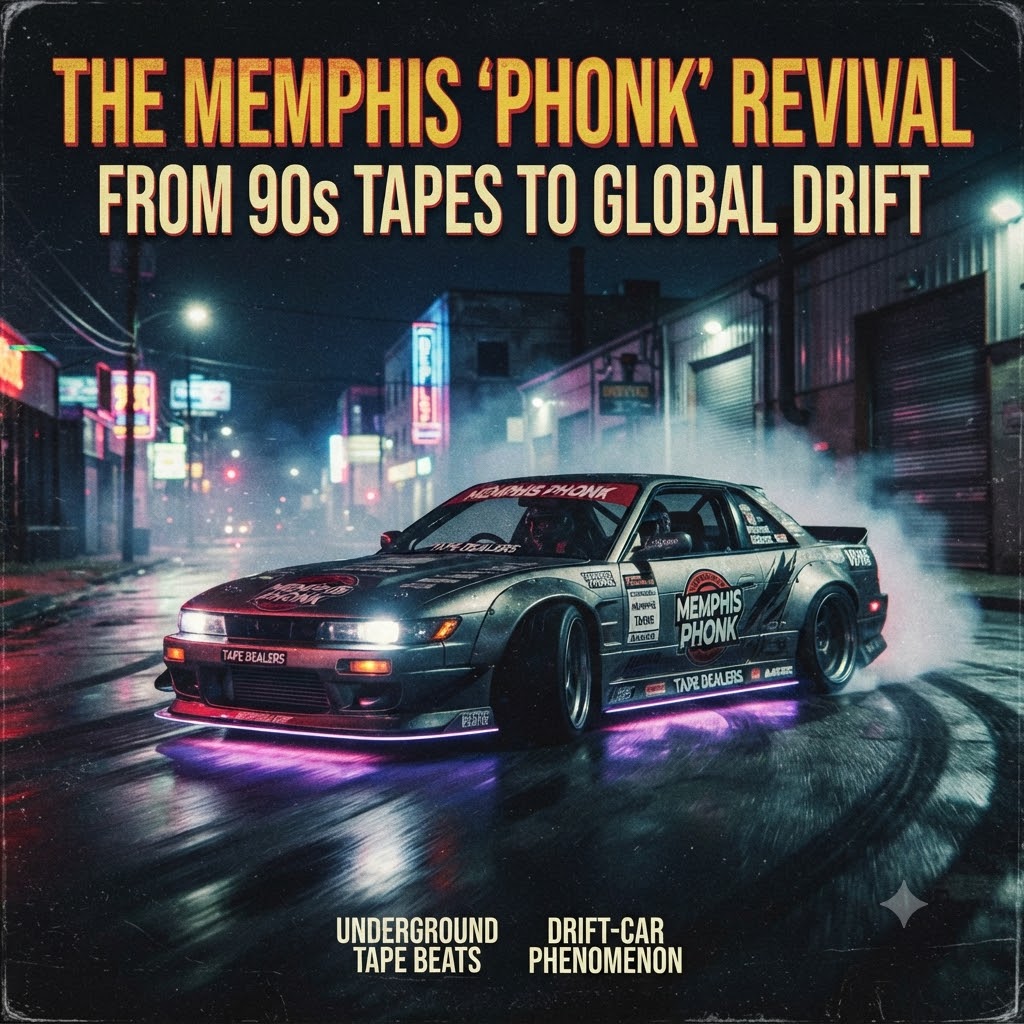
The Memphis “Phonk” Revival: How Drift-Car Culture Turned 1990s Memphis Underground Tape Beats Into a Global Streaming Phenomenon
If you have spent any time scrolling through TikTok, YouTube Shorts, or Spotify algorithmic playlists lately, you have definitely run into it. It is that heavy, driving sound dominated by distorted 808s, haunting vocal clips, aggressive cowbell melodies, and gritty VHS aesthetics.
Welcome to the world of Phonk—and more specifically, its high-octane sibling, Drift Phonk.
If you are just discovering it now, you might think it is a brand-new electronic subgenre cooked up entirely by internet bedroom producers. But the truth is much wilder. The heartbeat of modern Phonk stretches back over thirty years into the humid, underground cassette tape trading scene of 1990s Memphis, Tennessee.
How did gritty, lo-fi southern hip-hop tapes from the mid-90s end up fueling the soundtrack for high-speed Japanese drift cars across the globe? Let us pull back the curtain on the Memphis Phonk revival and look at how an obscure regional sound conquered the internet.
1. What is Memphis Phonk? The Lo-Fi Origins
To understand where Phonk is today, you have to look back at where it started. Back in the early-to-mid 1990s, Memphis hip-hop pioneers like Three 6 Mafia, DJ Paul, Juicy J, Koopsta Knicca, Lil Gin, and Gangsta Pat were building something entirely different from the rest of the hip-hop landscape.
While New York and Los Angeles dominated mainstream rap, Memphis artists were carving out a dark, hypnotic, and menacing style of music. They operated completely outside the major label system. They recorded on cheap 4-track recorders, dual cassette decks, and basic samplers in their bedrooms, basements, and cramped apartments.
Because of that low-budget gear, their music took on a raw, accidental signature:
-
Cassette Saturation: Pushing tape decks past their limits created a warm, fuzzy, lo-fi crunch that you just could not get in a pristine commercial studio.
-
Haunting Vocal Chops: They sampled eerie lines from horror movies, local news clips, and their own earlier tracks, pitching them down so the voices sounded demonic and distressed.
-
Thumping 808s: Heavy, distorted sub-bass lines engineered specifically to rattle the trunk speakers of Chevy Caprices and Monte Carlos cruising down Beale Street.
For years, these tapes were closely guarded secrets. They were traded as physical cassettes among hardcore underground hip-hop heads, eventually finding a digital second life on early internet message boards and obscure SoundCloud archives.
2. The Digital Bridge: How Memphis Tapes Crossed Oceans
For a long time, Memphis rap remained a cult favorite. So how did it explode into a worldwide digital movement?
It started around the mid-2010s when a new wave of internet producers—many of them sitting in bedrooms in Russia, Europe, and South America—started digging deep into digital archives for rare 90s Memphis cassette rips. Producers like SpaceGhostPurrp and his Raider Klan crew in the United States laid the foundational blueprint by mixing Memphis horror-core aesthetics with modern trap.
Soon, international bedroom producers began downloading these grainy vocal hooks and looping them up. But instead of keeping them strictly traditional, they sped them up, layered on sharper drum loops, and introduced a heavy electronic edge.
Before long, localized internet subgenres like House Phonk, Phonk Metal, and eventually Drift Phonk were born.
3. The Marriage of Drift-Car Culture and Phonk
While the musical DNA came straight from the American South, Drift Phonk found its visual and emotional home thousands of miles away in street car culture—specifically, high-speed drifting and JDM (Japanese Domestic Market) vehicles.
Independent creators on YouTube and TikTok began syncing these aggressive, heavily distorted Phonk tracks with adrenaline-pumping footage of Nissan Silvias, Toyota Supras, and Mazda RX-7s sliding sideways through mountain passes and city streets at night.
Why did this combination click so effortlessly? It comes down to a few core elements:
-
Pacing and Adrenaline: The relentless tempo, driving cowbells, and distorted basslines matched the high stakes of burning rubber and snapping handbrakes.
-
A Shared Rebellion: Both underground tape culture and 90s/00s street racing share a raw, DIY, anti-establishment ethos.
-
Algorithmic Magic: The pairing of high-contrast night driving visuals with hard-hitting basslines proved to be the ultimate cheat code for short-form video algorithms.
Tracks like Kordhell’s “Murder in My Mind”, DVRST’s “Close Eyes”, and various anthems by artists like LXST CXNTURY turned Phonk from a niche internet experiment into a multi-billion-stream juggernaut.
4. Why the Memphis Phonk Revival is Here to Stay
It is easy to write off internet micro-genres as temporary fads, but the Phonk movement has staying power. It represents a fundamental shift in how global music communities resurrect and reinvent regional history.
-
Genre-Bending Appeal: Phonk successfully bridges the gap between hip-hop, electronic dance music, industrial soundscapes, and heavy metal, making it adaptable to almost any mood.
-
Fiercely Independent: Much like the original Memphis tape creators, many top Phonk producers operate completely independently. They build massive audiences purely through streaming platforms, social media communities, and creator collaborations rather than traditional radio play.
-
Giving Credit Where It’s Due: While modern drift phonk sounds quite different from a 1993 Three 6 Mafia cassette, this global wave has introduced millions of younger, international listeners to legendary 90s Memphis artists who are finally getting the widespread flowers they deserved decades ago.
Final Thoughts
The journey of Memphis Phonk is a wild one. It traveled from dusty 90s cassette tapes recorded on budget gear in southern bedrooms, crossed digital borders, and ended up blaring out of the exhaust pipes of drift cars in Tokyo and dominating TikTok feeds worldwide. It stands as a testament to the power of digital archiving and unexpected cultural crossover.