The Underground Guide to Securing Local Brand Sponsorships for Your First Independent Tour
You’ve finally locked in the dates. The venue holds are confirmed, your producer just sent over the final master files for the setlist, and you’re staring at a massive, color-coded map of the country with pushpins mapping out your first official independent tour. It’s an incredible milestone. All those late nights in a cramped bedroom studio are finally translating into real-world miles.
Then, you sit down with a calculator and price out reality.
Gas prices are unpredictable. Van rentals require hefty security deposits. Airbnbs add up fast, and you haven’t even accounted for parking tickets, broken drum hardware, or eating something other than gas station hot dogs for three weeks straight. Suddenly, that excitement curdles into quiet panic. How are you actually going to fund this thing?
If you try cold-emailing major corporate brands like Nike, Red Bull, or Spotify right now, your inbox is going to stay dead silent. They want massive impression counts, standardized data sheets, and millions of streams before they even open a pitch deck from an emerging independent artist.
So, what’s the move? You pivot your strategy. Instead of looking at corporate giants, look right out your front window. Your local community is filled with independent businesses that live and breathe counter-culture, streetwear, and music.
Let’s break down how to ditch the generic corporate playbook and pitch local dispensaries, streetwear boutiques, and energy drink startups to fund your tour van, travel expenses, and life on the road.
Why Local Businesses Are the Secret Weapon for Touring Artists
When you’re an indie artist with a dedicated local following, massive brands see too much financial risk. They look at raw metrics and walk away. But local, independent businesses operate entirely differently. They thrive on grassroots marketing, community presence, and genuine street credibility.
Think about the shops you already spend your money at in your home city. Independent dispensaries, boutique clothing stores, local skate shops, and regional beverage startups don’t have massive national television ad budgets. They rely on word-of-mouth, local culture, and being plugged into what’s cool right now.
By partnering with an artist hitting the highway, they get instant, organic exposure across multiple state lines. Their brand is suddenly being talked about in green rooms, shouted out on stages hundreds of miles away, and plastered all over geotagged travel vlogs. In return, they help keep your tank full and your crew fed. It is a textbook symbiotic relationship.
Step 1: Mapping Out Your Targets (Who Actually Cares About Your Tour?)
Don’t just open Google Maps and spam every storefront in a five-mile radius. You need to target specific niches that naturally intersect with music culture, lifestyle branding, and your specific audience demographic.
1. Independent Dispensaries
Cannabis culture and underground music have walked hand-in-hand for decades. Today, modern independent dispensaries are some of the most forward-thinking patrons of local arts, fashion, and counter-culture events. They have dedicated marketing budgets, they understand experiential branding, and their customer base lines up almost identically with modern hip-hop, indie, and alternative music listeners.
2. Streetwear Boutiques and Skate Shops
Local clothing stores and indie labels live and die by hype, community, and aesthetic. Sponsoring a touring artist gives them a living, breathing billboard. Putting their hoodies, hats, and tees on stage night after night captures authentic photo and video content that paid ads can never replicate. It looks organic because it is organic.
3. Regional Beverage Startups and Cold Brew Companies
Independent energy drink brands, local kombucha brewers, and functional beverage startups are constantly hunting for trial and visibility. They need people to taste their product. Supplying a few cases of product for your tour van solves your rider needs while putting their cans directly into your hands, your crew’s hands, and backstage conversations across the country.
Step 2: Crafting a Pitch Deck That Doesn’t Get Ignored
Local business owners are busy, pragmatic people. If you walk into a shop or slide into an Instagram DM with a rambling paragraph about your musical journey, you’re getting left on read. You need a concise, highly visual PDF pitch deck—keep it strictly to three to five pages.
Your deck needs to answer one core question immediately: “What’s in it for the business owner?”
-
The Introduction: Who you are, your sonic lane, and the raw details of your tour (dates, cities, venue capacities).
-
Audience Demographics: Who listens to your music? Brands don’t buy art; they buy access to a specific demographic. Break down your streaming locations, age ranges, and listener habits.
-
Flexible Sponsorship Tiers: Give them options that match different budget levels. For instance:
-
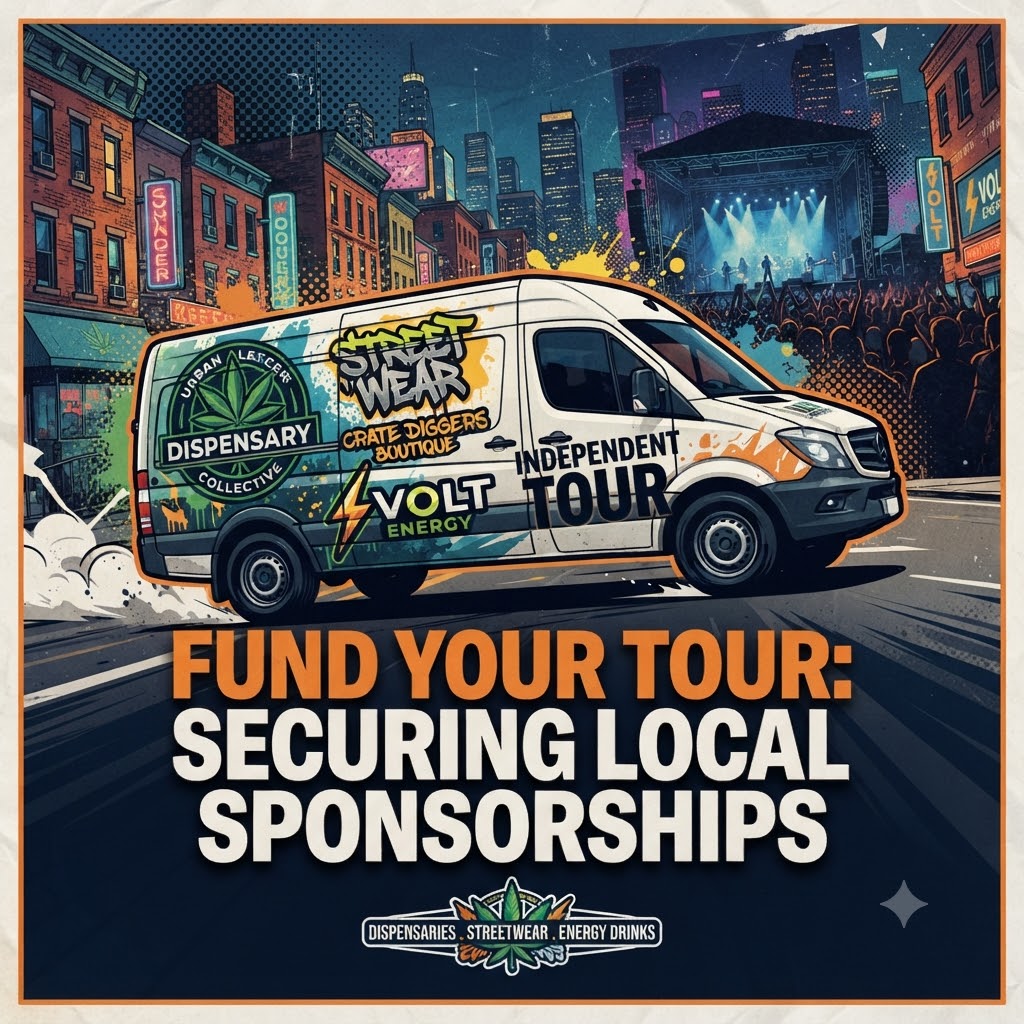
Tier 1 (The Van Wrap/Logo Placement): A small brand logo on your tour vehicle or road case in exchange for gas money or a weekly travel stipend.
-
Tier 2 (Apparel/Product Integration): Wearing their gear on stage and shouting them out online in exchange for free product or travel provisions.
-
Tier 3 (Digital Activation): Dedicated Instagram Reels, TikTok placement, and inclusion in your tour recap video series.
-
Step 3: Securing Media Validation to Prove Your Value
Here is the unfiltered truth about pitching local business owners: They want to know you’re legitimate before they risk their capital on you.
Even if a store owner likes your music, if they Google your artist name and find an empty Instagram page with 300 followers and a dead SoundCloud link from 2021, they’re going to ghost you. They want to see that you take your career seriously, and that means looking for third-party validation.
Corporate and local sponsors require media validation. Obtain published features through our specialized music review service to build your pitch deck.
When you can drop direct links, editorial write-ups, and quotes from established music blogs into a dedicated “Press & Media” section of your pitch deck, the entire dynamic shifts. You instantly stop looking like “just another musician looking for a handout” and start looking like an investable media asset. It builds immediate trust.
Step 4: Hitting the Pavement and Closing the Partnership
Once your pitch deck is polished and your press features are locked in, it’s time to start the outreach process.
For local streetwear shops and dispensaries, don’t rely entirely on email. Walk in during a slow afternoon hour. Ask to speak directly with the marketing manager, store owner, or buyer. Drop off a physical lookbook, introduce yourself warmly, and let them know you’re taking your music out of state and want to represent local businesses from your hometown while you’re on the road.
Be ready to negotiate. If a shop owner is hesitant to hand over cash right out of the gate, offer a hybrid deal. Ask for product to supply your van and gas cards to cover your local leg in exchange for targeted social media content. Once they see the digital return on investment and watch your tour unfold online, renewing or scaling up for the next run becomes an easy conversation.