Justice for Tupac Shakur: Inside Keffe D’s Landmark Murder Conviction After 30 Years of Silence
If you grew up listening to the golden era of hip-hop, or if you’ve spent any time diving down the rabbit hole of music history, you know where you were when you heard about Tupac Shakur. September 1996 feels like a lifetime ago, yet the cultural shockwaves of that fateful night in Las Vegas never truly faded. For nearly thirty years, the murder of one of the most prolific artists the world has ever seen remained an open wound. Rumors swirled, documentaries dissected every second, and fingers pointed in every direction.
Then came the courtroom gavel in Las Vegas.
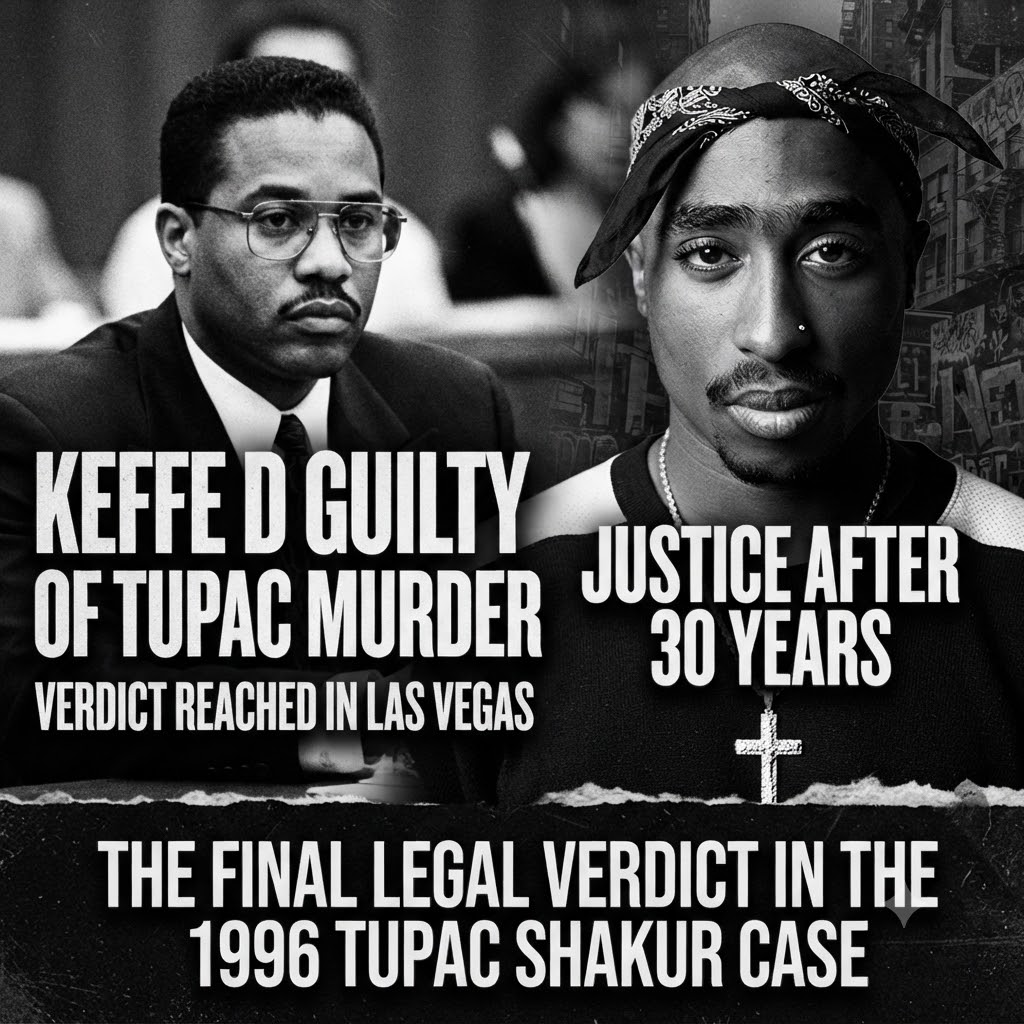
The legal saga finally reached its peak when a jury convicted Duane “Keffe D” Davis of first-degree murder with the use of a deadly weapon for orchestrating the drive-by shooting that took Tupac’s life. It’s a moment hip-hop fans, true crime enthusiasts, and the Shakur family thought they might never see. But how did law enforcement finally crack a case that went cold for decades? And what does this verdict mean for the legacy of the man born Lesane Parish Crooks? Let’s dive deep into the trial, the evidence, and the closure of music’s biggest mystery.
The Verdict That Shook Las Vegas: Closing a 30-Year Mystery
For almost three decades, the prevailing narrative surrounding Tupac’s death was one of frustration. Everyone in the hip-hop community seemed to “know” what happened, but translating street talk into admissible evidence in a court of law proved nearly impossible. Witnesses clammed up, investigators hit dead ends, and the trail went ice cold.
That all changed when a Las Vegas jury spent less than three hours deliberating before reaching a verdict. They found Duane “Keffe D” Davis legally responsible for coordinating the ambush that ended Shakur’s life at just 25 years old.
Now, a common question pops up: If Davis didn’t pull the trigger, how was he convicted of murder? Under Nevada law, an accomplice who orchestrates a crime, procures the weapon, and directs the perpetrators bears the exact same criminal liability as the shooter. Prosecutors didn’t need to prove Davis’s finger was on the gun; they needed to prove he engineered the entire operation. As the last living person who was inside that white Cadillac on the night of September 7, 1996, Davis became the linchpin of the prosecution’s case.
From the Streets to the Courtroom: How Keffe D Talked Himself Into a Cell
The most fascinating—and frankly, most baffling—element of the Keffe D trial is that law enforcement didn’t need a massive, secret whistle-blower network to solve the crime. In many ways, Duane Davis solved it for them by refusing to stay quiet.
For years, Davis operated under a mistaken belief that he was safe from prosecution. He talked openly about the shooting in police interviews, sat down for explosive documentary interviews, and even wrote all about it in his 2019 memoir, Compton Street Legend.
The Motive: Retaliation on the Strip
During the trial, prosecutors laid out a timeline that connected a casino altercation to a fatal shooting. Earlier in the evening on September 7, 1996, Tupac and members of his entourage were involved in a physical fight inside the MGM Grand in Las Vegas with Orlando “Baby Lane” Anderson—who happened to be Keffe D’s nephew.
Rather than letting the incident slide, prosecutors argued that Davis sought revenge. Instead of an impulsive, heat-of-the-moment reaction, the state presented evidence that Davis tracked down a firearm, coordinated with associates, and actively hunted for Shakur’s BMW along the Las Vegas Strip before the fatal shots rang out.
The Defense Strategy: “It Was Just Marketing”
Davis’s defense attorneys tried a high-stakes gamble: they argued that everything Davis said in his book, in interviews, and on podcasts was a work of fiction. They claimed he spun tall tales, exaggerated his role, and sensationalized his past strictly for financial gain, fame, and book sales.
However, the jury didn’t buy it. When you tell the exact same story across multiple platforms, police interrogations, and a published memoir over the span of a decade, it becomes a bit difficult to convince a jury that you were just writing fiction. The core details remained consistent, and those admissions ultimately became the anchor of the state’s case.
The Impact on Hip-Hop Culture and True Crime History
It’s hard to overstate what Tupac Shakur meant—and still means—to music and culture. Albums like All Eyez on Me and The Don Killuminati: The 7 Day Theory defined an era, and his poetic, raw lyricism gave voice to the struggles of marginalized communities. When he was gunned down at the height of his creative powers, it wasn’t just a personal tragedy for his family and friends; it felt like a collective cultural theft.
For generations of fans, the lack of an arrest felt like a glaring injustice. True crime buffs debated the case online for decades, turning every frame of footage and every police leak into a localized conspiracy theory.
Seeing a courtroom finally deliver a guilty verdict changes the tone of the narrative. It shifts the story away from endless speculation and toward accountability. While a prison sentence can’t bring Tupac back, it sends a powerful message that time does not necessarily expire on murder investigations, especially when modern investigative persistence meets a suspect who just couldn’t stop talking.
What Happens Next? Legal Fallout and Final Thoughts
As the dust settles on the trial, the legal process isn’t entirely over. Following his conviction, Duane “Keffe D” Davis faces sentencing, which will likely keep him behind bars for the rest of his natural life given his age and the severity of the charges. Meanwhile, his legal team has indicated plans to appeal the verdict, continuing to argue that the evidence relied too heavily on sensationalized media claims rather than hard, objective proof.
Even with appeals on the horizon, this verdict marks the definitive closing of the most famous unsolved murder mystery in entertainment history. The 30-year shadow hanging over the 1996 drive-by shooting has finally lifted, leaving behind a hard-fought measure of justice.
As we look back at Tupac’s incredible catalog, his activism, and his timeless poetry, we can finally do so knowing that the legal system eventually caught up to the truth.