Inside DJ Khaled’s Mega-Collaboration Playbook: How Cross-Genre Pooling Triggers Streaming Algorithms
If there is one masterclass in modern music marketing, it belongs to DJ Khaled. Year after year, he rolls out massive star-studded projects featuring fifteen, twenty, or sometimes even thirty major artists on a single tracklist. While skeptics often dismiss these projects as chaotic star-stitching, streaming data tells a completely different story.
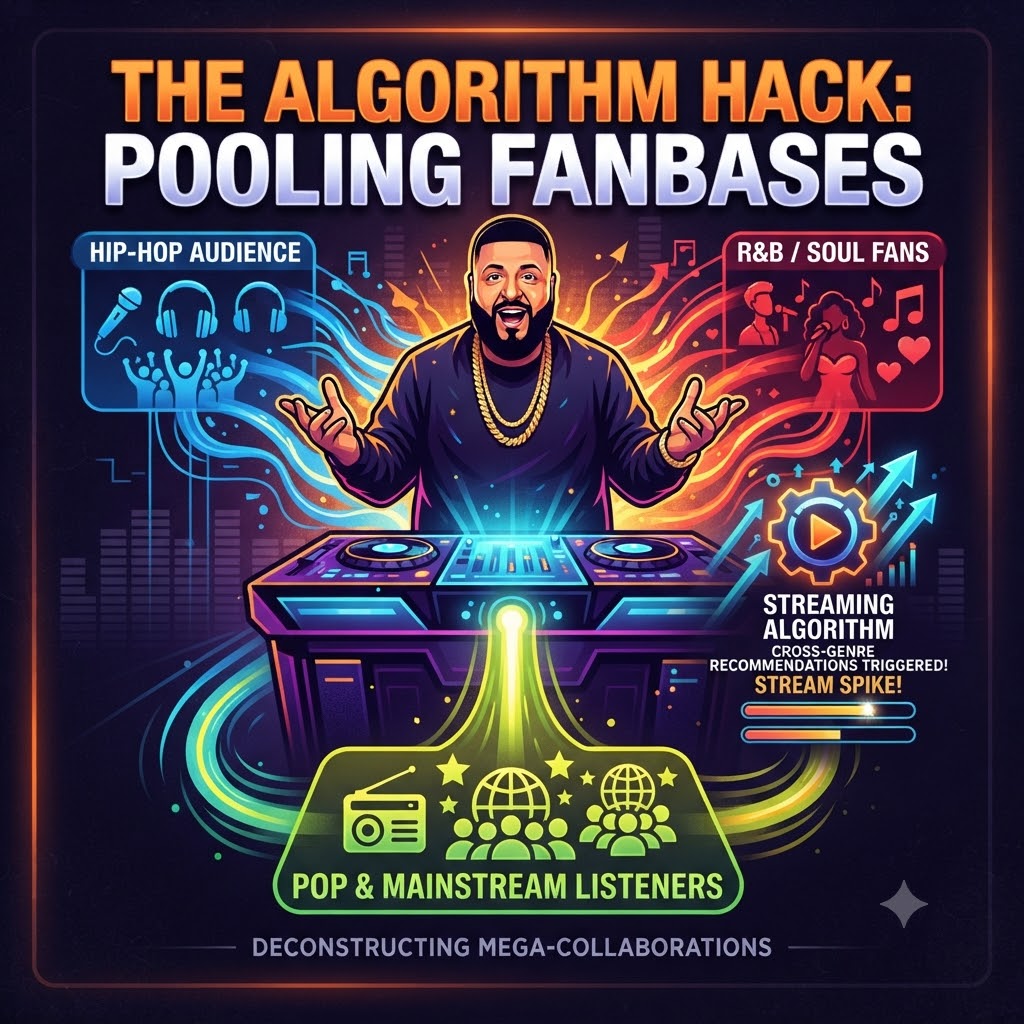
Khaled’s mega-collaborations aren’t just flexes—they are a precision-engineered algorithmic hack. By pooling massive, disparate fanbases onto a single release, he triggers cross-genre recommendation algorithms that blast tracks straight to the top of the charts.
Let’s deconstruct the science behind DJ Khaled’s “Aalam of God” style mega-collaborations, and more importantly, how independent artists can adapt this exact blueprint to supercharge their own streaming metrics.
The Algorithm Code: How Pooling Fanbases Works
Recommendation algorithms on platforms like Spotify, Apple Music, and YouTube are built around collaborative filtering and listener crossover behavior. When a track features multiple heavyweight artists from different corners of the music ecosystem, the algorithm faces an immediate puzzle: Who do we recommend this to?
Instead of putting the track in a box, the algorithm tests it across multiple audiences simultaneously:
-
Multiplying the First-Week Spike: When Artist A, Artist B, and Artist C drop a track together, their individual fanbases are all notified at once. This creates an intense velocity spike in the first 24 to 48 hours—the single most critical window for algorithmic triggers like Release Radar and Discover Weekly.
-
Bridging Genres for Cross-Pollination: If a track merges a gritty rap verse with an R&B hook and a pop-oriented melodic breakdown, the song immediately bridges three distinct audience segments. Listeners who might never have checked out Artist A are now being served the track because they actively stream Artist C.
-
Feeding the Autoplay and Radio Loops: Because the song successfully captures attention across multiple demographic and genre clusters, streaming platforms flag it as “broadly appealing.” Consequently, it gets heavily prioritized in radio loops, genre-blended editorial playlists, and smart-shuffle queues.
Scaling the Strategy: You Don’t Need DJ Khaled’s Rolodex to Win
You might be thinking that’s great for Khaled, but everyday creators don’t have access to global superstars. The truth is, you don’t need Drake or Justin Bieber to execute a multi-artist pooling strategy. Independent artists can scale this exact concept on a micro-level through strategic collaboration:
-
The EP/Album Crew Track: Instead of a solo project where every song relies entirely on your individual marketing push, build a 3-track or 4-track EP featuring local or digital peers.
-
Genre-Bending Synergy: Pair a lyricist with a melodic singer and an alternative producer. Suddenly, you aren’t just marketing to your own followers—you are pulling in three separate listener pools.
-
Co-ordinated Rollout Campaigns: Ensure that all featured artists share release day assets, cross-tag on social media, and update their streaming profiles simultaneously.
Of course, even the best collaboration needs an initial push to get the algorithmic wheels spinning. To maximize feature releases by seeding your collaborative tracks into our curated rap playlists, independent creators often rely on targeted submission networks that guarantee real ears from day one.
Action Plan: How to Structure Your Next Mega-Release
If you are ready to leverage the power of collaborative streaming spikes for your next drop, follow this blueprint:
-
Secure the Right Features: Look for collaborators who share a similar or slightly larger audience size, or those who occupy a complementary micro-genre.
-
Optimize Metadata: Ensure every featured artist is properly credited in the track metadata (Primary Artist, Featured Artist, Producer) so that the release hits the notification feeds of every single fanbase.
-
Targeted Pitching: Submit your tracks to curators who understand genre crossover. Getting your multi-artist track placed in front of active, engaged genre-specific listeners is the catalyst that wakes up the algorithm.