Using Wikipedia Citation Rules to Document Your Indie Rap Discography Over Time
Most independent rappers treat press coverage like a disposable Instagram Story. A blog posts a write-up on Friday, you screenshot the headline, throw a couple of fire emojis over it, post it to your feed, and by Tuesday everyone has moved on to the next release.
That short-term mindset is one of the biggest reasons talented underground artists wake up five years into their careers with dozens of songs on Spotify, a loyal local following, and zero permanent footprint on the open web. If you want to understand how to build press citations for wikipedia artist page eligibility—or simply want to make sure your music history cannot be wiped out by a social media algorithm change—you have to stop looking at PR as launch-week promo and start treating it like archival record-keeping.
Wikipedia is notoriously strict about who gets a page. You cannot buy your way onto the site, and you cannot write a page about yourself using your own Spotify bio, YouTube channel, or press releases. Instead, Wikipedia relies on a paper trail of independent, third-party journalism built slowly over time. Even if getting a Wikipedia page isn’t your immediate goal this year, building your press strategy around Wikipedia’s citation rules is the smartest way to document your discography for the long haul.
Why Wikipedia Doesn’t Care About Your Spotify Numbers
If you have ever looked into how to build press citations for wikipedia artist page approval, you have probably run into two terms that trip up almost every independent musician: Verifiability and Notability.
Wikipedia editors are essentially volunteer librarians. Their job isn’t to decide whether your beats slap or whether your pen game is elite. Their job is to verify facts using sources that have zero financial or personal connection to you. Because of that, Wikipedia draws a hard line between primary sources and secondary sources:
-
What doesn’t count (Primary Sources): Your own website, your DistroKid or TuneCore release pages, Bandcamp liner notes, fan-submitted Genius annotations, your Instagram posts, and any “interview” where you paid a blog to publish answers you wrote yourself.
-
What actually counts (Secondary Sources): Real music journalism written by independent editors, local newspaper features, alt-weekly profiles, and honest album or single reviews where a writer actually listened to your record and critiqued it.
Think about what happens if your entire career lives inside Instagram Reels, TikTok sounds, and streaming playlists. Algorithms change. Accounts get locked. Platforms shut down—just ask any rapper who lost their entire early catalog when DatPiff went offline or when MySpace wiped its servers. Independent journalism, on the other hand, gets indexed by search engines, saved in digital archives, and cited years after a trend dies out.
The Three Types of Citations Every Indie Rapper Needs
You don’t build an encyclopedia-worthy paper trail in a single month. You build it release by release, project by project, so that anyone researching your name sees a clear timeline of growth. Every time you drop a tape, an EP, or an important single, aim to lock in three specific layers of documentation.
1. Independent Album and Single Reviews
When an established hip-hop site or independent music publication writes an actual review of your project, it does heavy lifting for your public record. First, it confirms the basic facts of your release—the title, the drop date, the producers, and the guest features—through an outside voice. Second, it creates a permanent record of how your sound evolved from one project to the next.
Skip the outlets that just copy and paste your press release word-for-word. Editors and researchers look right past “churnalism.” Instead, target publications that actually dissect your production, talk about your delivery, and place your music in context. When you are mapping out your rollout, focus on outlets with real editorial standards so you can build the verifiable digital source trail required for encyclopedic notability via our music review submission page.
2. Local Newspaper and Regional Press Profiles
A lot of independent rappers ignore their hometown newspapers because they think local press isn’t “cool” enough compared to big national hip-hop blogs. In the world of press citations, that is completely backwards.
City newspapers, college papers, and regional alt-weeklies carry massive weight because they have real mastheads, fact-checkers, and copy editors. A 1,200-word feature in your local city paper about how you built a studio in your basement, organized a neighborhood showcase, or recorded a concept album about your side of town is gold. Those local stories establish where you are from, when you started making music, and why you matter to a real community—details that national blogs rarely bother to verify.
3. Clean, Cross-Referenced Discography Databases
Press articles tell your story, but structured databases verify your catalog. Whenever you put out a record, don’t just upload it to your distributor and call it a day. Take an extra thirty minutes to make sure your credits are logged accurately across the databases that music researchers actually check:
-
MusicBrainz and Discogs: Open-source music databases used by archivists, radio stations, and Wikipedia editors to verify release dates, tracklists, vinyl or CD pressings, and producer credits.
-
AllMusic: Still one of the most widely referenced catalog databases on the internet for confirming discographies and album credits.
-
PRO Repertoires (ASCAP, BMI, SESAC) and ISRC Records: Registering your splits and publishing ensures your songwriting and production credits are officially on file.
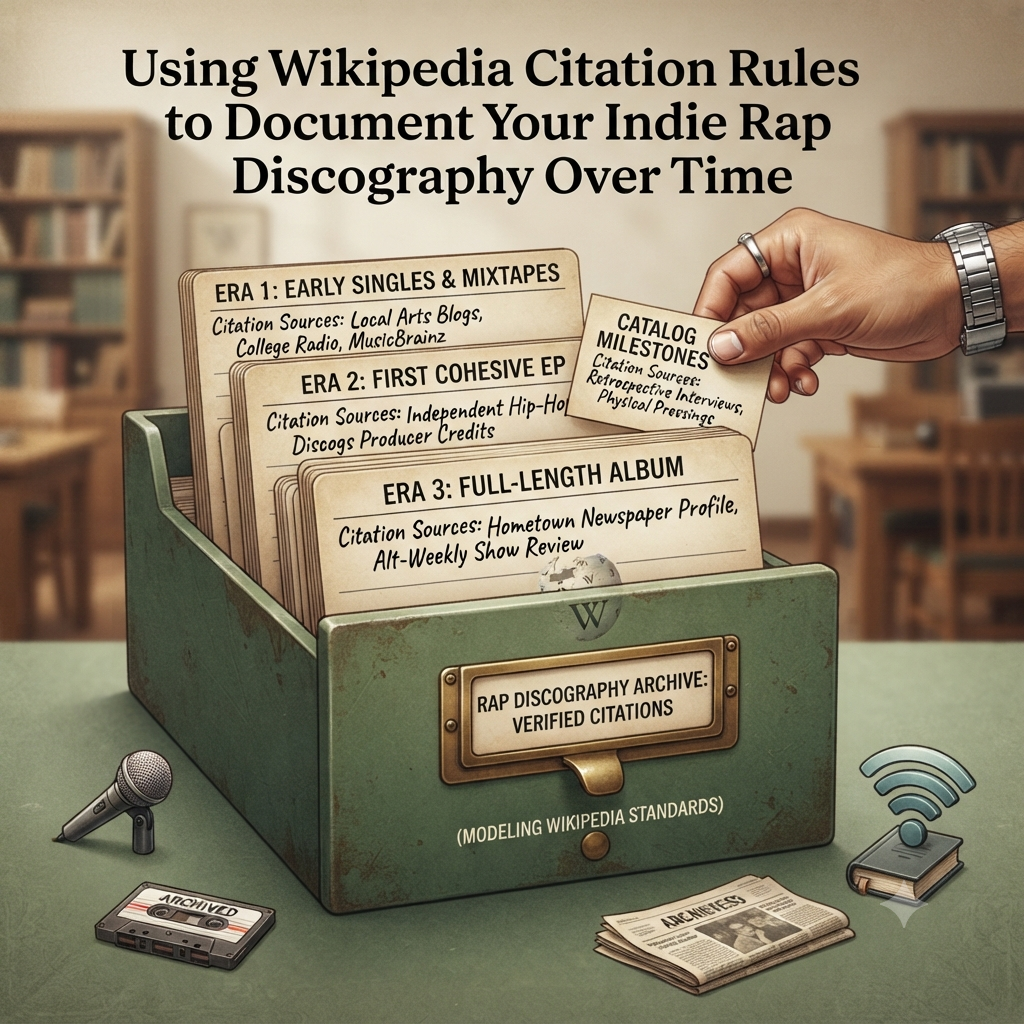
Mapping Your PR Timeline Era by Era
One of the biggest red flags for Wikipedia editors—and for booking agents or label A&Rs doing homework on you—is a career with massive gaps. Having five articles from one random week in 2024 and nothing before or after looks like a paid PR blitz rather than a real career. Notability requires sustained coverage over multiple years.
Four Habits to Keep Your Press Trail Alive
Getting written about is only half the battle. Half the music blogs from ten years ago are gone, taking thousands of great indie rap reviews with them. If you want your citations to last, treat your press clippings with the same care you give your vocal stems and master files:
-
Save Every Article in the Wayback Machine: The day an interview or review goes live, copy the URL and paste it into
web.archive.orgto save a permanent snapshot. If that website ever shuts down or changes its domain name, your archived link still works. -
Keep a Running Press Spreadsheet: Track the publication name, article title, writer’s name, publication date, live link, and archived link for every legitimate piece of coverage you get. Note which song or album each article covers.
-
Give Writers Real Context in Your Pitches: When you email a music journalist, don’t just send a private SoundCloud link and say “check this out.” Tell them where the beat was made, what personal story inspired the second verse, and what changed between this tape and your last one. Writers include better facts when you hand them real details.
-
Separate Paid Promo from Editorial Press: Buying sponsored posts or playlist placements might get you short-term eyeballs, but never mix them up with real editorial coverage. Keep your real journalism in its own dedicated folder.
Tell your personal story without social media gimmicks. Submit your project via our Music Review Portal.
Thinking Beyond the Algorithm
You don’t need to obsess over getting a Wikipedia page tomorrow morning. Most artists don’t meet those strict guidelines until several years—and several projects—into their run.
The real value in learning how to build press citations for wikipedia artist page readiness is that it forces you to take your own legacy seriously right now. When a festival talent buyer, a sync licensing supervisor, or a music journalist searches your name two years from today, they are looking for the exact same thing an encyclopedia editor looks for: proof that real people, real writers, and real communities paid attention to your music over time.
Social media trends expire in forty-eight hours. A well-documented discography backed by real independent journalism stays on the record forever.