The Real Ripple Effect: How the Diddy Federal Trial is Rewriting Major Label Contracts
If you’ve been paying attention to music news lately, you know the headlines around Sean “Diddy” Combs’ federal trial have been nonstop. But while commentators on social media are focused on the courtroom drama, a massive, quiet shift is happening behind the scenes inside major record labels.
Behind closed doors in Los Angeles, New York, and London, legal teams at Universal, Sony, Warner, and top independent distributors aren’t just watching the news—they are panicking.
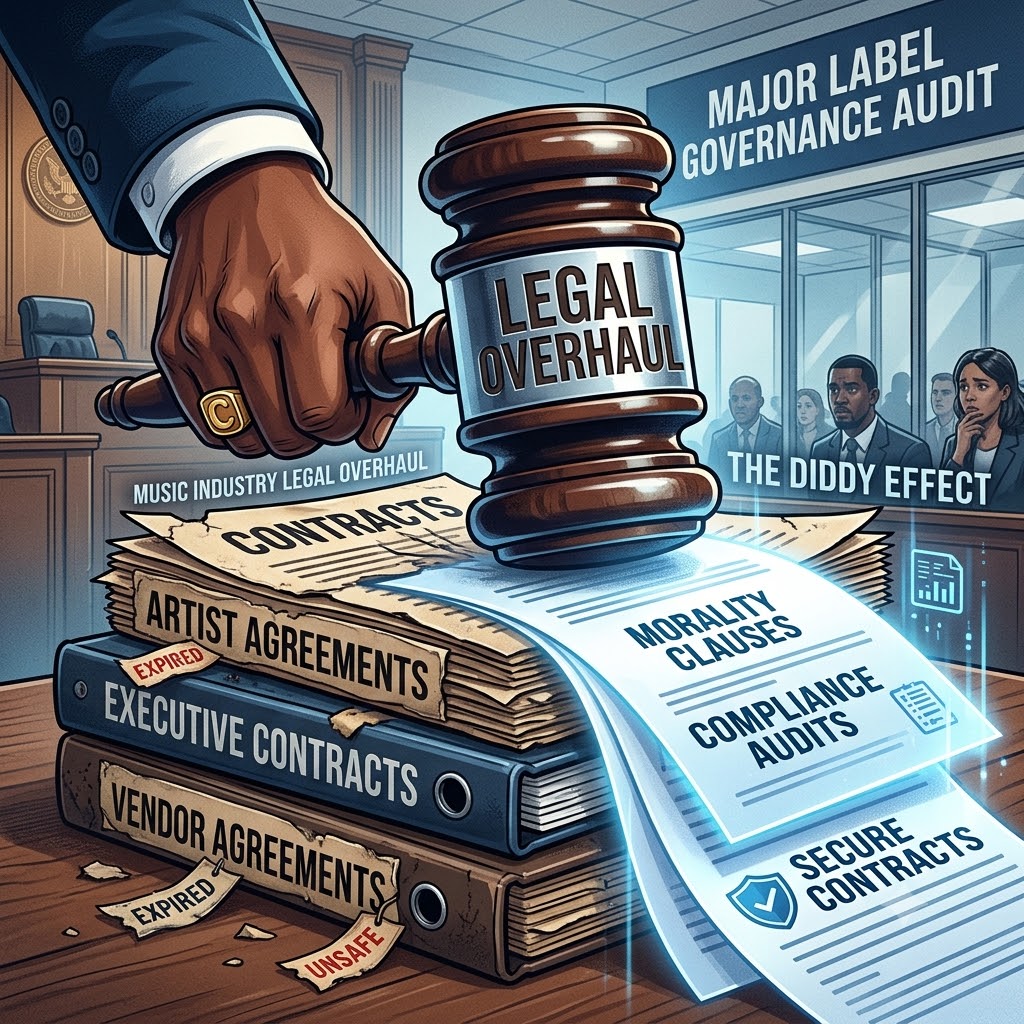
For decades, the music business operated on a “don’t ask, don’t tell” culture regarding executive behavior, wild after-parties, and questionable vendor arrangements. That era is officially dead. The ongoing federal trial developments surrounding Sean “Diddy” Combs are forcing major record labels to audit executive agreements, morality clauses, and vendor contracts across the board.
Here is a deep dive into how corporate music governance is being completely overhauled, what it means for the business, and why independent creators need to pay close attention.
1. The Death of the “Slap-on-the-Wrist” Morality Clause
Historically, morality clauses in artist and executive contracts were treated like fine print. They were broad, vague, and almost never enforced unless someone was actively convicted of a major crime. Most contracts used floppy legal phrasing like “actions bringing public disrepute”—a standard so blurry that corporate lawyers could rarely use it to void a multi-million dollar contract without getting sued themselves.
That has completely changed overnight.
Corporate legal departments are ripping up old boilerplate templates and replacing them with ironclad, zero-tolerance language. Modern executive and high-level artist agreements now feature hyper-specific triggers:
-
Immediate Suspension on Formal Charges: Labels no longer want to wait for a trial verdict. New clauses allow companies to freeze salary, cut access to corporate assets, and suspend contracts the moment a formal indictment or serious federal charge is brought down.
-
Aggressive Financial Clawbacks: If an executive or signed partner breaches ethical or compliance standards, legacy labels are building in legal mechanisms to reclaim past bonuses, unvested equity, and upfront advance payments.
-
Mandatory Behavioral Reporting: High-ranking staff members are now legally obligated to report compliance issues or ethical red flags. Turning a blind eye to an executive’s off-the-clock behavior is no longer just bad ethics—it’s now a contract-breaching offense.
When legacy corporations get caught flat-footed by federal investigations, their immediate defense mechanism is to insulate the parent company. By tightening these clauses, majors are making sure that if an executive or star artist falls, they fall alone.
2. Cleaning House: Third-Party Vendor & Event Audits
A record label isn’t just an office building with talent scouts; it’s an interconnected web of external security firms, event production companies, luxury travel handlers, venue operators, and private talent management groups.
The current legal climate has exposed a massive vulnerability for major brands: third-party liability.
When an off-site event or private gathering associated with a label or its top executive turns into a legal nightmare, the parent corporation often ends up on the hook for civil suits and reputational damage. As a result, corporate risk managers are running brutal audits on every vendor agreement on their books.
What Vendor Contracts Look Like Now:
-
Sky-High Insurance Requirements: Vendors working corporate events, security details, or artist tours are now required to carry significantly higher liability insurance policies to cover potential misconduct claims.
-
Strict Indemnification: Sub-contractors must sign agreements guaranteeing that if legal action arises from their operations, they bear 100% of the financial and legal burden, shielding the label entirely.
-
Background Checks & Vetting: Third-party agencies providing staff, private security, or personal assistants for roster talent are now subjected to intense background checks and compliance vetting before a single invoice gets approved.
-
Instant Termination-for-Cause: Labels are adding language that lets them cancel long-term vendor contracts immediately if the vendor becomes linked to active civil litigation or criminal investigations, without paying early termination fees.
3. What This Means for Independent Artists and Sovereign Businesses
If you’re an independent artist, manager, or boutique label owner looking at all of this corporate restructuring, you might wonder: Why does this matter to me if I’m not signed to a major?
It matters because it highlights a fundamental truth about the traditional music industry: major label infrastructure is designed to protect the institution, not the creator.
When major labels lock down their systems, tighten compliance, and restrict how resources are allocated, independent artists often get caught in the collateral damage. Creative budgets get frozen, distribution deals get delayed by legal review, and corporate executives become risk-averse, favoring cookie-cutter, “safe” releases over innovative art.
This shift proves why retaining complete control over your own career is more important now than ever.
Legacy System                      Sovereign Independent Setup
--------------------------------   -----------------------------------
- Corporate risk control           - Full ownership of master rights
- Vague, trap-heavy contracts      - Direct fan-to-artist revenue
- Tied to executive politics       - Agility & fast campaign rollouts
When you own your masters, publish your own music, and manage your own promotional pipeline, you don’t have to worry about a corporate board locking your project in a vault because an executive involved in your project got named in a court filing.
Building an independent infrastructure doesn’t mean doing everything by yourself—it means partnering with teams that respect your autonomy. You can protect your sovereign business rights while expanding your footprint with our hip-hop promotion packages.
4. The New Architecture of Music Industry Deals
As these legal audits finish rolling through the system, the types of contracts offered to talent moving forward will look radically different. The days of loose, handshake-based joint ventures and unmonitored executive expense accounts are officially over.
Expect to See:
-
Stricter 360 Deal Compliance: Labels taking a cut of touring, merch, and endorsements will now demand oversight over how those external events are staged and managed.
-
Shorter Contract Terms with Frequent Review Gates: Instead of long-term 5-album commitments, labels will favor shorter option periods to assess risk dynamically.
-
Higher Transparency Demands: Both artists and executives will be expected to maintain clean, auditable records for all business expenses, third-party hires, and event logistics.
Ultimately, the overhaul triggered by the Diddy federal trial is a wake-up call for the entire entertainment landscape. The major label apparatus is reinforcing its legal walls to insulate corporate bottom lines. For smart creators, the message is loud and clear: build your own house, safeguard your assets, and run your music business with total transparency and total control.
Ready to Launch Your Next Project on Your Own Terms?
Don’t get stuck in corporate red tape or lose control of your creative output. Build a real, scalable launch campaign with a team dedicated to elevating independent talent.
👉 Launch your project with a full marketing setup on our Artist Submission Portal today!