Future & Travis Scott Skipped Drake’s 40th: What It Means for Hip-Hop’s New Cold War
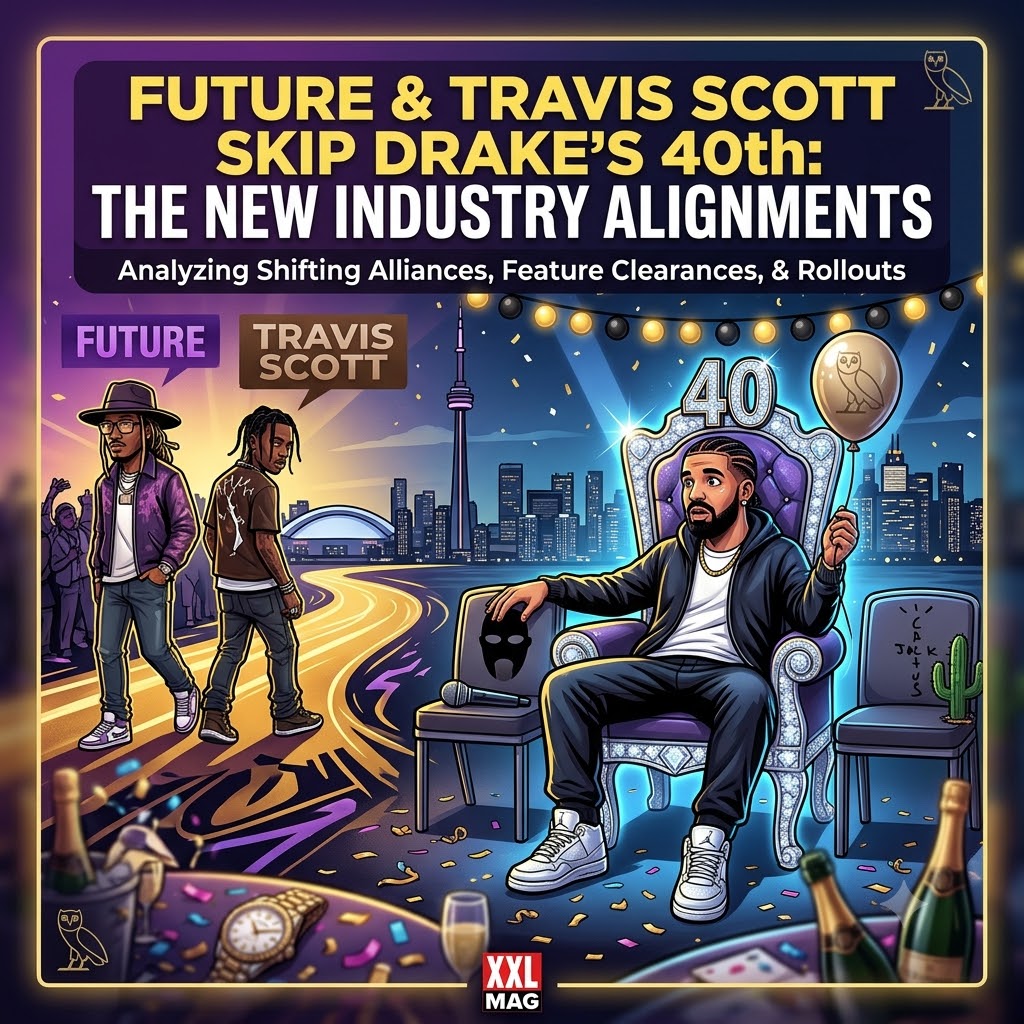
When a rap titan turns 40, the party isn’t just a celebration—it’s a corporate summit and a live map of the industry’s political landscape. So when Drake rented out Toronto to ring in his fourth decade, eyes weren’t just on who pulled up; they were glued to who stayed home.
The biggest talking point following the star-studded weekend? Future and Travis Scott were nowhere to be found.
For years, a missed party in hip-hop meant a missed flight or a scheduling conflict. But in today’s fractured rap ecosystem, where subliminals turn into chart-topping diss tracks and camp lines are drawn in permanent marker, missing Drake’s 40th milestone carries heavy subtext. Industry observers immediately jumped on the absence of two of Drake’s most frequent and lucrative collaborators.
This isn’t just about celebrity drama or hurt feelings. The fallout from these shifting loyalties cuts deep into the business of music, reshaping feature clearance negotiations, altering album rollout strategies, and killing off the collaborative project era as we know it.
From “Life Is Good” to Locked Studio Doors
To understand why Pluto and La Flame skipping the party matters, you have to look at the track record.
For nearly a decade, Drake, Future, and Travis Scott operated as an elite triumvirate atop mainstream hip-hop. Hits like “SICKO MODE,” “Life Is Good,” “Grammys,” and “Meltdown” weren’t just streaming monsters—they were dynamic proof of a mutually beneficial ecosystem. A Drake verse on a Future track guaranteed a Billboard debut; a Travis hook with Drake guaranteed a cultural moment that drove global stadium tours.
They didn’t just share studio space; they shared creative equity and massive commercial crossover power.
When those personal and professional ties sour, the ripple effects spill straight into label boardrooms. The seamless exchange of vocal stems, surprise pop-ups, and rapid-fire clearance approvals that defined rap’s streaming boom is officially over. In its place lies a cold war where paperwork replaces handshakes and guest verses become strategic bargaining chips.
How Shifting Alliances Friction-Test Feature Clearances
On paper, getting a feature cleared sounds simple: two artists agree on a song, their managers text, and the paperwork gets signed. In reality, feature clearances are complex legal transactions involving publishing splits, master rights, label approvals, and competitive release windows.
When artists align with opposing camps or choose to distance themselves publicly, the clearance process instantly becomes a minefield.
1. Weaponized Paperwork and Strategic Delays
In happier times, clearing a high-profile guest verse might take a couple of days. Today, legal departments and management teams use clearance requests as passive-aggressive leverage. A verse can sit in “legal review” indefinitely while release dates pass by, effectively killing a song’s momentum without the featured artist ever having to explicitly say “no.”
2. Publishing Battles and Split Disputes
When goodwill evaporates, so does flexibility over publishing splits. Minor disagreements over who wrote which bar or who produced which section of a beat turn into lengthy legal stalemates. If one camp feels slighted, they can demand inflated performance royalties or master shares, forcing label executives to step in and mediate expensive disputes.
3. Blocked Rollout Windows and Market Cannibalization
Record labels hate competing against themselves. When major artists in rival camps plan rollouts around the same timeframe, the tension reaches peak volume. Artists tied to opposing factions will deliberately anchor release dates to undermine competitors, creating logistical headaches for distributors trying to maximize streaming market share.
The Death of the Megastar Collaborative Album
Remember 2015? When Drake and Future dropped What a Time to Be Alive after spending a single week together in Atlanta, it felt like the future of hip-hop. It signaled an era where top-tier artists could lock in, feed off each other’s energy, and hand fans a full-length classic out of nowhere.
That era is officially in the rearview mirror.
The modern industry landscape has forced producers, engineers, vocalists, and directors to pick sides. When the top 1% of the genre isolates into separate camps, the cross-pollination that kept rap vibrant and unpredictable stops.
Instead of mega-collaborations, we’re seeing:
-
Insulated Creative Bubbles: Top acts are retreating to tight-knit internal rosters, leaning on lesser-known in-house talent rather than reaching across the aisle for marquee features.
-
Calculated Public Distance: High-visibility public appearances—from birthday galas and award shows to surprise festival pop-ups—are now heavily scrutinized. Skipping an event is a low-risk, high-impact way to signal alignment without firing a direct shot in a verse.
-
Fragmented Festival Lineups: Promoters face growing challenges booking multi-headliner festivals, as artist riders increasingly dictate who can and cannot share a backstage area or performance day.
Navigating Career Sovereignty in a Divided Industry
For independent artists and rising acts coming up in this climate, watching the giants clash carries a crucial lesson: relying on traditional gatekeepers or riding the coattails of a single major camp is a high-risk strategy.
When major alliances fracture downstream, artists signed to or associated with a specific clique often find themselves collateral damage. If your entire brand relies on a co-sign from an artist who suddenly falls out of favor with key playlist curators, label heads, or radio programmers, your trajectory stalls overnight.
The modern music economy rewards independence, ownership, and direct fan relationships above all else. Building a career that survives industry politics requires owning your masters, controlling your distribution, and leveraging independent promotion pipelines that don’t depend on major-label diplomacy.
To build a resilient music brand, smart artists focus on maintaining complete independent career sovereignty using our curated artist promotion networks.
🚀 Ready to Scale Your Music Career?
Don’t let industry politics dictate your reach. Convert casual listeners into dedicated superfans and take control of your release strategy. Secure your growth plan with our Artist Submission Services today!
The New Playbook for Independent Success
Whether Future and Travis Scott skipping Drake’s 40th was a subtle line in the sand or just a matter of conflicting schedules, the narrative highlights a fundamental truth about today’s music business: alliances are temporary, but infrastructure is forever.
The artists who dominate the next decade won’t just be the ones with the best hooks or the biggest party invites. They’ll be the ones who understand how to navigate IP ownership, manage their release rollouts strategically, and build sustainable fanbases outside the traditional label machine.
As the mainstream rap landscape continues to divide into competing territories, survival comes down to control. Focus on your craft, secure your business backend, and build an independent engine that keeps moving—no matter who shows up to the party.