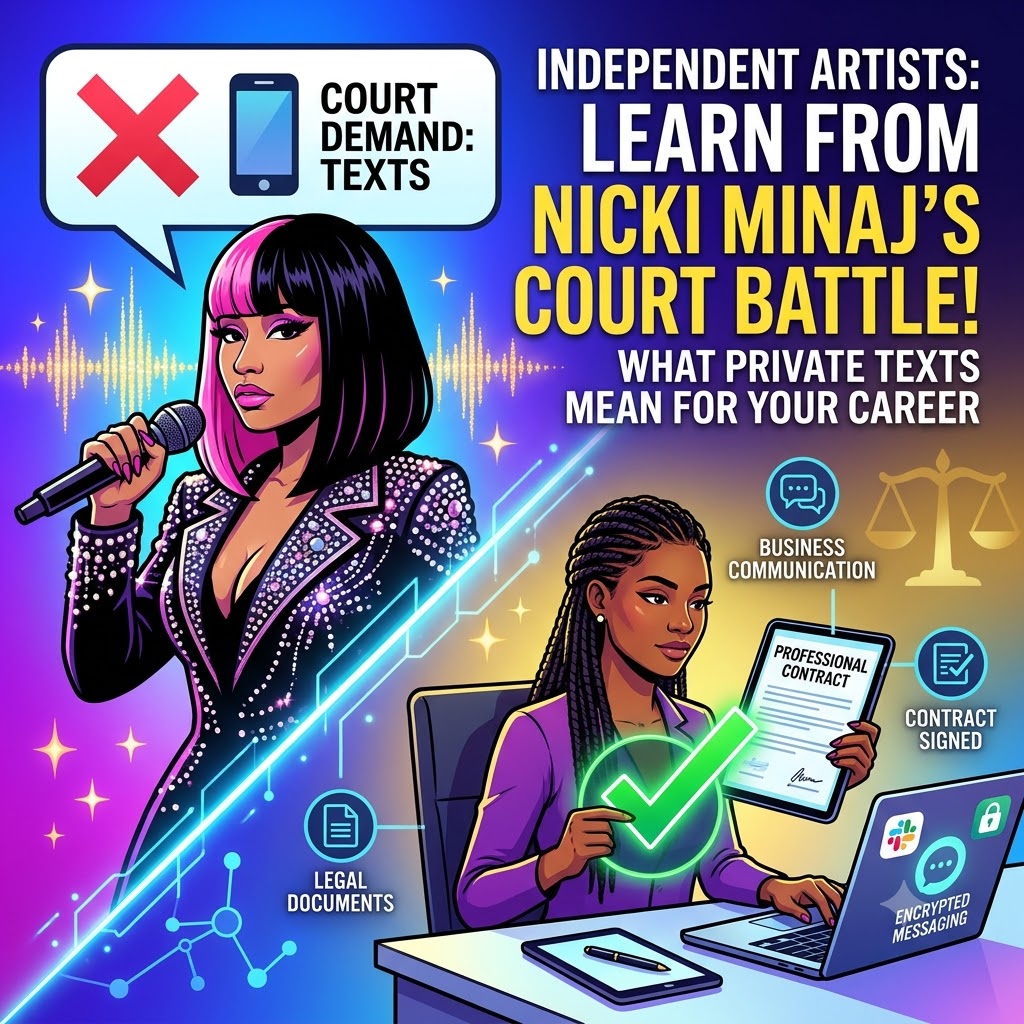
What Independent Artists Can Learn From Nicki Minaj’s Court Battle Over Private Text Messages
The high-stakes legal drama surrounding Nicki Minaj has taken another intense turn, bringing a crucial lesson to the forefront for anyone working in the music industry. In the ongoing battery lawsuit filed by her former assistant, Brandon Garrett, the rap icon is pushing back hard against court demands requiring her to hand over personal text message records. Garrett alleges that a physical altercation took place during his time working for her, but Minaj’s defense team is standing firm against the request, arguing that forcing her to turn over private electronic communications is an unnecessary invasion of privacy.
When a major celebrity hits the news cycle on outlets like TMZ, it is easy to view the situation as pure entertainment gossip. But under the hood, this court battle highlights a massive vulnerability that thousands of independent musicians, producers, managers, and independent label owners face every single day.
When you operate as an independent artist, you are not just a creative—you are the CEO of a business. The way you communicate with your team, structure your working relationships, and protect your personal boundaries can either safeguard your career or leave you open to devastating legal and financial headaches down the road. Here is a deep dive into what Nicki Minaj’s current legal battle teaches us about digital privacy, employment structures, and maintaining total control over your brand narrative.
The Danger of Doing Business Over Text Message
In the modern music business, speed is everything. Moves happen fast, decisions are made on the fly, and the vast majority of day-to-day operations take place inside text threads, group chats, direct messages, and voice notes. It feels natural, quick, and convenient. However, relying on informal text messages for business logistics creates a massive paper trail that can easily be turned against you if a working relationship turns sour.
Texts Are Legal Records
One of the biggest mistakes independent artists make is assuming that private text messages are entirely protected or informal enough to not count as official business documentation. The moment you hire an assistant, a road manager, a sound engineer, or a graphic designer, any text exchange related to work duties, pay rates, hours, or workplace behavior can be subpoenaed during litigation. If a dispute reaches a courtroom, a judge can order you to turn over entire chat logs—exposing personal conversations, offhand remarks, and private details that have nothing to do with the actual case.
Drawing the Line Between Personal and Professional
The easiest way to avoid finding yourself in a position where your personal life is dragged into a legal discovery process is to separate your personal and professional communication channels entirely.
-
Stop using standard SMS for business commands: Keep your personal phone number reserved for family, friends, and trusted personal peers.
-
Adopt dedicated team communication platforms: Use platforms like Slack, Microsoft Teams, or dedicated professional email threads for tour logistics, daily schedules, and work requests.
-
Keep records organized: Formalizing your business communications makes it significantly easier to document what actually happened if a contractor or employee makes an unfounded claim against you later.
Managing Employees and Contractors as an Independent Act
When independent artists start building a team, they usually hire people close to them: friends, peers, or recommendations from acquaintances. Because these relationships often start out casual, standard workplace boundaries are frequently ignored. But as Nicki Minaj’s lawsuit demonstrates, when professional boundaries blur, the resulting legal disputes can become personal, messy, and extremely expensive.
       INFORMAL WORK ENVIRONMENT
(Handshake deals, texting, casual boundaries)
                  │
                  ▼
       RELATIONSHIP BREAKDOWN
(Disagreements over pay, duties, or conduct)
                  │
                  ▼
       LEGAL & DISCOVERY DISPUTES
(Subpoenas for private texts, brand damage)
The Power of Clear Contracts
You should never allow anyone to do work for your music brand without a written agreement. Whether you are hiring a full-time personal assistant or a temporary merchandise seller for a weekend run of shows, clear paperwork establishes expectations and protects both parties.
-
Non-Disclosure Agreements (NDAs): An NDA ensures that team members understand that what happens behind the scenes stays behind the scenes, protecting your personal life and creative secrets.
-
Independent Contractor Agreements: Clearly outline job responsibilities, compensation rates, payment schedules, and exact expectations. This eliminates ambiguity regarding what constitutes work hours or extra duties.
-
Code of Conduct Standards: Setting explicit ground rules for professional behavior on set, in the studio, or on tour prevents misunderstandings and establishes a clear standard for workplace conduct.
Protecting Your Professional Brand Narrative
Legal battles, online drama, and press leaks do serious damage to an artist’s public image. Once headlines take over the narrative, it becomes incredibly difficult for the music itself to remain the center of attention. When booking agents, talent buyers, and record label executives evaluate your act, they look at your overall reputation and professional standing.
Superstars have multi-million-dollar crisis PR teams to handle court filings and press spin. Independent artists do not have that luxury. That is why taking proactive control of your media coverage and building established industry authority before issues ever arise is essential.
When you consistently build a clean, documented, and respected public profile, you ensure that industry gatekeepers view you as a serious professional rather than an amateur act caught up in avoidable noise. A powerful way to reinforce your credibility and secure verified industry coverage is to protect your professional brand narrative through verified editorial reviews on our music review service.
Essential Business Checklist for Growing Artists
To ensure your music career is built on a solid foundation, put these actionable steps into place today:
-
Audit Your Current Communication Systems: Stop conducting business operations through personal SMS threads. Shift all work tasks, scheduling, and payroll discussions to dedicated business email addresses or project management software.
-
Draft Standard Operating Agreements: Work with an entertainment attorney or use verified legal templates to create formal contracts for every assistant, engineer, photographer, and crew member working on your project.
-
Establish Clear Work Boundaries: Keep personal conversations strictly separated from work-related directives to prevent ambiguity if a professional relationship ends.
-
Invest in Professional Media Coverage: Continuously build a strong, positive press archive so that search engine results reflect your artistic achievements rather than rumors or casual commentary.
Gain the Authority Needed to Impress Industry Leaders
Standing out to talent buyers, festival organizers, and label executives requires a verified record of excellence. Gain the authority needed to impress talent buyers and scouts. Submit your release via our Music Review Submission Page.