The DMV “Off-Beat” Flow: How D.C., Maryland, and Virginia Hijacked the Internet’s Algorithm
If you spend even a few minutes scrolling through music TikTok, digging into underground trap playlists, or tracking what’s actually moving the needle in hip-hop, you’re going to run into it.
It hits your ears like a glitch. The rapper sounds like they’re rushing, sliding completely ahead of the snare. The delivery is usually deadpan, almost conversational, and the cadence feels like it’s constantly about to fall off a cliff. Yet somehow, it always catches itself at the absolute last microsecond.
Welcome to the DMV flow.
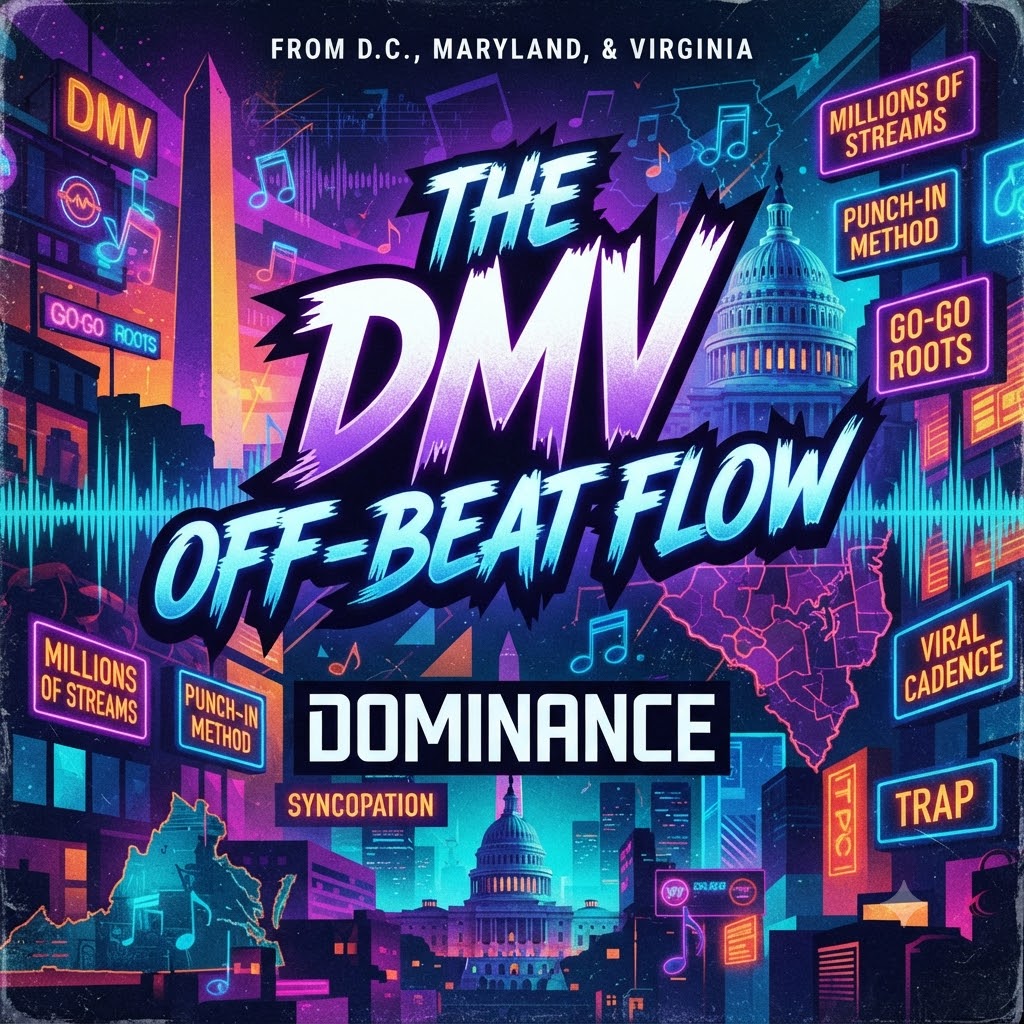
Hailing from Washington, D.C., Maryland, and Virginia, this idiosyncratic, rhythmic-defying style of rapping has quietly exploded from a fiercely guarded regional secret into a global streaming juggernaut. Racking up millions of plays, the DMV sound is proving a major point to the broader industry: you don’t need to ride a standard 4/4 grid to capture mainstream ears anymore. Instead, by leaning hard into an intentionally “off-beat” cadence, artists across the District, PG County, and the broader tri-state area are rewriting the rules of modern rap.
1. What Actually Is the DMV Flow? (Breaking Down the Syncopation)
To someone hearing it for the very first time, a DMV rapper can sound entirely out of pocket. Traditionalists used to dismiss it as sloppy or simply “off-beat.” But anyone who spends time with the culture quickly realizes it’s actually a master-class in aggressive syncopation.
Rather than working against the beat, these artists are playing a rhythmic game of cat-and-mouse with the instrumental. Here are the core ingredients that make up the anatomy of the sound:
-
The Punch-In Method: Forget writing a traditional 16-bar verse in one long, continuous breath. DMV artists heavily lean into rapid, bar-by-bar “punch-ins.” This creates tightly edited verses where every individual line lands with the sharp impact of a jab.
-
The Deadpan Delivery: You won’t find a lot of theatrical screaming, high-pitched whining, or hyper-melodic flexing here. The vocal tone is usually flat, calm, and almost menacingly casual—making the complex rhythm pop even harder against the backing track.
-
Dense Internal Rhymes: To keep the track grounded while the cadence dances all over the place, lyricists pack their lines with rapid-fire internal rhymes. It anchors the chaos.
The net result is a style that feels loose, unpredictable, and raw. It gives you the distinct feeling that the song was made on the spot in a basement studio at 3:00 AM—which, historically speaking, is often exactly how it happened.
2. The Ancestral Roots: Go-Go Funk Meets Minimalist Trap
You can’t talk about modern DMV hip-hop without paying homage to the region’s true musical heartbeat: Go-Go music. Long before trap beats took over car stereos in the District, Go-Go was ruling the streets. Pioneered by legends like Chuck Brown, this native funk subgenre relies heavily on a swinging, rolling percussion style, heavy conga drums, and intense call-and-response crowd participation.
When the modern DMV trap scene (often called “crank music”) started solidifying in the late 2000s and 2010s, local producers and rappers naturally translated that live, swinging pocket into digital production.
They swapped out live drums for sub-heavy 808s, pushed the tempos up (frequently sitting comfortably between 130 and 150 BPM), and built a minimalist, icy sonic aesthetic. Because the beats often leave massive gaps of silence, the rapper’s vocal delivery has to do the heavy lifting of carrying the groove. The off-beat phrasing became the natural tool to fill those empty spaces.
3. From Local Car Speakers to Global Algorithmic Export
For a long time, if you wanted to hear real DMV rap, you had to live there, buy mixtapes out of trunk setups, or catch local SoundCloud links as they floated around the region. The sound was fiercely local and intensely proud of it.
Then came the streaming era, short-form video platforms, and social media algorithms—and everything changed.
Suddenly, the DMV style turned out to be tailor-made for the modern internet. Here is why it took off so heavily online:
-
Instant Soundbites: Because the punch-in style isolates clever bars and eccentric flows, individual lines clip into viral video audio tracks with zero effort.
-
Global Imitation: The sound has officially crossed international borders. Underground scenes from the UK to France have started picking up the signature DMV punch-in cadence, adapting it to their own local languages and sub-genres.
-
A New Class of Heavy-Hitters: Paved by early underground pioneers like Shy Glizzy, Fat Trel, and Rico Nasty, a fresh wave of talent—including artists like Nino Paid, XanMan, and countless others—continues to pull in millions of streams without ever watering down their native regional accent.
4. Why the DMV Sound Wins in a Homogeneous Industry
We live in an era where regional rap borders can easily blur into a single, homogenized global trap sound. With millions of songs dropping on streaming platforms every single week, standing out is harder than ever.
That is precisely why the DMV movement matters so much right now.
It proves that modern listeners—especially younger audiences raised on algorithm-driven discovery—crave texture, quirkiness, and genuine regional identity. They don’t want a cookie-cutter delivery; they want something that sounds human, edgy, and a little dangerous.
By bending traditional time signatures and turning the “off-beat” style into an art form, the DMV has successfully exported its local neighborhood flavor into hip-hop’s most exciting blueprint. Whether you’re a producer looking to inject fresh bounce into your drum patterns or just a fan hunting for the next big wave in rap, one thing is certain: the DMV flow isn’t just a trend. It’s here to stay, and it’s running the algorithm completely on its own terms.