Phonk Rap and the Car Community: Why Drift Videos and Heavy Bass Are Inseparable
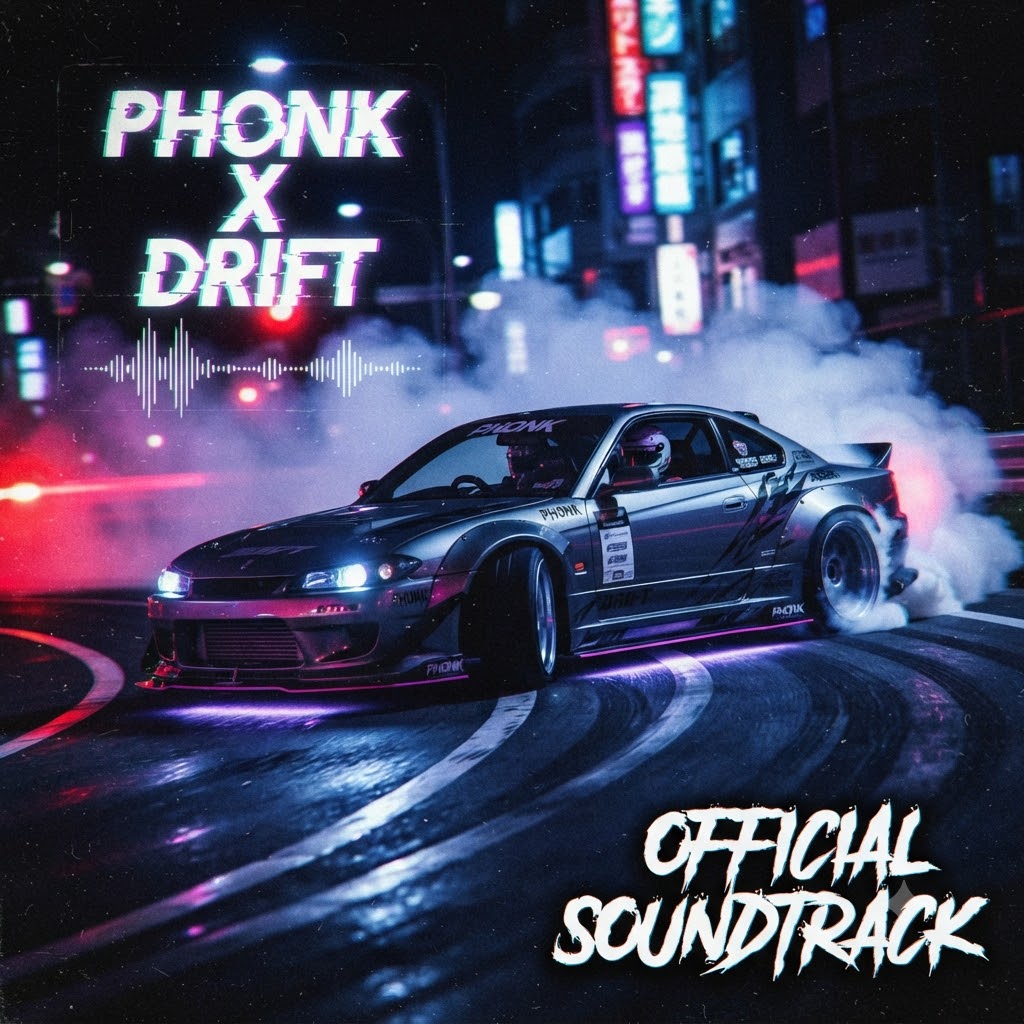
Picture this: You are scrolling through TikTok late at night. The glow of your phone screen lights up a dark room, and suddenly, you are hit with a wave of deep, rattling 808 bass, eerie vocal chops from a forgotten ’90s cassette tape, and a sharp, frantic cowbell rhythm. On screen, a heavily modified Nissan Silvia S15 is sliding sideways through a foggy mountain pass in Japan, tires smoking, sparks flying against the guardrail. The exact millisecond the car snaps into a punishing angle, the beat drops.
If you spend any time on social media, you have seen this video a thousand times. Because this isn’t just a random edit—it is the exact formula that has turned the collision of Phonk rap and car culture into one of the most powerful digital movements of the decade.
For years, automotive media relied on predictable soundtracks. But today, cowbell-heavy Memphis phonk is the undisputed heartbeat of the global car community. How did an underground subgenre of hip-hop become the ultimate companion to high-speed drifting, late-night car meets, and viral short-form video? Let’s take a deep dive under the hood.
The DNA of Phonk: From Memphis Tapes to Modern Car Meets
To understand why Phonk fits car culture like a custom widebody kit, we have to look back at where it came from. Real phonk traces its roots straight back to the mid-1990s underground rap scenes in Memphis, Tennessee. Back then, artists were mixing dark, lo-fi aesthetics, heavy bass, jazzy or eerie synth melodies, and chopped-and-screwed vocal samples, distributing them locally on cassette tapes.
Fast forward to the internet age, and producers on platforms like SoundCloud took that nostalgic, gritty blueprint and supercharged it. Enter Drift Phonk.
Modern drift phonk threw out the rulebook of traditional song structure. Producers cranked up the BPM, beefed up the distortion on the 808 sub-basses, and leaned heavily into aggressive, metallic cowbell melodies.
The result? Sound that feels inherently mechanical. The crisp, rapid-fire strikes of a phonk cowbell sound a lot like a high-revving engine or a rapid gear shift. It mimics the adrenaline-fueled pulse of driving a car right on the edge of traction.
Why Car Culture Adopted Phonk as Its Official Anthem
Car enthusiasts and underground music fans have always shared a similar rebellious ethos. Both communities value customization, DIY culture, and a distinct rejection of mainstream polish. But the marriage between drifting and phonk specifically happened because of how the music behaves in a visual medium.
1. The Ultimate Sync Factor for Video Editors
Drift racing is an art form rooted in split-second physics. It is all about timing, momentum, and control. When video editors started pairing drift clips with phonk, they realized something magical: the sharp transients of a phonk cowbell line up with visual cuts effortlessly.
Whether it is a driver flicking the steering wheel to initiate a drift, a camera flash going off at a roadside car meet, or a turbo spooling up, the heavy beat drops provide a natural narrative punctuation mark. It hooks the viewer’s attention in under two seconds—the holy grail of modern social media algorithms.
2. The Late-Night Aesthetic
Let’s be honest: a huge part of the car community thrives in the dark. Think underground parking garages at 2:00 AM, neon lights reflecting off wet asphalt, and the glow of boost gauges. Phonk music carries that exact same nocturnal, shadowy atmosphere. It doesn’t sound like a sunny day at the beach; it sounds like tearing down an empty highway at midnight.
3. Crossing Language Barriers
Because much of modern drift phonk relies on instrumental wizardry, atmospheric soundscapes, and heavily altered vocal loops rather than standard pop verses, it doesn’t matter where you live. A car builder in Poland, a drift photographer in Los Angeles, and an enthusiast checking out a car show in Tokyo can all feel the exact same energy. The bass speaks a universal language.
The Algorithm Effect: How Viral Edits Built a Massive Loop
It’s a symbiotic relationship that feeds itself. Car creators need high-energy tracks to make their rolling shots and tandem drifts look cinematic, and phonk producers need hyper-engaged audiences to stream their beats.
When a TikTok edit featuring a rare JDM classic hits millions of views, thousands of commenters flood the post asking, “What song is this?”
Suddenly, a niche underground producer who made a beat in their bedroom gets hundreds of thousands of streams overnight. Listeners then take those songs, buy racing simulators, hit up local track days, or build their own drift cars while blasting the exact same playlists. The music shapes the driving, and the driving glorifies the music.
How Independent Artists and Producers Can Ride the Wave
If you are a music producer or hip-hop artist making hard-hitting, bass-heavy tracks, ignoring the automotive community is leaving massive amounts of exposure on the table. Car culture is one of the most organic, passionate promotion machines on the internet.
However, breaking through the noise takes more than just dropping a track on Spotify and hoping a TikTok creator magically finds it. You have to get your music directly into the workflow of active tastemakers, video editors, and music supervisors who curate the underground scenes.
Whether you want to tap into car culture and gym traffic by pushing your Phonk releases to our curated rap playlists, or scale up your overall visibility across active digital communities, putting your work in front of an engaged audience is what turns a hobbyist producer into a breakout name.
Put Your Heavy Bass in the Driver’s Seat
The landscape of music promotion has completely shifted. Fans of heavy bass music don’t just want to sit and listen—they want an experience. They want to feel the kinetic energy of a fast drop, whether they are hitting personal records at the gym, building a project car in the garage, or cruising down the freeway.
Don’t let your best production sit hidden on a hard drive somewhere. Get your tracks circulating where the culture is actually moving.