The Ultimate Guide to Securing Trademark Rights for Your Rap Moniker or Rap Crew: How to Stop Spotify Impostors from Stealing Your Search Traffic
You spent months locking yourself in a cramped home studio or a late-night rented session, meticulously writing verses, fixing cadence, arguing over mix tweaks, and pumping your own money into mastering. Finally, the project is wrapped. You upload it to your distributor, schedule the drop, and wait for the fans to pour in.
Then, reality hits.
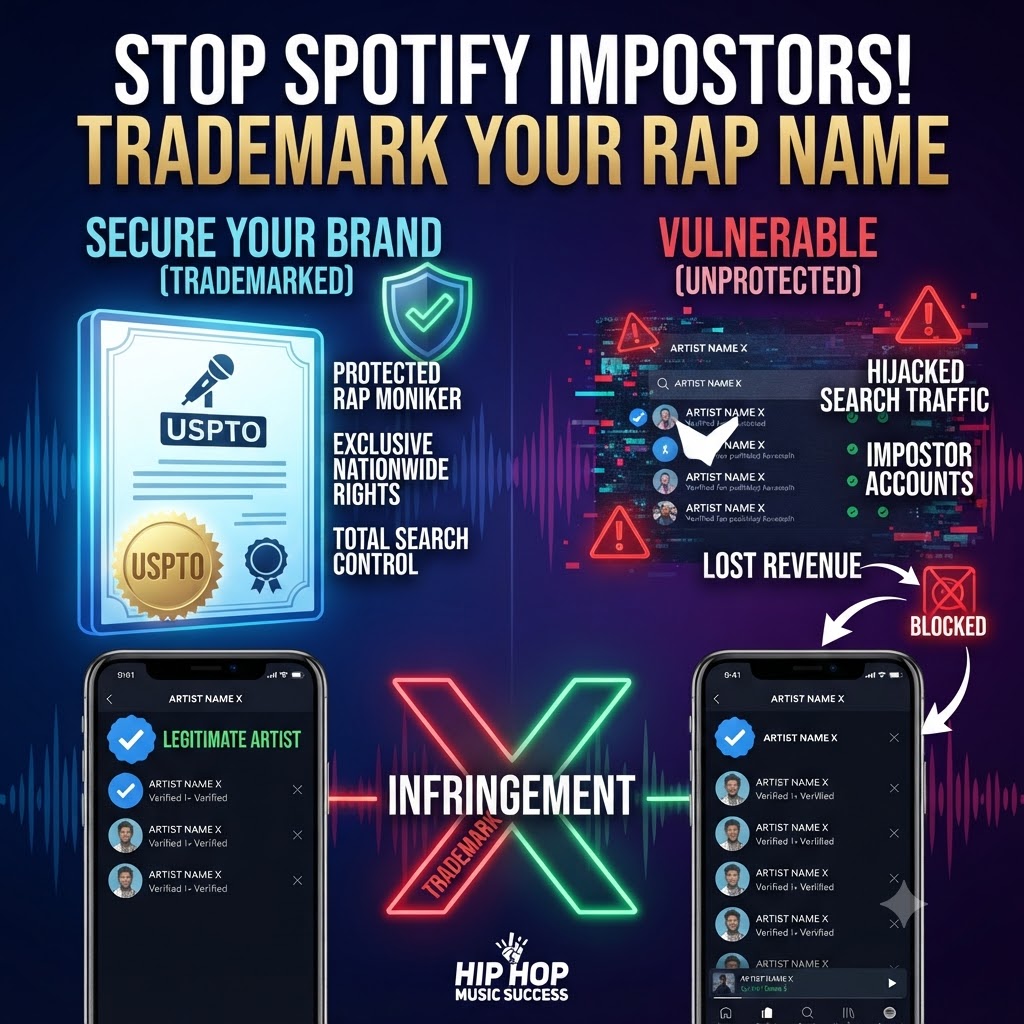
A few weeks after release day, you look at your analytics or check your phone to show a friend your Spotify profile, and something is off. Another artist—someone with a strikingly similar name, a bizarre phonetic spelling of your moniker, or outright the exact same name—is sitting right there in the search suggestions. Sometimes, they are even ranking above you for your own unique search terms.
Fans looking for you accidentally stream them. Your monthly listeners start acting erratic, your release algorithm gets totally confused because the metadata is bleeding into someone else’s catalog, and your hard-earned search traffic is effectively being hijacked by a stranger.
If this sounds like a nightmare, that is because it is. In the modern, hyper-crowded digital streaming era, your rap name or your crew’s moniker isn’t just an artistic handle. It is your intellectual property, your calling card, and the core engine of your brand equity. If you aren’t filing for a USPTO (United States Patent and Trademark Office) trademark, you are basically leaving your front door wide open for copycats, algorithm confusion, and lost revenue.
Let’s break down why this happens, why streaming platforms won’t save you on their own, and how filing a trademark is the ultimate power move to lock down your digital real estate.
The Spotify Search Problem: Why “Good Music” Isn’t Enough to Save Your Name
When listeners open up Spotify, Apple Music, or YouTube Music, they are creatures of habit. They want instant gratification. They open the app, tap the search bar, type your exact rap moniker, and expect your verified profile to pop up immediately at the top of the page.
Unfortunately, streaming platform algorithms do not care about who used the name first in spirit. They care about metadata, upload velocity, streaming volume, and keyword matching. If another independent act—whether they live across the country or across the globe—uploads music under your moniker, the algorithm has to figure out how to sort them. Often, it ends up lumping both of your catalogs together under a single “Combined Artist” profile error, or it splits your traffic right down the middle.
Think about how devastating that is for your career momentum. You run a targeted Instagram ad or drop a heavy TikTok freestyle telling people to go search for your new single. They type your name into Spotify, click the wrong profile because the names match, listen to three seconds of a stranger’s track, and bounce. You paid for that click, you built that hype, but someone else reaped the reward.
The Illusion of Platform Support
When this happens, most artists panic and immediately fire off support tickets to Spotify for Artists or their digital distributor (DistroKid, TuneCore, CD Baby, etc.).
Here is the harsh truth: streaming platforms are tech companies, not courts of law. They deal with thousands of naming disputes every single day. Unless you can wave a legally binding document under their nose proving that you own the commercial rights to that specific trademark, support teams will rarely take aggressive action. They don’t want to get caught in the middle of a civil naming dispute between two independent acts. They will tell you to “resolve it amongst yourselves” while your streams continue to bleed out.
This is where a federal trademark changes the entire dynamic. A USPTO registration acts as an unbreakable shield. It gives you the legal authority to demand that distributors, streaming platforms, and social media networks hand over handles, separate entangled profiles, and remove infringing accounts.
What a USPTO Trademark Actually Does for Your Rap Career
Filing for a federal trademark for your rap moniker or crew name isn’t just about feeding an ego or feeling official. It provides concrete, practical, and career-saving advantages that protect your business from the ground up:
1. Exclusive Nationwide Commercial Ownership
Once your trademark is officially registered, you hold the exclusive legal right to use that name in commerce for musical entertainment, live performances, and merchandise within the United States. If another artist tries to release music or build a brand under your exact moniker after your filing date, they are legally infringing on your territory. You gain the power to issue formal cease-and-desist letters that actually carry legal weight.
2. Streamlined Takedowns on DSPs and Social Media
Platforms like Spotify, Apple Music, TikTok, and Instagram have strict intellectual property reporting portals. If an imposter refuses to budge, having a registered USPTO trademark lets you submit an official IP infringement claim. In most cases, platform legal teams will move swiftly to correct profile mix-ups or terminate infringing accounts once federal registration is verified.
3. Bulletproof Protection for Merch and Touring
Your rap name doesn’t just live on a screen; it lives on hoodies, t-shirts, tour flyers, and physical vinyl records. If your career blows up and you haven’t trademarked your name, another clever entrepreneur could trademark it first and actually sue you for selling your own merch under your own name. Securing the name early ensures that your apparel revenue and touring rights stay safely in your hands.
4. Attracting Investors, Labels, and Sponsors
The music business runs on leverage. Serious investors, booking agents, and brand sponsors do thorough due diligence before putting money behind an independent artist. If your brand name is legally vulnerable or tied up in ownership disputes, they will walk away. A locked-down trademark signals that you treat your rap career like a legitimate corporation.
From Defense to Offense: Building Brand Value Aggressively
Securing your trademark is the ultimate defensive play. It stops the leaks, shuts down copycats, and ensures that every single stream, search, and click you generate actually lands on your profile. But defense alone doesn’t scale a career.
Once your brand name is legally protected, the next logical step is to build its value aggressively through our independent artist campaign services.
Legal protection stops people from stealing your house, but strategic marketing builds the mansion around it. By pairing your new USPTO protection with high-impact playlist pitching, targeted digital PR, and aggressive social media growth campaigns, you ensure that when fans search for your rap moniker, they find an absolute powerhouse of an artist dominating the culture.