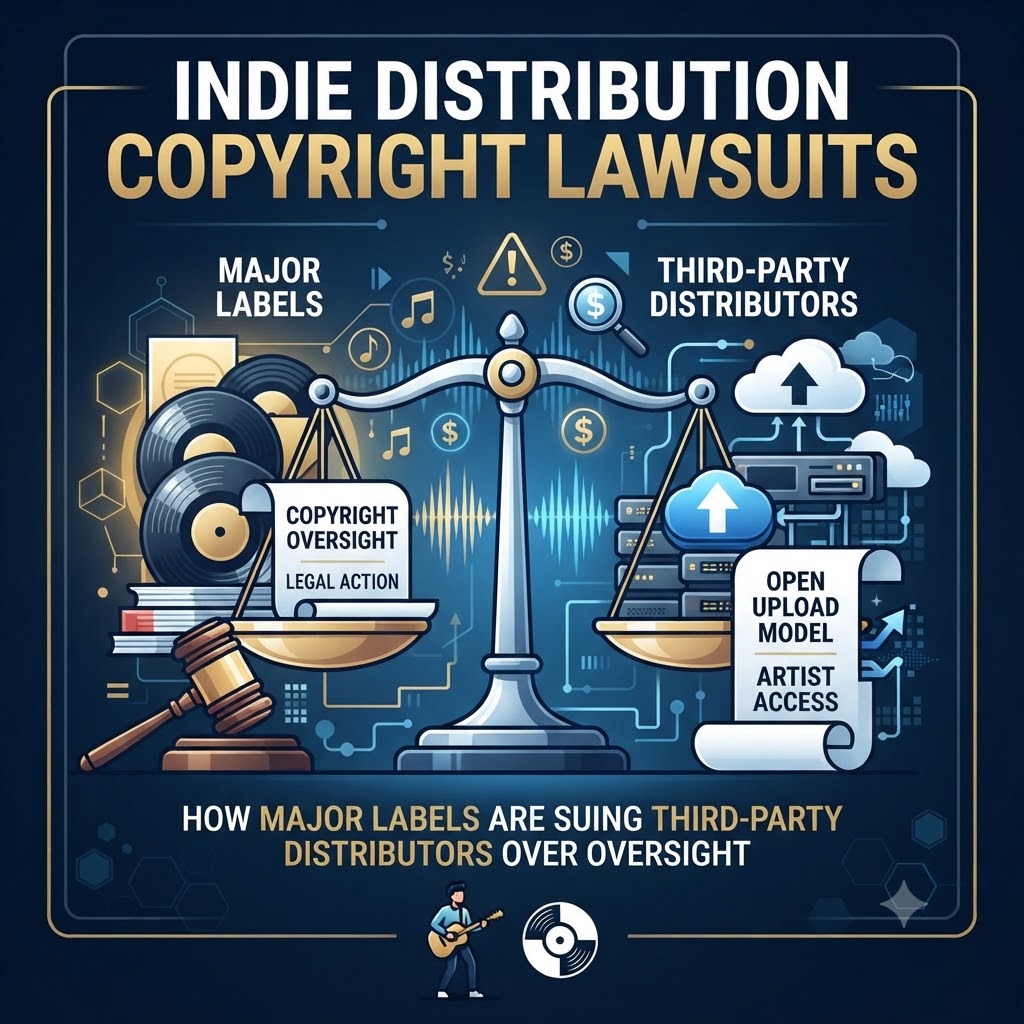
Indie Distribution Copyright Lawsuits: Why Major Labels Are Targeting Third-Party Platforms
The music industry is caught in a massive legal tug-of-war. For years, copyright battles were fought directly between major labels and digital streaming giants like Spotify and Apple, or against obvious, open-market piracy operations.
Lately, though, the courtroom drama has shifted to a completely different target: third-party self-service indie distributors.
With major labels launching aggressive lawsuits against prominent aggregators over copyright oversight, the open-upload model that fueled the indie boom is facing a serious reality check.
From Open-Uploads to Heavy Policing
The whole appeal of self-service music distribution has always been speed and accessibility. For a small fee, any independent artist could drop their audio files, plug in some metadata, and see their music pop up on global streaming platforms within days.
That frictionless setup, however, created a massive loophole. Major music companies argue that some third-party aggregators have essentially become highways for “AI slop,” unauthorized bootlegs, sped-up edits, and outright piracy.
-
The Core Argument: Major labels claim certain distributors turned a blind eye to systemic fraud simply because their business models thrive on sheer volume rather than careful vetting.
-
The Scale of the Chaos: With AI tools allowing millions of tracks to be dumped onto streaming ecosystems daily, distributors are dealing with an overwhelming wave of lookalike audio designed to steal royalties from hardworking creators.
What’s Driving the Legal Shift?
Major label lawsuits and independent counter-suits are forcing third-party distributors to completely rethink how they handle copyright protection:
1. High-Stakes Lawsuits and Settlements
Lawsuits filed by Universal Music Group and other heavy hitters against major aggregators have demanded massive damages. Even when these federal cases wrap up in confidential settlements rather than final court rulings, they set a loud precedent: major labels are ready to use the courts to penalize platforms that don’t catch violations early.
2. The Backlash Over Takedowns
It isn’t just major labels applying pressure. Independent artists and boutique labels are pushing back too, sometimes threatening class-action suits over heavy-handed, automated takedowns. The complaint? Distributors are pulling down legitimate music without offering a clear, human way to dispute the flag.
3. Tighter Gatekeeping at the Upload Stage
To stay out of the courtroom, third-party distributors are ditching passive posting models. Platforms are rolling out stricter audio-fingerprinting technology, aggressive metadata checks, and AI-detection tools right at the upload gate.
What This Means for Independent Artists and Labels
If you’re an independent musician or running a small label, this shift in the distribution landscape changes your day-to-day release strategy:
-
Longer Review Times: Expect delays before your tracks go live. Automated compliance checks mean legitimate tracks with clever samples or minimal arrangements might get held up while algorithms verify ownership.
-
Read the Fine Print: Distribution agreements are tightening up. It’s worth checking your distributor’s exact policies on Content ID, account suspensions, and liability.
-
Clean Metadata is Crucial: Vague artist names, messy producer credits, or mismatched titles will trigger automated red flags designed to stop stream fraud in its tracks.
The Bottom Line
The wild-west era of uploading anything, anywhere, instantly is coming to an end. As major labels force third-party distributors to lock down their systems, the indie distribution pipeline is shifting toward corporate-level compliance. Navigating this new landscape means picking distribution partners that can weed out fraud without punishing genuine creators.