Pre-Saves vs. Countdown Pages: Which One Actually Drives Better Day-One Traffic?
If you have ever dropped music, you already know the drill. That first 24 hours can honestly make or break the entire release. Algorithms are watching, playlist editors are peeking at your numbers, and you are just hoping all those weeks of teasing actually translate to streams.
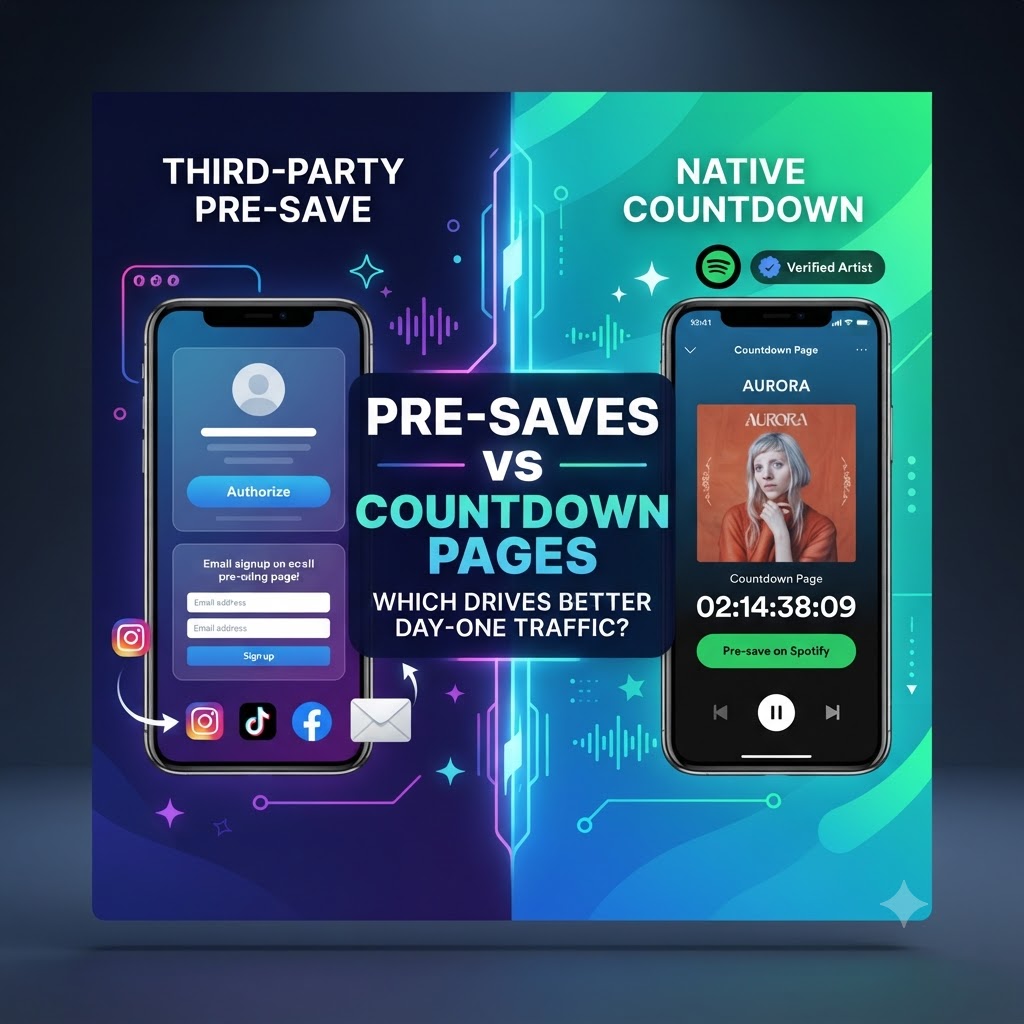
Lately, independent artists have two main ways to build hype before drop day: third-party pre-save links (like Linkfire or Feature.fm) or native countdown pages right inside apps like Spotify.
So, which one actually moves the needle when launch day finally hits? Let us break it down.
The Lowdown on Third-Party Pre-Saves
We have all used them. Someone clicks your link in bio, has to give a third-party app permission, and boom—the track is automatically added to their library on release day.
-
The Good: They are great for building your mailing list. Most of these tools let you capture emails or phone numbers, meaning you actually own that fan relationship. Plus, you get clean analytics on where your clicks are coming from.
-
The Bad: Friction. Every extra step you make a fan take is a chance for them to bounce. If a link forces them to log in, authorize an app, and navigate away from Instagram or TikTok, you are going to lose a chunk of potential listeners right there.
The Reality of Native Countdown Pages
Platforms like Spotify rolled out countdown pages to keep users glued to the app. These are essentially mini-landing pages for your upcoming album or single, complete with a countdown timer, merchandise links, and a simple one-click save button.
-
The Good: Zero friction. A fan sees it in-app, taps once, and they are done. No weird permission screens, no leaving the app. Better yet, Spotify’s algorithm seems to heavily favor artists using these features because it keeps users engaged inside their ecosystem.
-
The Bad: You don’t get the email addresses. The platform keeps that data, and you are locked entirely into whatever streaming ecosystem you are using.
Head-to-Head: What Drives Day-One Velocity?
If your main goal is pure streaming numbers and algorithmic love on day one, the native countdown page takes the crown. Because it lives right where the music gets played, it creates high-intent signals that streaming platforms love. It feeds directly into Release Radar momentum.
That said, if you are playing the long game and want fan ownership, third-party pre-saves are still hard to beat. Collecting direct contact info means you aren’t entirely at the mercy of an app’s feed algorithm next month.
The sweet spot? Don’t pick just one. Most smart artists use native in-app tools to capture the quick streams, while routing fans to email sign-ups through alternative touchpoints.
Making Your Next Drop Count
Getting people to care before a song drops is tough, but marrying the right tech with a solid content rollout changes everything. Make it as easy as possible for your audience to show up when the clock hits zero.
Fuel your day-one release velocity by aligning your launch date with our [Insert Link to Your Tool/Platform].
Drop-Day Action Plan
Stop leaving your streams to chance. Put a real strategy behind your countdown and watch your numbers climb out of the gate.