The two-minute rap track didn’t happen by accident. If you’ve spent any time scrolling through Spotify’s Top 50 lately, you’ve probably noticed that songs are getting noticeably shorter, and hip-hop is leading the charge.
It’s easy to blame shrinking attention spans, but the reality is much more calculated. For artists and producers trying to break through the noise, shorter tracks are a masterclass in playing the streaming game.
Why Shorter Tracks Rule the Charts
-
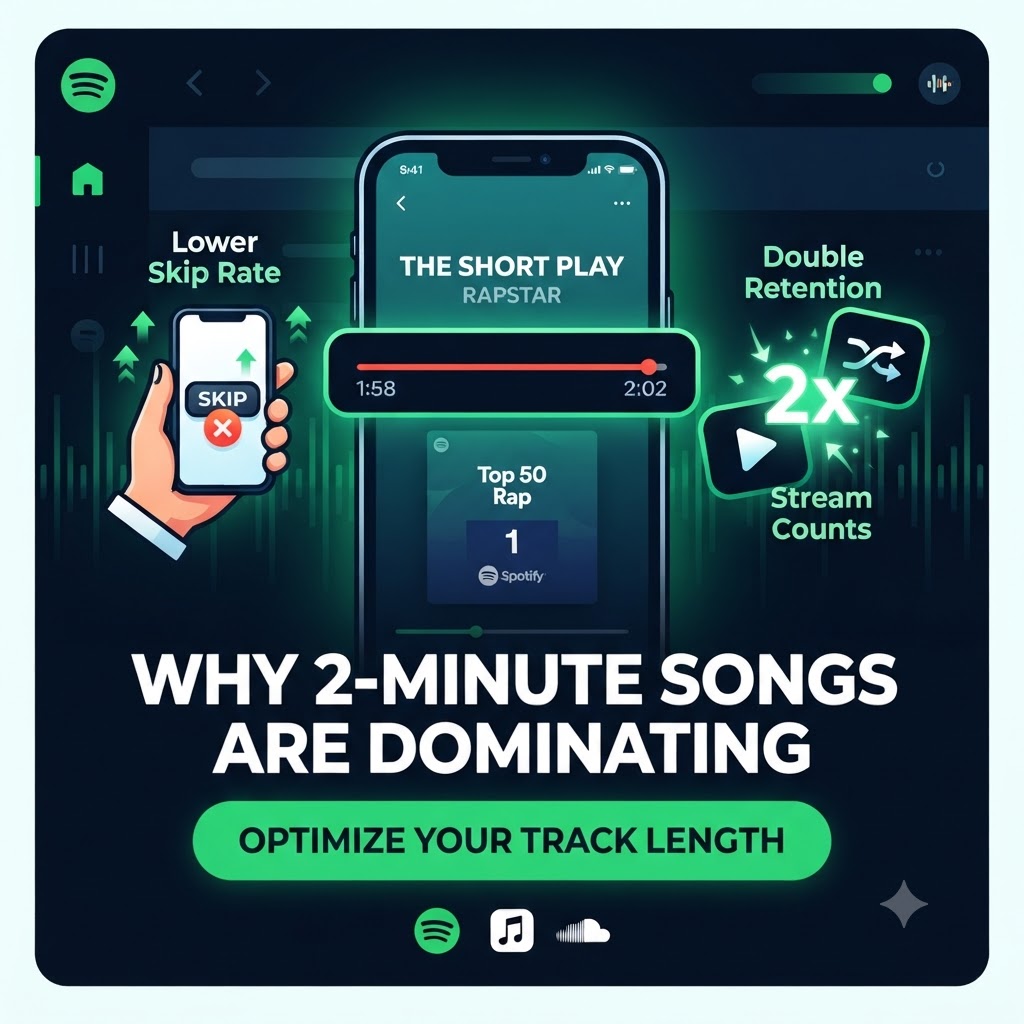
The 30-Second Rule: On Spotify, a stream officially counts the second a listener hits the 30-second mark. Whether a song runs for two minutes or five, that playback registers the exact same way. Condensing a track means fans can easily spin it back for a double play in the same amount of time it used to take to finish one epic track, ultimately driving up stream counts and royalties.
-
Beating the Skip Button: Every extra verse or drawn-out bridge is a new opportunity for a listener to get bored and hit skip. Shorter songs leave virtually zero dead air. By trimming the fat—no long intros, no wandering outros—artists keep the momentum high and the skip rates low, which the algorithm loves.
-
Built for Algorithmic Momentum: Spotify’s recommendation engines reward engagement. When a track has high completion rates and people aren’t skipping it, the algorithm takes notice and starts pushing it into high-traffic playlists like RapCaviar or Lorem.
The Bottom Line
At the end of the day, the modern rap blueprint is all about efficiency. Producers are front-loading the hooks and cutting straight to the point because today’s listeners demand instant impact. It’s a complete shift in how music is consumed—and honestly, if you aren’t adapting to the pacing, you risk getting skipped before the beat even drops.