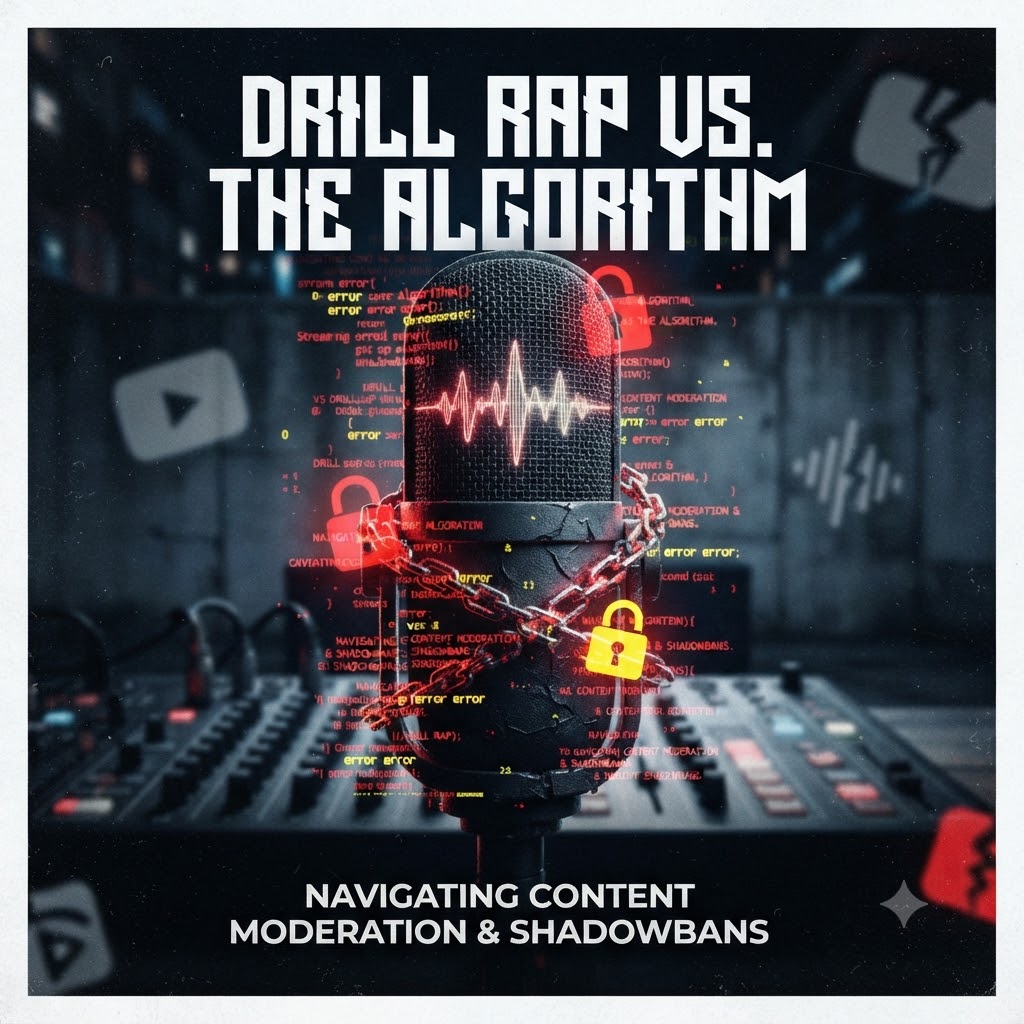
If you’re dropping drill or aggressive rap, you already know the frustration. You spend hours locked in the studio dialing in an 808, put together cold cover art, and push the track live—only for it to hit an invisible wall. Streams immediately stall, the track vanishes from algorithmic discovery feeds, and your momentum flatlines.
Welcome to the headache of modern streaming content moderation.
Because drill is rooted in raw street realities, gritty environments, and intense, unapologetic delivery, automated safety filters often mistake authentic storytelling for policy violations. The result? Shadowbans, quiet age-gating, and restricted distribution across Spotify, Apple Music, YouTube, and TikTok.
The good news is you don’t have to water down your sound or clean up your bars just to stay visible. Getting around these restrictive filters isn’t about changing the music; it’s about being strategic with how you package and drop it.
Here is how drill artists can format their metadata, handle their visuals, and stop algorithmic flags before they kill a release.
1. Clean Up Your Metadata (Without Killing the Vibe)
Platforms rely heavily on text-scanning algorithms to check song titles, album names, artist bios, and lyric transcripts long before a human ears ever hit play.
If your metadata is packed with aggressive keywords, hyper-localized slang, or anything automated filters mistake for threats, you’re looking at an instant age-gate or shadowban. Protect your rollout with these habits:
-
Audit your track and album titles: Keep primary titles clean. Save the hard-hitting statements for your bars, not the metadata fields that trigger automatic reviews.
-
Watch the auto-synced lyrics: Platforms often pull lyrics automatically. If raw, aggressive street slang gets flagged by text-filtering bots, your track can get restricted weeks after it drops. Make sure your official lyric submissions avoid gratuitous trigger words that algorithms are programmed to blacklist.
-
Think of metadata as armor: Optimizing your metadata isn’t about selling out—it’s just playing chess with the algorithm so your actual audience can find the music without the platform burying it.
2. Protect Your Cover Art and Visuals
Visual moderation is just as strict as text parsing. Automated image recognition tools scan cover art, video thumbnails, and profile pictures for weapons, gang signs, or anything that looks like stylized violence.
-
Keep firearms, blades, and hyper-aggressive imagery off your primary Spotify and Apple Music cover art.
-
Save the cinematic, high-intensity visual storytelling for your YouTube videos—where platforms give you a bit more leeway for context—and keep your streaming profile clean to maintain universal green lights from the DSP filters.
3. Build Organic Momentum That Algorithms Can’t Ignore
When an account is dealing with algorithmic suppression, relying on Release Radar or Discover Weekly is an uphill battle. If a platform flags your content as high-risk, spammy promotion or fake stream pushes will only dig a deeper hole and earn you a permanent red flag.
Instead, bypassing restrictive algorithms requires an authentic push. Work with verified partners to build organic momentum without getting flagged. Real listener retention, genuine playlist placements from human curators, and steady, engagement-driven traffic signal to platform algorithms that your music actually matters—forcing the system to lift restrictions and push your work back into rotation.
Final Thoughts
Drill has always been the voice of the streets—a raw, unfiltered medium born from real environments. While tech platforms keep tightening their automated guardrails, you don’t have to let algorithmic over-censorship silence your movement. Play smart with your metadata, protect your visuals, and focus on real growth to keep your music accessible to the fans who actually want to hear it.