If you’re trying to get a Google Knowledge Panel, you already know how frustrating the process can be. You drop a brilliant project, push it out to every streaming platform, and wait for that official verification box to pop up on the right side of the search results.
Most of the time? Crickets.
That clean, authoritative badge doesn’t just hand itself out because you have a distributor or a few thousand monthly listeners. Google’s algorithm is looking for something specific, and it isn’t social media hype. It’s looking for external validation.
Here is the truth about how search engines actually build artist profiles, and why verified written press is the ultimate shortcut to getting recognized.
Why the Algorithm Ignores Self-Published Hype
Google’s Knowledge Graph doesn’t care how many followers you bought or how many automated playlists you landed on. The system operates entirely on consensus and corroboration.
If your digital footprint only consists of links you control—your own Instagram, your Linktree, or your automated Spotify profile—the algorithm sees a closed loop. There’s no outside source vouching for your cultural impact.
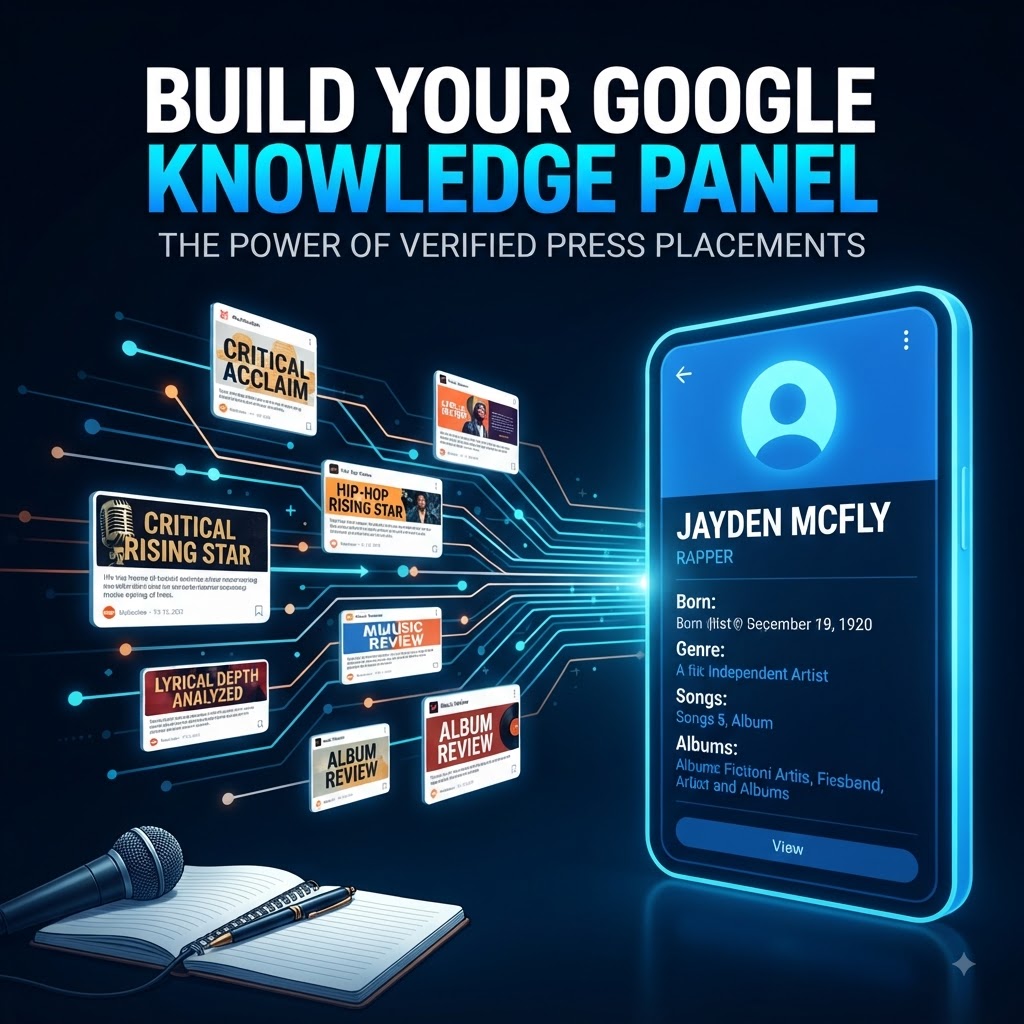
Real music journalism changes that overnight. When an independent publication takes the time to break down your bars, review your mixing, or place your sound in the context of modern hip-hop history, it creates a digital anchor. Search engines crawl that review, recognize your name attached to real-world critique, and start building the verifiable digital source trail required for search indexing with high-quality .
Moving Beyond Automated Noise
Search bots aren’t stupid; they know the difference between a bot-generated press release and an actual human writer digging into an album.
When a real writer covers your work, they inject contextual metadata that automated sites just can’t replicate:
-
Disambiguation: If your artist name happens to overlap with an everyday word, a geographical spot, or an old-school band, a solid press feature helps Google figure out you are the entity it needs to map.
-
Semantic Weight: Editorial write-ups tie your name to specific production styles, regional scenes, and collaborative networks, feeding the Knowledge Graph the exact descriptive text it needs to form your artist bio.
-
Cross-Platform Proof: A legitimate review acts as a bridge between your streaming numbers and your actual cultural footprint, giving the algorithm the green light to connect the dots.
How to Actually Earn Your Panel
You can’t trick the Knowledge Graph into giving you a panel, but you can feed it what it’s starving for:
-
Keep Your Data Clean: Make sure your spelling, project titles, and release dates match everywhere—from your distributor to your press drops.
-
Prioritize Real Press Over Playlists: While streaming numbers are great, algorithms crave narrative text written by real people. Editorial features prove notability in a way numbers alone never can.
-
Let the Web Do the Talking: Once search engines aggregate enough independent, high-value press citations, your official panel will materialize, ready for you to claim and lock down.
Document your music’s place in modern hip-hop history. Order a write-up through our .