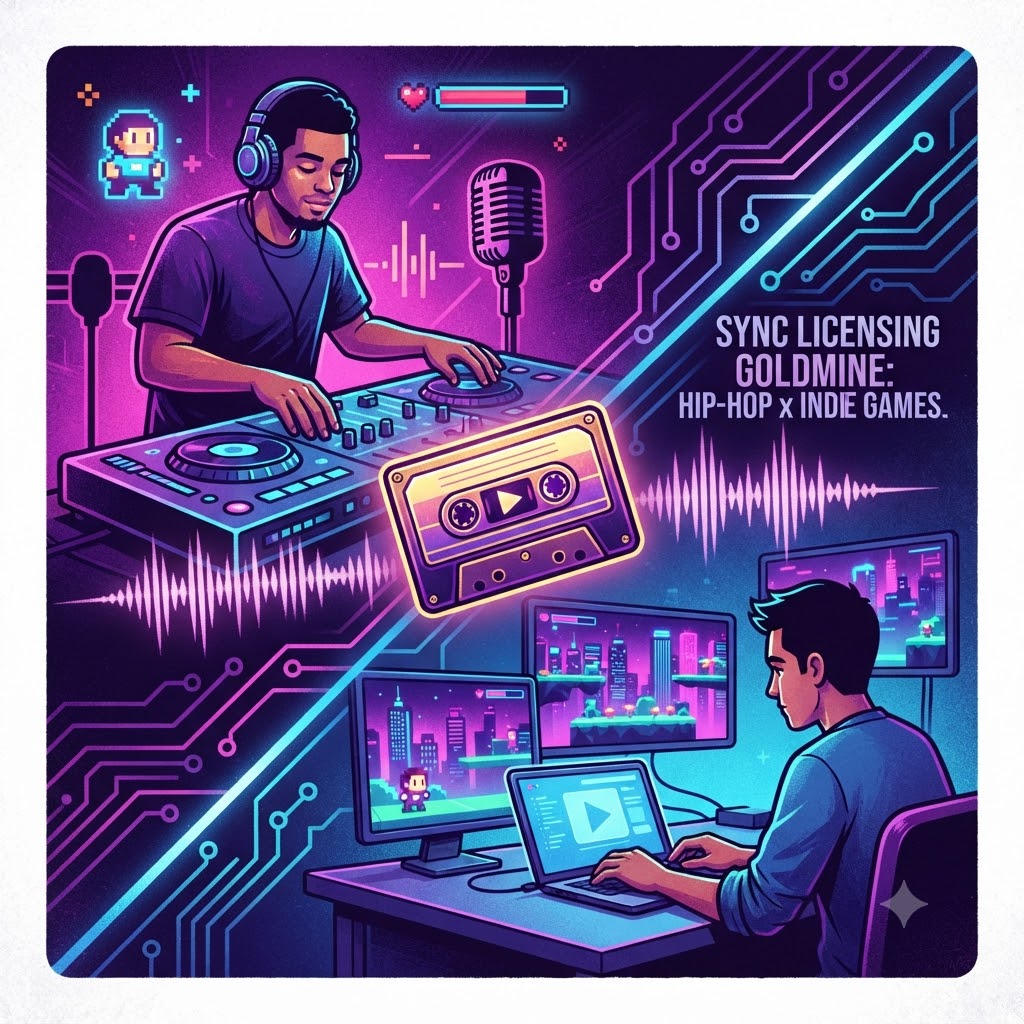
The Sync Licensing Goldmine: Pitching Your Rap Catalog to Indie Video Game Developers
When independent hip-hop artists and producers think about sync licensing, the mind usually jumps straight to Hollywood trailers, Netflix dramas, or high-budget commercial spots. Those traditional avenues are great, but they are also fiercely competitive, locked behind layers of gatekeepers, major-label executives, and endless corporate red tape.
Meanwhile, a massive, highly lucrative revenue source sits right under the radar for most independent creators: the indie video game industry.
If you are a hip-hop producer looking to diversify your income, open up fresh revenue streams, and capture long-term passive royalties, indie gaming soundtracks are a goldmine. Let’s talk about why this sector is an overlooked powerhouse and how you can position your rap catalog to start landing placements.
Why Indie Games Love Hip-Hop
Independent game developers are always trying to set their titles apart from generic, big-studio releases. They want games with real edge, genuine culture, and a distinct pulse. Whether it’s a neon-drenched cyberpunk platformer, a fast-paced urban fighting game, or a moody psychological thriller, underground rap beats provide an unmatched layer of grit and energy that traditional orchestral scores just can’t touch.
Unlike major game studios that rely on predictable corporate asset libraries, indie devs are genuine music fans. They value authenticity and are actively hunting for fresh sounds that resonate with modern gaming communities. Better yet, the decision-making process in indie development moves fast. Instead of pitching through a dozen corporate channels, you are usually dealing directly with the audio director, lead designer, or studio founder.
The Perks: Real Money Meets Cult Exposure
Landing a sync placement in an indie game isn’t just about the upfront synchronization fee (which can range anywhere from a few hundred to several thousand dollars per track). It’s about the cult follower effect.
Gamers are intensely loyal. When an indie game becomes a viral hit on Steam, Twitch, or Itch.io, its soundtrack becomes woven into the player’s experience. People obsess over the music, look up the artists, and stream the tracks on repeat. A single indie game placement can expose your production catalog to thousands of hyper-engaged fans who take pride in discovering underground talent early.
Step 1: Prep Your Catalog for the Grid
Before you pitch a single beat or vocal track, your catalog needs to be technically sound and legally clean. Game developers move fast and operate under tight parameters, so they have zero patience for messy paperwork:
-
Keep it 100% Clearable: If your beat contains an uncleared sample from a vintage soul record, skip it. Game developers can’t risk DMCA strikes or copyright takedowns—especially because their games will be streamed live by hundreds of creators on Twitch and YouTube. Clean master and publishing rights are mandatory.
-
Always Export Instrumentals and Stems: In many games, heavy vocal tracks will clash with in-game dialogue, sound effects, or character voice lines. Always supply clean instrumental mixes, alternate versions, and stems so developers can seamlessly loop or layer your beats into dynamic gameplay sequences.
-
Nail Your Metadata: Sync supervisors and indie devs search databases using precise tags. Make sure your audio files are embedded with accurate metadata: BPM, mood keywords (think aggressive, dark, futuristic, chill), genre, and your direct contact info.
Step 2: Build a Professional Digital Footprint
When an indie dev or sync scout finds your music, they don’t just listen to the beat—they look at the artist behind it. They want to know you are a professional, reliable entity who can execute contracts swiftly and handle administrative requirements without dropping the ball.
Sync licensing supervisors seek verified, active independent brands. Make sure your profile looks professional with our tailored ArtistRack Campaign Services.
When your web presence reflects an active, established enterprise, you eliminate the hesitation that causes indie developers to pass on talented creators.
Ready to Plug In?
The intersection of independent hip-hop and modern gaming culture is expanding faster than ever. By targeting indie studios, tapping into communities on Discord and Itch.io, and formatting your catalog for immediate sync readiness, you can bypass traditional gatekeepers and turn your beats into active digital assets.