The “31-Second Skip Penalty”: How DSP Algorithms Spot Fake Streams and How to Survive Them
If you have released music on Spotify, Apple Music, or Amazon Music recently, you already know the golden rule of streaming royalties: a play counts toward a payout the moment it crosses the 30-second mark. For years, independent artists and marketing agencies treated that 30-second mark like the finish line. Get a user—or a bot—to hold on for 31 seconds, collect the fraction of a cent, and move on to the next track.
That playbook is officially broken.
Digital Service Providers (DSPs) have spent the last few years quietly building far more aggressive fraud-detection algorithms. They aren’t just looking at how many plays your track gets in a day anymore; they are dissecting how people listen. The biggest red flag currently tripping these fraud filters is what industry insiders call the “31-Second Skip Penalty.”
If your music suffers from a sharp drop-off right after the payout threshold, your catalog is on dangerous ground. Here is a deep dive into how these streaming-integrity algorithms work, why your song structure might be triggering fraud filters even if you aren’t buying fake plays, and how to engineer your track intros to keep human ears locked in past the first minute.
What Exactly Is the 31-Second Skip Penalty?
To understand why this penalty exists, you have to look at how click farms and low-tier promo services operate.
When fraudulent playlist curators set up automated bot nets to generate plays, they program those bots for maximum efficiency. Running a stream for three minutes wastes bandwidth and CPU cycles. Instead, bots are coded to play a song for 31 or 32 seconds—just long enough to trigger the royalty calculation—and immediately skip to the next track in the queue.
DSPs quickly caught on to this pattern. They mapped out listener retention curves and realized that organic human listening almost never looks like a cliff edge at second 31.
When anti-fraud systems detect a recurring spike in skips between seconds 31 and 35, the algorithm marks that behavior as artificial stream manipulation. Even if a portion of those skips come from actual people who simply lost interest, the algorithm doesn’t take chances.
What Happens When Your Track Gets Flagged?
The penalties for triggering these filters have become brutal for independent artists:
-
Algorithmic Isolation: Your song is immediately blacklisted from algorithmic placements like Discover Weekly, Release Radar, and Spotify Radio.
-
Royalty Claws and Deductions: DSPs withhold payouts for all flagged plays and can retroactively reclaim money already paid out to your distributor.
-
Catalog Takedowns: Major distributors like DistroKid, TuneCore, and CD Baby receive direct violation notices from DSPs. If your account gets flagged too many times, your entire catalog gets pulled offline.
-
Distributor Fines: DistroKid and other services now pass DSP administrative penalties straight to the artist, charging up to $10 or more per track identified as fraudulent.
Relying on cheap, unvetted promo networks puts your hard work at immediate risk. To protect your catalog and grow your career safely, you need to build clean, high-retention listener data that passes all distributor checks using our independent music promo network.
The Catch: Real Listeners Skip at 30 Seconds, Too
Here is the cruel irony of modern streaming: human attention spans are shorter than ever.
While bots are programmed to skip at 31 seconds, real human listeners make up their minds about a song in roughly 10 to 15 seconds. If your song takes too long to get moving, a real listener will hang on just long enough to see if something interesting happens, realize it isn’t coming, and hit the skip button right around—you guessed it—the 30-second mark.
To an automated integrity filter, a song being skipped at 31 seconds by a bored teenager in Ohio looks almost identical to a song being skipped at 31 seconds by a server farm in Eastern Europe.
If your track features a slow ambient pad, a long spoken-word sample, or a drum-loop intro that drags on for 40 seconds before the vocal kicks in, you are effectively setting a trap for yourself. You are giving real human listeners every reason to skip right at the exact moment the algorithm is watching for fraudulent drop-offs.
Arranging for Retention: How to Keep Listeners Through Minute One
Surviving modern streaming filters requires a shift in how you arrange and produce your tracks. You don’t have to sacrifice your artistic vision, but you do need to respect the listener’s attention span in the first 60 seconds.
If you can hold a listener past the one-minute mark, your completion rate soars, signaling to the DSP that your track is engaging, authentic, and safe to push to wider audiences.
Here are four concrete ways to restructure your intros to maximize first-minute retention:
1. The “Teaser Intro” (Hook ‘Em Early)
The traditional song structure of Intro $\rightarrow$ Verse $\rightarrow$ Pre-Chorus $\rightarrow$ Chorus is a tough sell on modern streaming apps. Instead, try giving the listener a quick taste of the payoff within the first 5 seconds. This could be a 4-bar vocal chop from your chorus, a striking guitar riff, or a high-energy line from your hook. Once the listener knows a great melody is waiting for them, they are far more likely to sit through the verse to hear it in full.
2. Get to the Vocals in 10 Seconds or Less
Unless you are producing cinematic ambient music or long-form deep house, long instrumental intros are a massive risk. Aim to drop your main vocal line or lead melody within the first 10 to 12 seconds. Human brains connect with human voices; establishing that connection early grounds the listener and stops them from browsing for another song.
3. Inject a “Second 25” Attention Reset
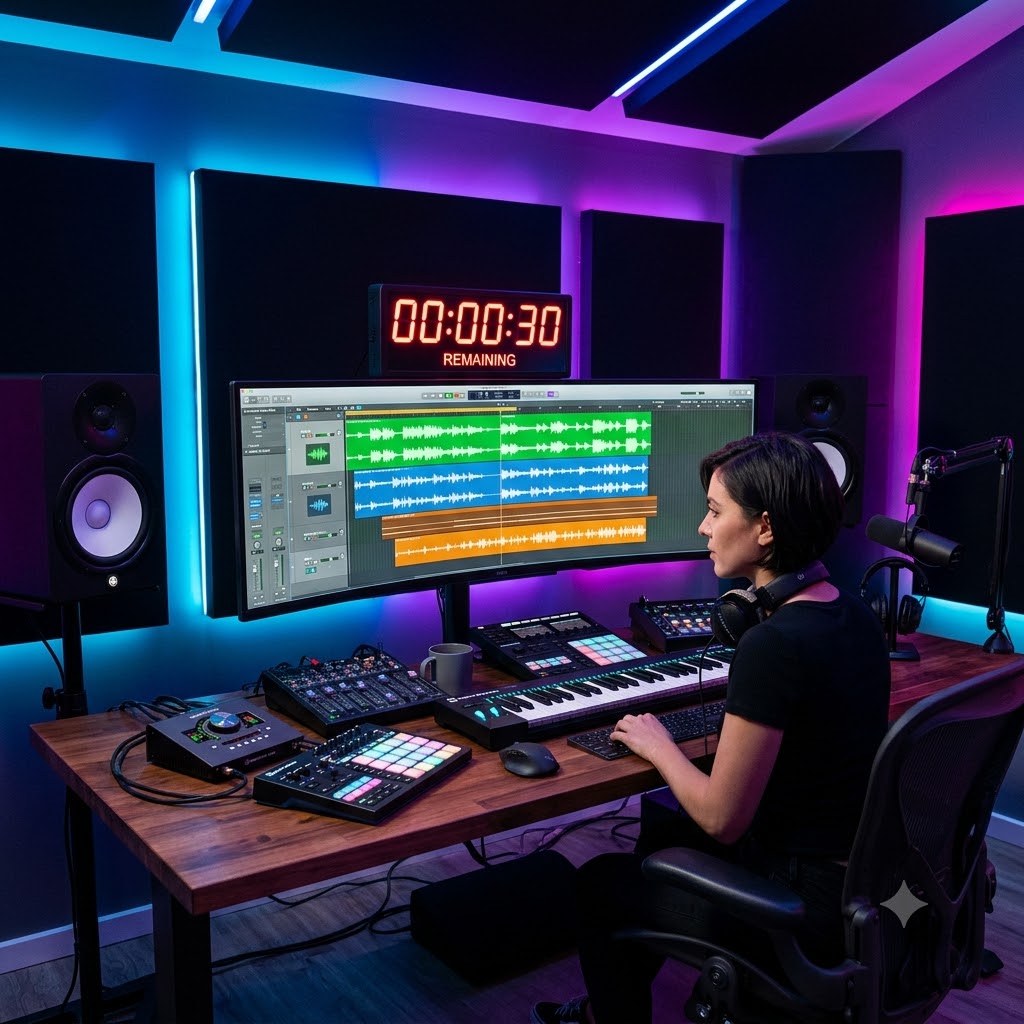
Since the brain naturally wanders around the 20-to-30-second mark, build a sudden shift in energy right at second 25. This doesn’t mean you need a massive drop; it can be as simple as stripping away the drums for two beats, bringing in a new instrument, adding an unexpected vocal effect, or dropping a punchy bassline. This sudden change breaks up the monotony and resets the listener’s focus right before the dangerous 31-second skip window.
4. Fast-Track the First Chorus
Try to hit your first full chorus or main drop between seconds 40 and 50. If your verse drags on past the 60-second mark without a clear shift in dynamics, casual listeners will skip. Reaching the climax of your first section before minute one ensures that the listener gets the full emotional impact of your track early on.
Quality Audience Growth vs. Quick Fixes
At the end of the day, beating the 31-second skip penalty isn’t about pulling fast ones on an algorithm—it’s about respecting how real people consume music today.
Combining sharp, high-retention track arrangements with authentic promotion is the only sustainable path for independent artists. Buying fake plays from questionable sites will destroy your algorithmic standing and risk your distributor account. Focus on making intros that command attention, and partner with promotion channels that put your music in front of real, engaged hip-hop fans who actually listen to the end.
🛡️ Protect Your Music Catalog
Protect your catalog with authentic, human-streamed plays. Send your track to our team via the Music Submission Page.