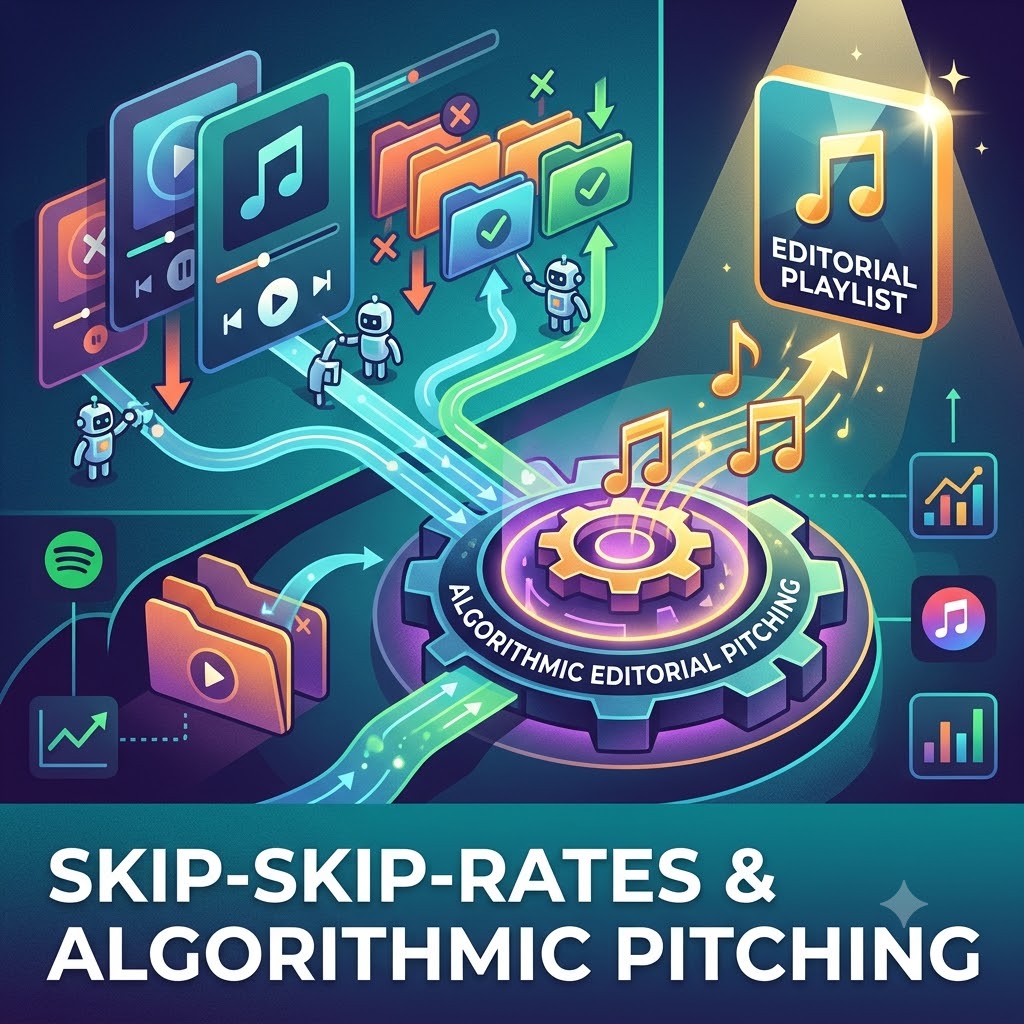
How Skip-Rates on User Playlists Affect Algorithmic Editorial Pitching
Every independent artist knows the dream: waking up on Friday morning, opening Spotify or Apple Music, and seeing their latest single sitting right near the top of a major flagship editorial playlist. It feels like the ultimate validation, not to mention a golden ticket to hundreds of thousands of organic streams.
Because of this dream, artists spend weeks—sometimes months—crafting the perfect pitch through Spotify for Artists or reaching out directly to music curators. But here is the hard truth about modern music distribution: human editors rarely discover new tracks out of nowhere anymore.
Long before a human playlist curator ever glances at your track pitch, automated system algorithms, data scrapers, and predictive recommendation tools have already made up their mind about your song. And one of the most critical factors influencing their decision isn’t your follower count or total stream numbers—it is your skip-rate telemetry inside everyday user playlists.
Understanding how these algorithms track listener behavior behind the scenes can mean the difference between explosive growth and getting lost in the noise.
What Is Skip-Rate Telemetry (and Why Are Algorithms Obsessed With It?)
At its core, skip-rate telemetry is the metric streaming platforms use to track how quickly and how frequently a listener hits the “next track” button when your song starts playing in their queue.
On almost every major streaming platform, listening to less than 30 seconds of a song counts as a skip. But the tracking goes far deeper than a simple binary skip vs. play. Streaming platforms track precise behavioral data, including:
- The 5-Second Drop-off: How many people skip almost instantly upon hearing the intro?
- The Mid-Song Fade: Where in the song do listeners lose interest and hit skip?
- The 30-Second Mark: Did the play count toward monetization, or was it abandoned just short of the threshold?
- Completion Rate: What percentage of users listen to the song all the way to the very last second?
Why do streaming platforms care so much about this? Because their primary business goal is keeping users inside the app for as long as possible.
If an algorithm recommends a song that gets skipped instantly, it creates a poor user experience. If a listener skips three or four tracks in a row, they close the app. Therefore, streaming platforms aggressively penalize songs with high skip rates and reward tracks that keep listeners engaged.
Behind the Curtain: How Automated Scrapers Evaluate User Playlists
A common misconception among artists is that data tracking only happens when a song is placed on official algorithmic feeds like Release Radar or Discover Weekly. In reality, streaming algorithms start monitoring your track the second it goes live, using automated scrapers to analyze how real listeners interact with it on private, user-generated playlists.
When your song gets added to a workout playlist, a personal driving mix, or a niche indie playlist, the platform’s scrapers immediately start gathering telemetry. Here is how that process unfolds:
1. The Micro-Testing Stage
Before pitching your track to a broader audience, the platform runs silent micro-tests. It introduces your song into small algorithmic queues or monitors how it performs when added to organic user playlists.
If 100 people encounter your song across various personal playlists and 80 of them let it play past the 30-second mark, the algorithm flags your track as high-retention content.
2. Signal Amplification and Categorization
As your song maintains a low skip rate, the scrapers analyze who is listening to it. What other artists are in those user playlists? What genres or sub-genres are present?
By analyzing high-retention user playlists, the system creates an accurate listener profile for your music. It now knows exactly which audience segment is least likely to skip your track.
3. Feeding Editorial Curation Dashboards
When human playlist editors sit down to curate flagship playlists, they don’t manually listen to tens of thousands of submissions. They look at internal analytics dashboards populated by algorithmic recommendation engines.
These dashboards rank submitted and trending tracks based on engagement scores—specifically completion rates, save rates, and low skip telemetry. If your song has built a track record of low skip rates on user playlists, it automatically bubbles up to the top of the editor’s radar.
The Trap of Cheap Playlist Promotion
This algorithmic reality explains why so many fake or low-quality playlist promotion services ruin an artist’s long-term algorithmic reach.
When you pay a questionable promotion service to add your track to a playlist with 50,000 “followers,” those plays often come from click farms, inactive accounts, or listeners who have the playlist running as low-quality background noise.
Here is what happens to your telemetry when you use low-quality playlisting:
- Massive Skip Spikes: Real users who stumble across a mismatched playlist will instantly skip your song if it doesn’t fit the vibe they expected.
- Damaged Algorithmic Score: The streaming platform records hundreds or thousands of early skips, signaling to the backend algorithm that your song is unengaging.
- Loss of Editorial Viability: Even if your stream count jumps from 1,000 to 50,000 overnight, the algorithm flags the underlying data as low quality. When an editor looks at your track’s backend performance, they see a 75% skip rate and move on to the next submission.
To build long-term momentum that catches the eye of major platforms, you must focus on real, targeted promotion that reaches authentic fans. Choosing quality over raw quantity allows you to build high-retention listener histories that catch curator attention with our independent rap playlist campaigns.
Actionable Strategies to Keep Your Skip Rates Low
If retention is the key to triggering algorithmic growth and editorial pitches, how do you actually lower your skip rates? Here are practical, actionable techniques you can apply to your music and promotion strategy today:
1. Optimize Your Intros for Modern Attention Spans
You don’t have to compromise your artistic vision, but you do need to respect how modern audiences listen to music. Long, quiet intros or drawn-out ambient soundscapes invite listeners to hit the skip button before the song even starts. Get to the core vibe, vocal, or hook of the track within the first 5 to 10 seconds.
2. Laser-Target Your Promotion
Never push your music to playlists or audiences that don’t match your exact sub-genre. If you make melodic hip-hop, getting placed on a boom-bap playlist will result in immediate skips from purists looking for a specific sound. Highly targeted placements yield dramatically lower skip rates.
3. Study Your Artist Analytics
Both Spotify for Artists and Apple Music for Artists offer detailed listener retention insights. Look at where listeners are dropping off. Are they saving your track to their personal library? A high save-to-stream ratio alongside a low skip rate is the ultimate green flag for recommendation algorithms.
🚀 Ready to Elevate Your Telemetry?
Stop chasing hollow stream counts and start building meaningful algorithmic momentum. Build clean, low-skip listener analytics. Schedule your push on the Music Submission Portal.
Final Thoughts: Quality Signals Win the Long Game
In today’s streaming climate, inflated stream counts are a vanity metric. What truly powers modern music discovery is engagement depth.
When you focus on acquiring high-retention plays from dedicated listeners, every add to a personal user playlist becomes a building block for future success. By keeping your skip rates low and your listener retention high, you give automated scrapers and human editors every reason to push your music to the masses.