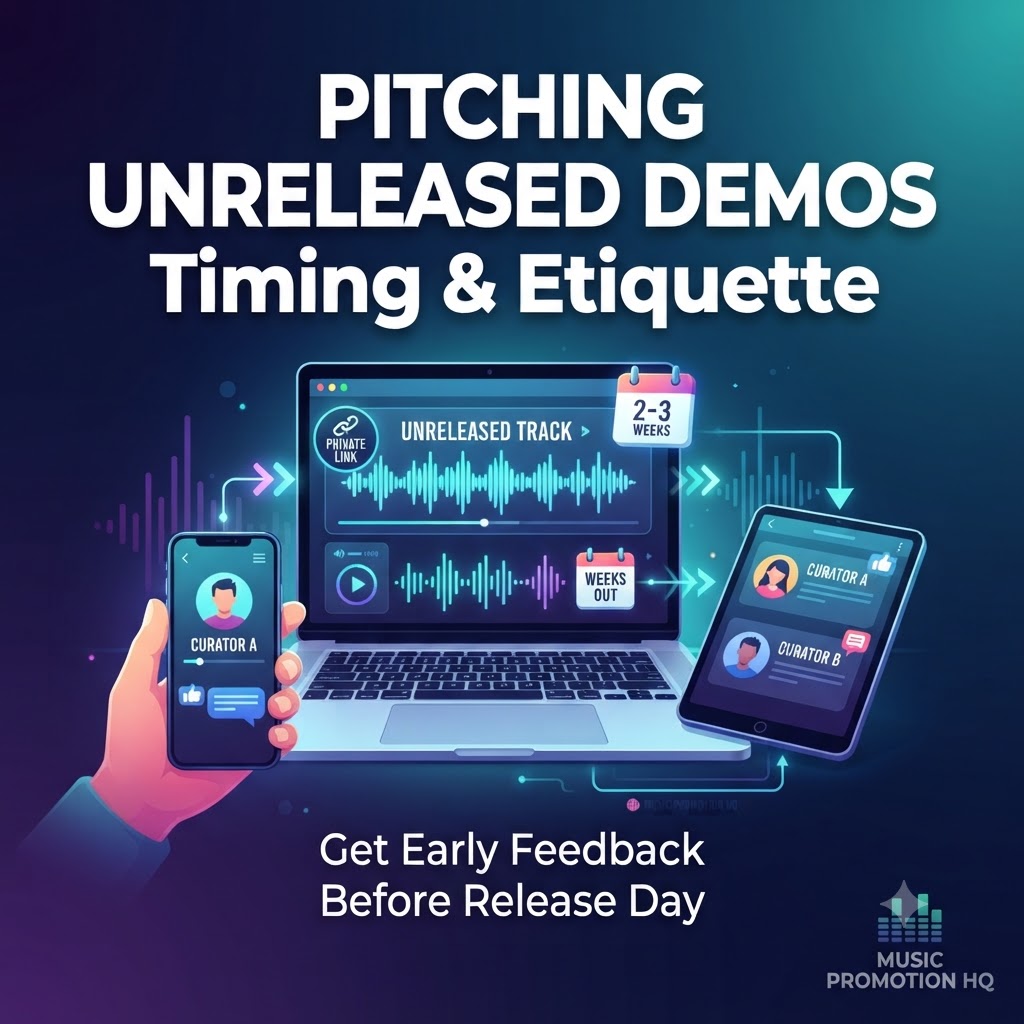
Pitching Unreleased Demos to Curators: Timing, Etiquette, and Direct Portals
You’ve spent months getting every stem right. The mix is sitting where it needs to, the master hits hard, and you’re genuinely proud of the final piece of work. Naturally, you want to start building some noise before it officially drops.
Waiting until release day to share a track means you’re already playing catch-up. If you want day-one traction, you have to get your music into the hands of tastemakers, playlist curators, and music bloggers before it hits the public platforms.
That said, sending out unreleased music is a balancing act. Move too early, and you run the risk of leaks or distributor issues. Move too late, and curators won’t have time to actually listen.
Here is how to handle unreleased demos the right way—hitting that 2-to-3-week window without stepping on any industry landmines.
1. Why the 2–3 Week Window is the Sweet Spot
Timing is everything when you’re pitching ahead of a release.
-
Pitching 4+ weeks out: Curators are usually buried in immediate deadlines. Your track gets bookmarked, buried in an inbox, and forgotten.
-
Pitching under a week out: This causes friction. Curators need time to sit with a track, see where it fits, and plan their schedules.
Hitting that 2-to-3-week mark gives independent curators enough runway to actually digest your music, figure out where it fits in their rotation, and lock in support for your actual release day.
It also keeps you out of trouble with your distributor. By the time you’re sharing private links, your audio should already be uploaded and locked behind a future release date, keeping you fully compliant with streaming platforms.
2. Private Link Etiquette: Protect Your Music
Sharing unreleased audio is an exercise in trust. If you want curators to take you seriously, your delivery needs to be clean, professional, and secure.
-
Never attach raw files: Dropping massive MP3 or WAV files straight into an inbox clogs up space and looks amateur.
-
Use stream-only links: Stick to private SoundCloud links (with downloads disabled) or secure preview portals like Disco or Dropbox.
-
Keep it frictionless: Make sure the link plays instantly on a phone. If a curator has to deal with weird passwords, slow downloads, or extra steps just to hear your song, they’re going to close the tab.
-
Be selective: Only send these private links to trusted contacts, boutique curators, and people you’ve actually built a relationship with.
3. Writing the Pitch: Keep it Brief and Real
Curators review a mountain of music every single day. Your message needs to get straight to the point in under 30 seconds.
-
Drop the release date upfront: Let them know immediately that this is an exclusive early listen and tell them the exact date it goes live.
-
Talk about the actual sound: Ditch generic buzzwords like “this is a vibe.” Give them real context—mention the tempo, the mood, and any genuine sonic reference points.
-
Respect their lane: Only pitch to people whose taste actually matches your sound. If it’s obvious you didn’t check out what they do, they won’t check out your track.
To keep your rollout smooth and your promotional calendar organized, prepare your launch calendar in advance by utilizing our direct-access tools.