Inside Lil Baby and Pharrell’s “Dead Fresh”: Why This Crossover Banger is Taking Over the Summer
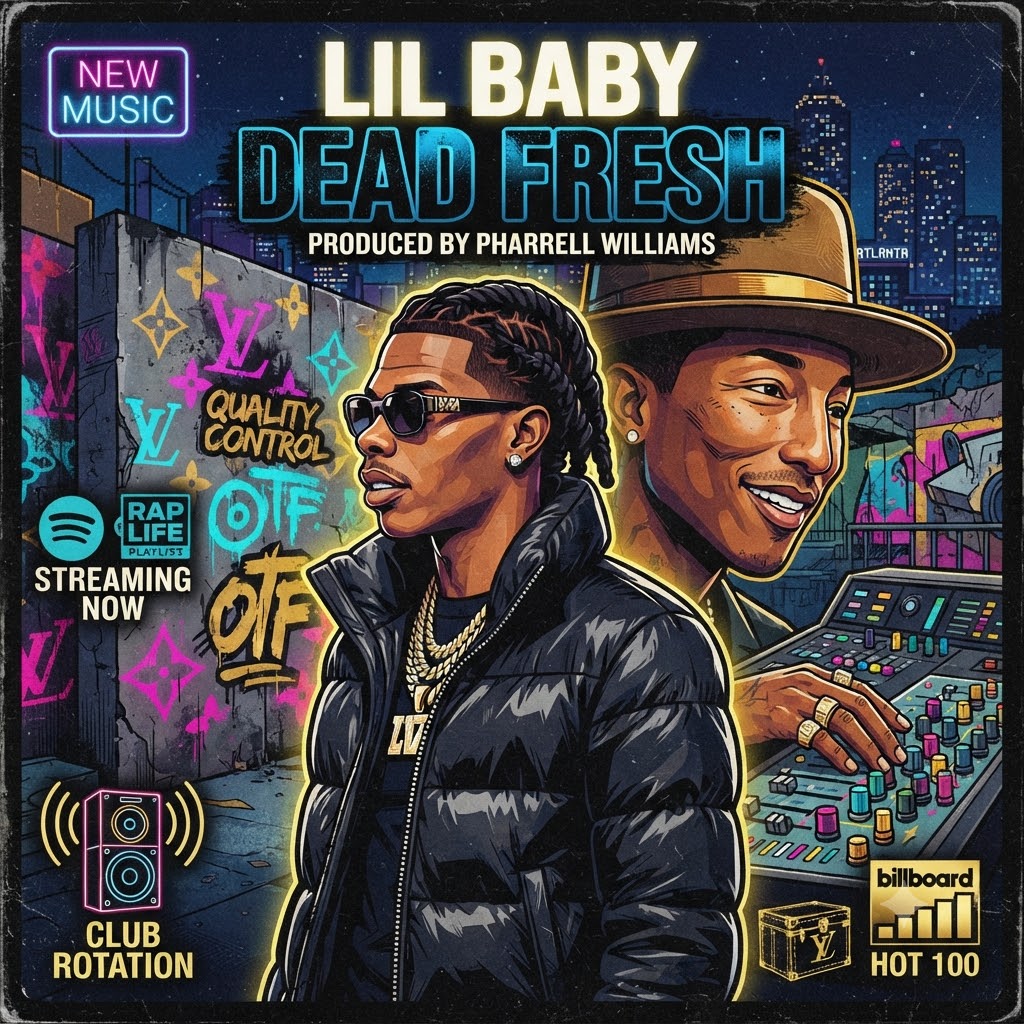
If you’ve spent any time scrolling through social media, hopping into an Uber, or walking past a downtown patio lately, chances are you’ve already run into the unstoppable wave that is “Dead Fresh” When Atlanta trap royalty Lil Baby links up with mastermind producer and fashion icon Pharrell Williams, the culture naturally pays attention.
Initially previewed during Pharrell’s high-profile Louis Vuitton menswear presentation, “Dead Fresh” transitioned seamlessly from runway exclusivity to an absolute daily staple for streaming queues and club sets alike. But what is it about this specific collaboration that has made it stick so hard? Let’s break down why this track is dominating the charts and defining the current landscape of modern hip-hop.
From the Runway to the Rotations: The Hype Behind “Dead Fresh”
In hip-hop, rollout strategy is everything. Dropping a single is one thing, but previewing it inside a luxury fashion sphere before letting it hit the streaming platforms creates an instant aura of exclusivity. That’s exactly the route Lil Baby and Pharrell took. Fans first caught wind of the collaboration through fashion week clips, setting off a wave of speculation across Twitter, Reddit, and TikTok.
When the track finally dropped officially via Quality Control Music and Motown, it didn’t just meet expectations—it blew past them. Within days, it rocketed to the top of major streaming milestones, hitting the number-one spot on Apple Music’s all-genre charts in the US and pulling in over a million daily streams on Spotify right out of the gate. It’s the kind of commercial reception usually reserved for full album rollouts, proving that Lil Baby’s core audience and the broader pop-culture sphere were more than ready for his next major era.
Unpacking the Production: Pharrell Meets the Atlanta Trap Blueprint
The magic of “Dead Fresh” ultimately lies in the friction—and chemistry—between its two main architects. Pharrell Williams has spent decades redefining what hip-hop production can sound like, favoring eccentric bounce, intricate percussion, and playful, unexpected melodies. Lil Baby, on the other hand, is known for his cool, unbothered, and rapid-fire street cadence.
Rather than forcing Lil Baby onto a traditional Neptunes-style bubblegum beat, Pharrell dials up something moodier yet deeply infectious. The production features creeping background elements and heavy, knocking low-end percussions that command a physical reaction.
For Lil Baby, the beat acts as an exciting canvas. It pushes him just slightly out of his standard comfort zone, resulting in a vocal performance that feels energized and razor-sharp. He rides the pocket of the rhythm effortlessly, dropping lines that effortlessly transition from gritty street reflections to high-fashion flexes. When he casually acknowledges the beat maker mid-track, it serves as a fun nod to the sheer weight of the collaboration.
Why “Dead Fresh” Works So Well in Clubs and Playlists
If a song wants to survive in today’s hyper-fast music ecosystem, it has to pull double duty: it needs to sound incredible through high-end headphones on a solo walk, and it needs to completely shake a room full of people on a Friday night.
“Dead Fresh” checks both boxes with room to spare.
-
The Streaming Powerhouse: On platforms like Spotify and Apple Music, the track’s crisp mixing and infectious hook make it an easy repeat candidate. It’s engineered to catch your ear on algorithmic playlists like New Music Friday and Rap Life on the very first listen.
-
The Club Catalyst: In the club, rhythm rules all. The spacious yet heavy production gives DJs plenty of low-end room to mix, while the bouncy tempo provides a natural, infectious groove that dancers gravitate toward instantly.
This dual-market dominance is precisely why the single secured strong multi-format chart positions, landing prominently on the Billboard Hot 100 while making serious noise on Hot R&B/Hip-Hop Songs and Rhythmic Airplay charts.
High Fashion, Hard Truths, and Visual Storytelling
You can’t talk about a track titled “Dead Fresh”—born from a Louis Vuitton runway connection—without looking at the visual aesthetics accompanying it. Directed by Kid Art, the official music video leans heavily into avant-garde styling, luxury vehicles, and striking cinematic frames. Lil Baby has increasingly positioned himself as a darling of the high-fashion world, regularly spotted front-row at major fashion weeks.
Yet, what keeps the song from feeling superficial is the underlying lyrical content. Lil Baby has always excelled at grounding his luxury in reality. Even when he’s rapping about designer threads and multi-million dollar milestones, his verses pivot back to the grind, the early days in the trenches, and taking care of his family. That duality is what resonates with fans. It’s aspirational, sure, but it never loses touch with the gritty hustle that built his foundation.
What Does This Mean for Lil Baby’s Next Era?
Whenever an artist of Lil Baby’s caliber drops a standalone powerhouse single paired with a massive producer like Pharrell, the immediate question from fans and critics alike is simple: Is an album on the way?
Following the massive footprint of his previous work, “Dead Fresh” feels deliberately calculated. It signals a creative evolution, a willingness to step outside traditional trap boundaries, and a desire to experiment with different sonic palettes. If this single is any indication of the direction his upcoming projects are heading, the hip-hop landscape is in for a very exciting run.
Whether you’ve got it on repeat during your morning commute, or you’ve heard it rattling through the speakers during a weekend night out, “Dead Fresh” has firmly cemented its status as one of the defining hip-hop moments of the year.