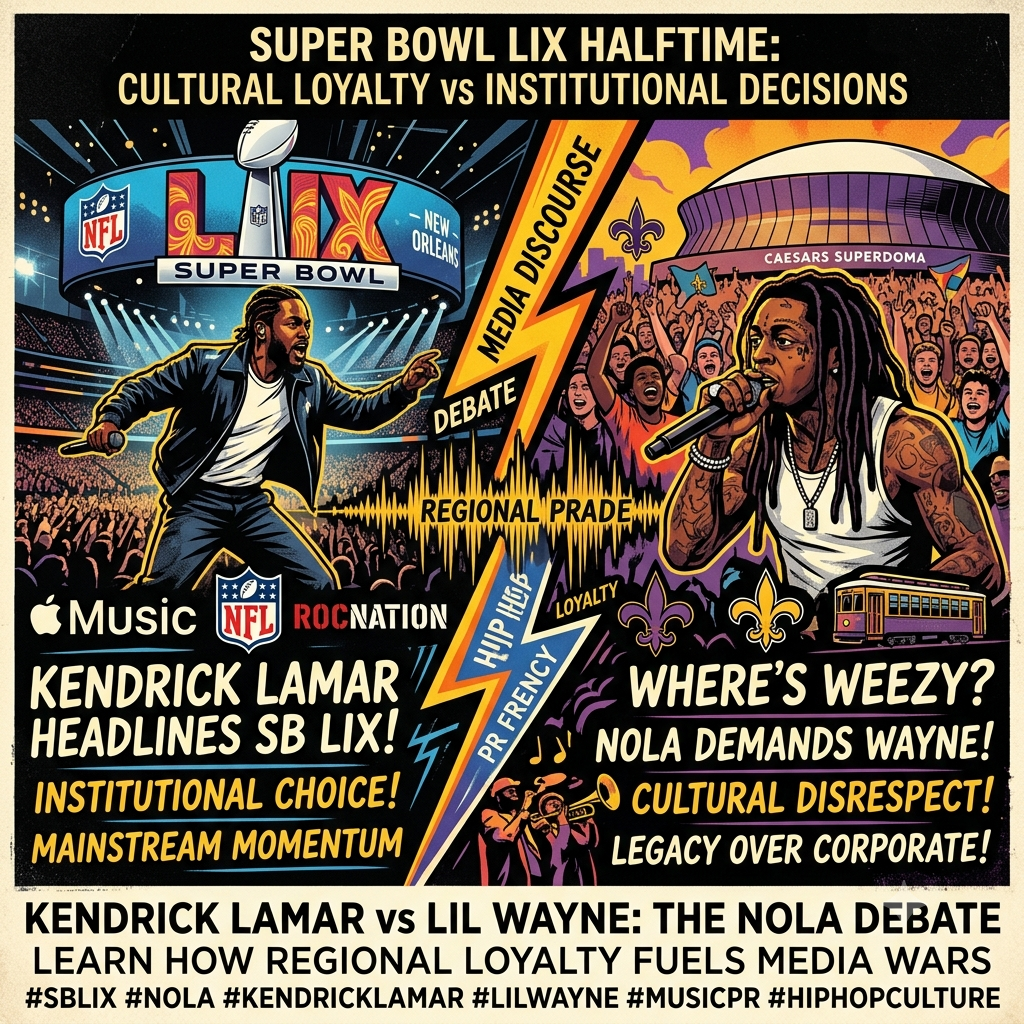
The Kendrick Lamar vs. Lil Wayne Super Bowl Meltdown: What It Teaches Independent Artists About Cultural Loyalty and Media PR
When Roc Nation, Apple Music, and the NFL dropped the news that Kendrick Lamar would headline the Super Bowl LIX halftime show in New Orleans, the internet didn’t just react—it fractured.
On paper, picking Kendrick made total business sense. The guy was coming off one of the biggest runs in modern hip-hop history, boasting 17 Grammys, record-breaking streaming numbers, and an undeniable grip on the mainstream zeitgeist. But on the streets, in the group chats, and across the Southern rap scene, the reaction felt like a slap in the face.
Super Bowl LIX was headed to the Caesars Superdome. For millions of rap fans, that meant one thing: New Orleans belonged to Lil Wayne.
What unfolded over the following months wasn’t just a quick trending topic on X (formerly Twitter). It became a masterclass in how institutional corporate decisions crash into deep-rooted cultural loyalty, triggering a media fallout that dominated headlines for months. When Nicki Minaj, Birdman, Master P, and Cam’ron stepped into the fray to defend Wayne’s legacy, they didn’t just spark a debate—they created a sustained press cycle. Even Kendrick couldn’t ignore it, ultimately addressing the tension on “wacced out murals,” the opening track of his surprise album GNX.
For independent musicians trying to get noticed, this whole spectacle is much more than celebrity drama. It’s a blueprint. It shows exactly how narrative tension, regional pride, and cultural alignment fuel the media engine—and how you can tap into those exact same forces to get journalists talking about your music.
1. Corporate Strategy vs. Cultural Heritage: Where Press Coverage Lives
Corporate entities like the NFL and Apple Music operate on metrics, scale, and broad consumer appeal. Their priority is booking an act that guarantees tens of millions of eyeballs and zero friction for advertisers. Kendrick Lamar checked every single one of those corporate boxes.
Hip-hop culture, however, was built on local identity, block codes, and regional pride. New Orleans isn’t just another tour stop; it’s the holy ground of Cash Money, No Limit, and Young Money—the architectural foundation of 2000s rap. By skipping over Wayne on his home turf, the decision created an immediate cultural friction point.
┌─────────────────────────────────────────────────────────────────┐
│                     THE PR TENSION ENGINE                       │
│                                                                 │
│   Institutional Action ──► Cultural Pushback ──► Media Discourse│
│   (Super Bowl Selection)    (Regional Pride)    (Headlines/Blogs)│
│                                                       │         │
│                                                       ▼         │
│   Artistic Response ◄─────────────────────────────────┘         │
│   ("wacced out murals" / Press Coverage)                        │
└─────────────────────────────────────────────────────────────────┘
The Lesson for Indie Artists
Here is a reality check about music PR: journalists, bloggers, and playlist curators rarely write passionate pieces about safe, agreeable news. Nobody cares about another generic press release that says, “Artist X drops brand-new single available on all streaming platforms.”
Media coverage thrives on contrast and conviction.
-
Stop playing it safe with your messaging: If you’re building a movement in your city, make that front and center. Position your sound as an authentic response to what’s missing in today’s cookie-cutter mainstream landscape.
-
Double down on your roots: Local music journalists love a hometown hero narrative. If your city has a distinct musical heritage, highlight how your work carries that tradition forward—or intentionally breaks away from it.
2. Peer Advocacy: Why Co-Signs Turn Headlines Into Movements
The halftime controversy didn’t stick around in the headlines just because casual fans were tweeting about it. It blew up into mainstream coverage because hip-hop royalty raised their voices.
When Nicki Minaj went on a multi-tweet run defending Wayne, when Birdman publicly called out the institutional disrespect, and when Cam’ron debated the topic on It Is What It Is, they forced publications like Rolling Stone, Complex, Billboard, and HotNewHipHop to run daily updates.
The lesson here isn’t about getting a megastar co-sign overnight. It’s about understanding how community validation creates undeniable media momentum.
┌──────────────────────────────────────────────────────────┐
│                   COMMUNITY VALIDATION                   │
│                                                          │
│   Local Scene Support  ──► Peer Co-Signs & Quotes        │
│                                 │                        │
│                                 ▼                        │
│   Music Blogs & Press  ◄── Organic Cultural Buzz         │
└──────────────────────────────────────────────────────────┘
How to Build Community Validation on an Indie Budget
-
Mobilize your inner circle: When preparing for a release, don’t just ask your peers to post a link. Ask local DJs, fellow artists, and respected tastemakers in your scene to share why the project matters to the community.
-
Leverage quote-worthy commentary: When someone with credibility speaks highly of your project, grab that quote immediately. Put it on your press kit, slide it into pitch emails to music editors, and pin it to your social channels.
3. Turning Narrative Friction Into Creative Capital
Instead of letting the internet control the narrative, the artists involved turned the tension straight into artistic output and long-term relevance.
On GNX, Kendrick didn’t ignore the noise; he tackled it on the very first track, acknowledging Wayne’s legendary status while laying out the reality of business politics. Wayne, on his end, opened up about his disappointment in raw, candid interviews, deepening his emotional connection with his fanbase and reaffirming his place as an unshakeable figure in rap history.
Both sides proved a fundamental rule of long-term branding: never run from a cultural debate if it touches your identity.
When you stand for something specific in your music, people will naturally disagree or compare you to others. Instead of shrinking away, lean into those conversations through your lyrics, your interviews, and your social content. That authenticity is what separates casual listeners from die-hard supporters.
4. How to Position Your Music for High-Impact Press Coverage
You don’t need a Super Bowl budget or a million-dollar PR agency to start generating real press buzz. What you do need is a clear narrative that makes music writers feel like they are covering a genuine movement, not just another album upload.
Here is a simple roadmap to start building real press momentum today:
-
Own Your Story: What is the actual hook behind your music? Are you reviving a forgotten regional sound, pushing back against industry formulas, or representing an underrated scene? Define it clearly.
-
Anchor Your Releases to Cultural Conversations: Keep your thumb on the pulse of what’s happening in your sub-genre. If there is an active debate about sound, ethics, or industry practices, share your perspective.
-
Build an EPK That Demands Attention: When pitching music blogs, don’t just send a raw AudioMack or Spotify link. Provide well-crafted quotes, high-resolution imagery, and verified reviews that prove your record already carries weight.
If you’re ready to take your release strategy to the next level and get real writers talking about your sound, you can harvest high-impact press quotes that position your music in the cultural conversation from our blog review service.
Get Official Press Quotes for Your Promo Run
High-impact press quotes turn a routine song release into an authentic cultural statement. Give music editors, festival bookers, and playlist curators a reason to take your music seriously with custom editorial reviews for your promotional materials and press kit.
➡️ Order a Custom Write-Up via Our Music Review Submission Page