Getting your official Google Knowledge Panel can feel like cracking an impossible code. One day you are searching for yourself and seeing a scattered mess of links, and the next, you want that clean, authoritative info box on the right side of the screen that tells the world you’ve arrived.
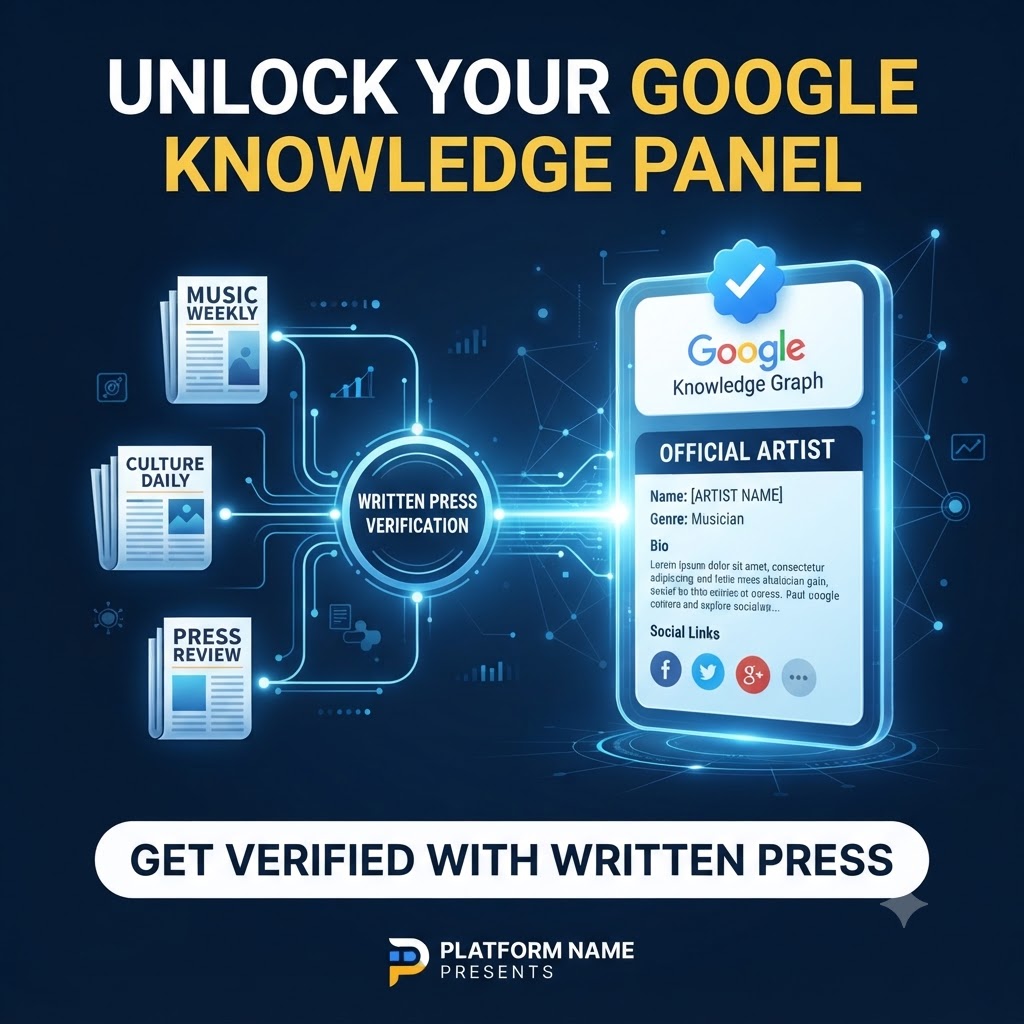
The catch? Google doesn’t just hand these out because you ask nicely. Behind the scenes, the Knowledge Graph is picky—it relies heavily on trusted third-party citations to prove you’re actually worth a spot in its digital ecosystem.
Here is why written press is the secret weapon to unlocking and claiming your official artist entity panel.
Why Google Doesn’t Take Your Word for It
Let’s be honest: anyone can spin up a website, write a glowing bio, or launch social media profiles. Because self-reported data is easy to fake, Google’s automated systems don’t rely on it to build a Knowledge Panel.
Instead, the Knowledge Graph looks outward. It scans the web for cross-corroboration—essentially asking, “Who else is talking about this person?”
When trusted music blogs, culture magazines, and digital news outlets write about you, they act as external validation. Every legitimate interview, review, or feature serves as a digital receipt. When enough of these receipts pile up from reputable sources, Google connects the dots and realizes, “Ah, this artist is a distinct, verifiable entity.” Without that external trail, your chances of getting a panel—let alone claiming it—drop significantly.
Creating the Digital Breadcrumb Trail
If you want to satisfy Google’s appetite for verification, you need to build a solid paper trail. You need to build the verifiable digital source trail needed for Google verification with an official press feature.
Building this trail isn’t just about scoring PR hype; it’s a technical move. Keep these practical rules of thumb in mind:
-
Keep your details identical: If your artist name is stylized a certain way, use that exact spelling across every single article, press release, and streaming profile. Discrepancies confuse the algorithm.
-
Aim for indexed, trusted sources: A quick write-up on a recognized indie music blog or regional culture site carries way more weight with Google than a self-published post.
-
Link everything together: Make sure your digital footprint is easy for crawlers to read. Your press features should point back to your main hubs, creating a clean loop of authority.
When Google’s web crawlers can easily trace a straight line from trusted third-party publications directly to your artist profile, the path to verification opens right up.
Take the Guesswork Out of Your Search Presence
Don’t leave your online reputation up to random chance. Proactively building your media coverage gives Google the exact signals it craves to authenticate your brand and hand over the keys to your panel.
Build your verifiable media source history. Get featured on our platform via the [submission portal].