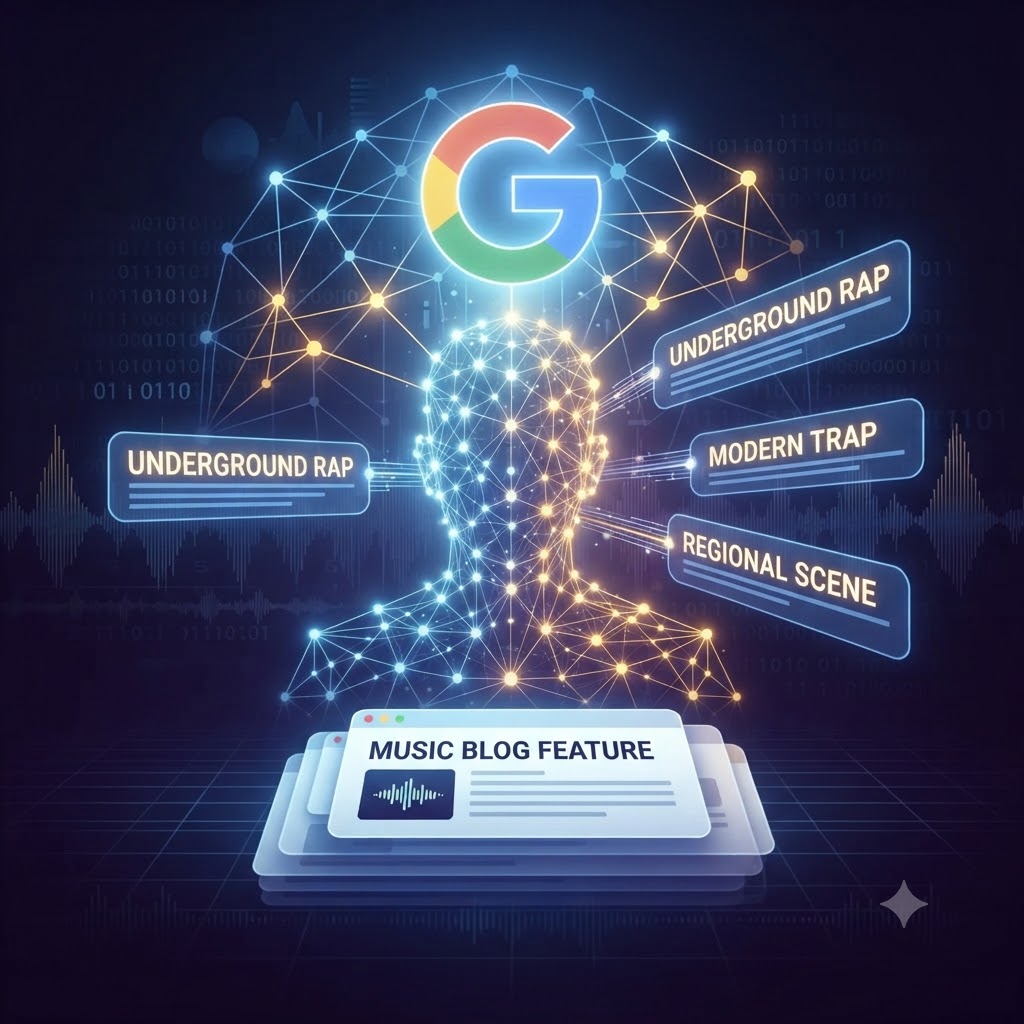
The Google Entity Framework: How Blog Placements Teach Google’s AI Who You Are as an Artist
For a long time, promoting music online felt like shouting into a void of algorithms. You’d drop a single, load up your captions with terms like “underground rap” or “modern trap,” and cross your fingers that the search gods would notice you.
Let’s be honest: that doesn’t work anymore.
Search engines have evolved past simple keyword matching. Today, platforms like Google rely on AI to understand entities—meaning they look at you as a real, distinct person or brand with a history, a genre, and a community.
If you want search engines to actually know who you are and what your sound represents, social media posts that disappear in 24 hours aren’t going to cut it. You need to understand how music blogs build your digital footprint from the ground up.
What Is an Artist Entity, Anyway?
Think about how search engines process information now.
-
Keywords are just flat words typed into a search bar.
-
Entities are about context and identity.
If your artist name is unique, Google’s AI still needs to know what you do. It doesn’t figure this out by guessing; it builds a mental map of your career based on who talks about you, where you get featured, and what scenes you’re tied to.
How Trusted Blogs Map Your Sound and Scene
When a reputable music blog writes about your track or breaks down your latest project, search engines pick up on that signal in a few key ways:
1. Connecting You to Your Genre
When a tastemaker publication drops a review framing your music within “underground rap” or “modern trap,” Google’s crawlers take note. It connects your name to those genre tags. The more often respected sites make that connection, the more the algorithm understands that your brand belongs right alongside those sounds.
2. Locking In Your Regional Scene
Are you building something special in your hometown or a specific regional movement? Search engines look for local and cultural context. When blogs mention your name alongside your city’s underground venues, local producers, or regional culture, Google maps your entity to that exact ecosystem.
3. Building Real-World Trust
Google’s AI runs on confidence. If your own website is the only place saying you’re a force in the scene, the algorithm isn’t quite convinced. But when independent music blogs validate your work through real editorial write-ups, they act as external proof. That web of third-party mentions creates an unshakeable digital footprint.
Securing Your Permanent Digital Identity
If you want to move past the grind of chasing fleeting algorithm spikes, you need a strategy with staying power.
…help search engines index your brand profile. Securing a professional, dedicated establishes your permanent digital identity.
Relying entirely on short-form video means your history resets every time you post. Blogs create permanent, indexable pages that Google crawls forever—anchoring your career into the actual architecture of the internet.
✍️ Build Your Search Authority: Stop relying only on temporary social media posts. Submit your track to our writers for a feature that gives search engines the real context they need to back you up.