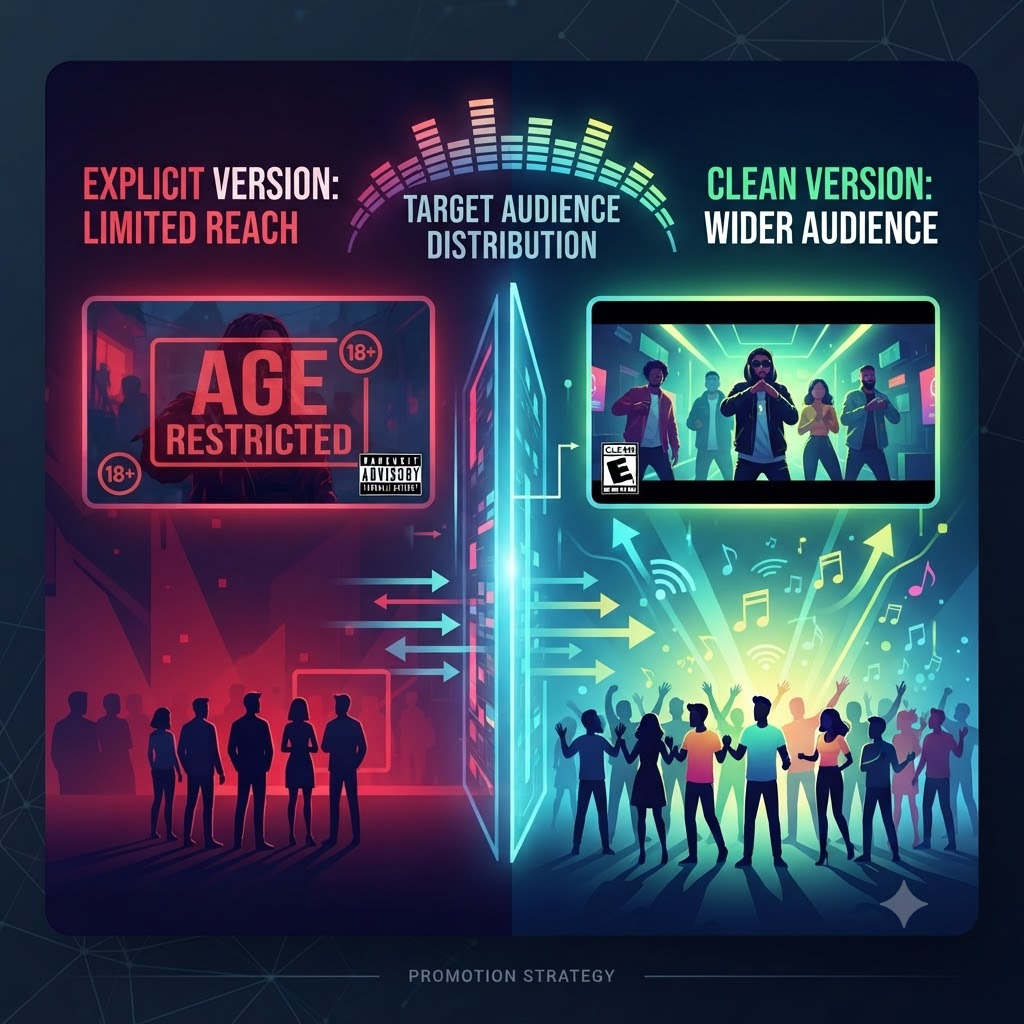
Why Explicit vs. Clean Music Video Promos Change Your Target Audience Distribution
Let’s be honest: when you’re dropping a new track, the last thing you want to worry about is a robot bleeping out your favorite line or a platform hiding your hard work. Visual content is everything right now, and music videos are usually the heavy lifters when it comes to getting discovered.
But if you’ve ever run paid ads behind an explicit music video and watched your budget stall out—while a simpler lyric video or clean cut went flying—you’ve run headfirst into one of the biggest hidden roadblocks in digital music marketing.
The issue isn’t your song. It’s how age-gating algorithms and platform rules completely dictate who actually gets to see your content. Let’s break down how explicit versus clean visual promos change your target audience distribution, and how a small shift in strategy can completely open up your reach.
The Algorithmic Reality: How YouTube’s Age-Gating Chokes Your Reach
When you upload a music video or try to push it through ad networks, automated moderation tools scan it instantly. If there’s heavy profanity, suggestive imagery, or grit, the system slaps an age-restriction or a mature content rating on it.
While a strict rating might feel like a badge of honor—especially for hip-hop, punk, or edgier electronic music—it acts as an immediate brake on your marketing funnel. Here’s what’s actually happening behind the scenes:
-
You Cut Out Your Biggest Streamers: Age-restricted videos can’t be watched by logged-out users, anyone under 18, or accounts with restricted mode turned on. Just like that, a massive chunk of Gen Z and younger demographics vanish from your viewer pool.
-
Ad Networks Shut the Door: Platforms like Google Ads have zero tolerance for policy gray areas. If your video is flagged as explicit, your ad campaigns can get disapproved outright. Even if they somehow slip through, your cost-per-click skyrockets because the algorithm treats your content as high-risk.
-
The Organic Algorithm Cools Off: Recommendation engines want content they can safely serve to everyone. If the system constantly has to check IDs or filter out younger viewers, your organic momentum takes a major hit.
The Power of the Clean Version: Widening Your Funnel
Dropping a clean version of your music video—or putting together a performance cut tailored for general audiences—isn’t “selling out.” It’s just smart marketing.
When you bring a clean promo into your toolkit, the entire dynamic of your target audience shifts:
-
You Tap Back Into the Gen Z Market: Younger demographics drive the bulk of modern music discovery and playlist sharing. A clean promo lets you plug straight into that high-engagement audience without running into algorithmic walls.
-
Cheaper Ads and Smoother Approvals: Clean content plays nicely with standard ad policies. Your campaigns sail through review, you get way more flexibility with targeting, and your return on ad spend looks a whole lot healthier.
-
The “Two-Pronged” Strategy: The smartest artists don’t pick just one version; they use both. The explicit cut keeps your core fans happy and preserves your raw artistic vision. Meanwhile, the clean cut acts as your top-of-funnel engine, safely introducing everyday listeners, playlist curators, and brand-new fans to your sound.
Balancing Artistic Integrity with Commercial Reach
You shouldn’t have to water down your creative soul to get traction, but you do have to be smart about where you deploy your assets.
If your entire promotional strategy relies on shoving an age-restricted, explicit video in front of a broad audience, you’re fighting an uphill battle against the platform’s own architecture. By diversifying your visual assets—pairing your raw main video with a clean, policy-friendly cut—you open the floodgates to a much wider, more receptive audience.