Do Pre-Saves Actually Matter for Independent Rapper Rollouts? A Reality Check
If you’ve spent any time on Instagram or TikTok lately, you’ve probably noticed the same pattern: every indie rapper is frantically pushing “Pre-Save” links before a drop. It’s become a standard part of the rollout checklist, right up there with shooting a cover and hitting the studio.
But if you’re an independent artist grinding to get noticed, you’ve probably asked yourself: Are pre-saves actually moving the needle, or are we all just chasing vanity metrics?
Let’s pull back the curtain on how these campaigns really work and why they might not be the “magic bullet” everyone claims they are.
Why Everyone Is Obsessed with Pre-Saves
The reality is that the industry pushes pre-saves because they want to capture your data. It’s not just about the streaming platforms; it’s about who is listening.
1. Owning Your Fan Data
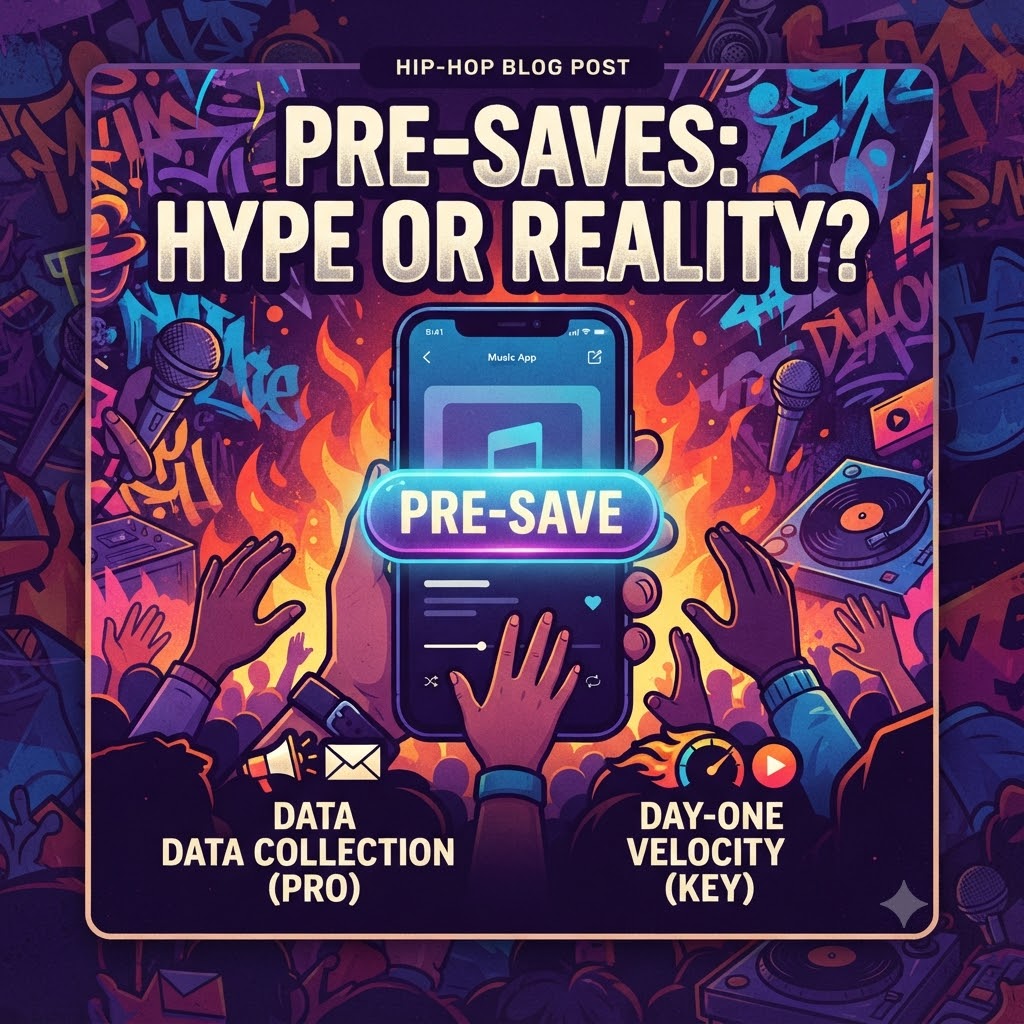
This is the real value. When a fan clicks a pre-save link and grants permission, you’re usually collecting their email address or phone number. For an independent rapper, owning that list is everything. If the social media algorithms change tomorrow, you’ve still got a way to reach your core fans directly.
2. The Algorithmic “Hype”
There’s a theory that high pre-save counts tell Spotify that people are “waiting” for your track, which supposedly helps with your placement in “Release Radar” playlists. Does it help? A little. Is it a guarantee for editorial playlisting? Absolutely not. Don’t let anyone tell you otherwise.
The Downside: The “Vanity” Trap
Here’s where things get real. If you’re obsessing over your pre-save count, you’re likely missing the bigger picture.
-
The “Permission” Wall: A pre-save is a high-friction action. You’re asking a fan to click a link, sign into an app, and grant permissions. It’s a lot of work for a listener. Many people will click your link, see a confusing pop-up, and just close the browser.
-
Velocity Beats Pre-Saves: You can brag about having 1,000 pre-saves, but if those people don’t actually come back and listen to the song on launch day, it doesn’t mean much. The algorithms care about streaming velocity—the number of listeners who play, save, and share your song within those first 24 to 48 hours. That is what actually triggers the algorithm to push your music to new people.
The Verdict: Keep Your Eyes on Drop Day
The bottom line? If your pre-save numbers are looking low, don’t sweat it.
A successful launch isn’t built on how many people clicked a button two weeks ago; it’s built on the heat you bring on release day. If your pre-saves aren’t hitting the thousands, you can absolutely make up for it by executing a strategic launch plan that focuses on real engagement—like crushing it with your video content and hitting up your direct community the moment the track goes live.
Don’t let the pressure of “hitting the numbers” distract you from the music. Focus on quality, stay consistent, and make sure that when the song drops, it actually resonates.
Stop relying on the slow, often uncertain crawl of organic pre-saves.
Secure the guaranteed day-one traction that organic pre-saves can’t promise. Get your music in front of real listeners and industry curators who are looking for the next big sound.