Decoding the Apple Music Hip-Hop Ecosystem: A Strategic Guide for Indie Rappers
For a lot of independent hip-hop artists, the streaming game starts and ends with Spotify. I get it—the editorial playlists are massive. But if you’re ignoring Apple Music, you’re leaving serious leverage on the table.
Apple Music holds a different kind of weight in hip-hop culture. It’s often the true testing ground for what’s actually moving in the streets and what’s about to blow up globally. While many focus solely on Spotify, Apple Music is a goldmine for rap. We offer to ensure you don’t miss out on these listeners.
If you’re serious about building a real career, it’s time to stop treating Apple Music as an afterthought. Here’s how you actually navigate the ecosystem and get noticed.
Understanding the Apple Music Layout
Apple Music isn’t just a list of songs; it’s built around aesthetic and high-fidelity presentation. Their editors aren’t just looking for “vibes”—they’re looking for a package that looks like a finished product.
-
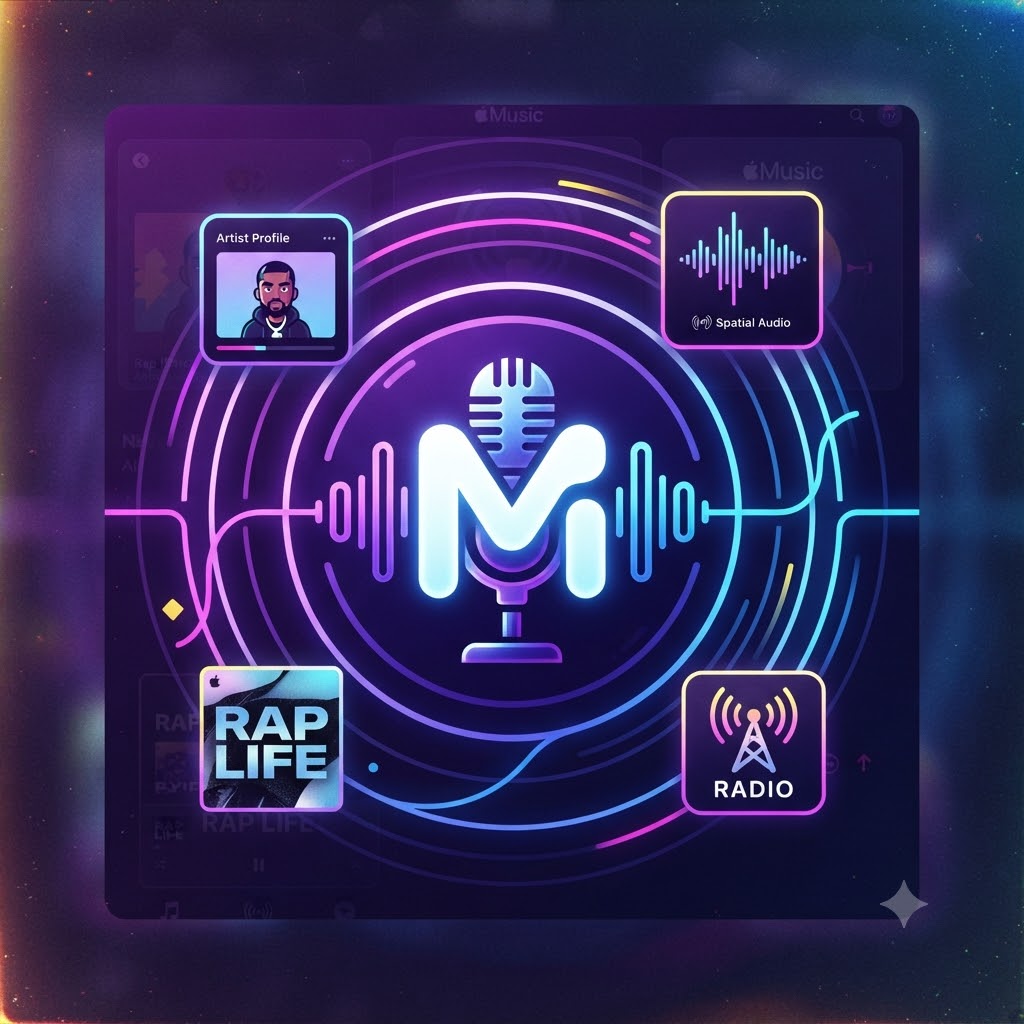
Own Your Profile: This sounds basic, but you’d be surprised how many artists leave their profile looking empty. Your artist image needs to be high-res, professional, and visually consistent with your brand. Head into your Apple Music for Artists dashboard and make sure your bio actually speaks to your identity.
-
Targeting the Hubs: Apple’s curation is heavily broken down into genre-specific hubs. If you want a shot at getting into spots like Rap Life or The Plug, your metadata needs to be airtight. Double-check your distributor’s portal and make sure your genre is strictly set to “Hip-Hop/Rap.”
Mastering the Radio & Algorithm
Apple Music runs on a mix of human curation and some really sharp algorithmic radio stations.
-
Stay Consistent: If a user hits “play” on a track that sounds like yours, Apple’s algorithm decides if it should pull your song into the mix. To keep that algorithm feed working for you, you need consistent data. Instead of dropping one massive project every two years, keep a steady stream of singles moving. It keeps your “related artist” data fresh and keeps you in the loop.
-
The Pitching Game: Use the Apple Music for Artists dashboard to pitch your singles at least 3–4 weeks before they drop. When you’re writing that pitch, don’t just dump technical specs. Tell the story behind the track. Apple’s curators are humans, and they want to know the narrative behind the bars.
Why You Need to Care About Spatial Audio
Apple Music has gone all-in on Spatial Audio (Dolby Atmos). If you’re an indie rapper, this is a massive competitive advantage that most people are still ignoring.
-
The Vibe Shift: Spatial Audio creates this immersive, 360-degree soundscape. For modern hip-hop—which is often loaded with intricate ad-libs, stacked 808s, and ambient background textures—it changes everything.
-
The Advantage: Apple’s algorithm currently gives a nudge to tracks mixed in Spatial Audio. Most distributors now make it easy to submit for this certification. Don’t skip it. If your track is mixed for spatial, you’re instantly more eligible for those premium “Spatial Audio” editorial collections. It’s a low-effort way to get a high-tier boost.
Stop Choosing Sides
The “Spotify vs. Apple” debate is a distraction. Your job as an independent artist is to meet your fans where they already are—and they’re using both.
By taking the time to optimize your profile, focusing on your release cadence, and utilizing the tools Apple is actually prioritizing, you stop being just another upload and start becoming a staple in their ecosystem.
🚀 Ready to Level Up Your Distribution?
Don’t let your music get lost in the noise of a single platform. Diversify your streaming revenue across both major apps. Send your single to our team via the It’s Hip Hop Music Submission Portal. We’re here to help you bridge the gap between your next session and the global stage.