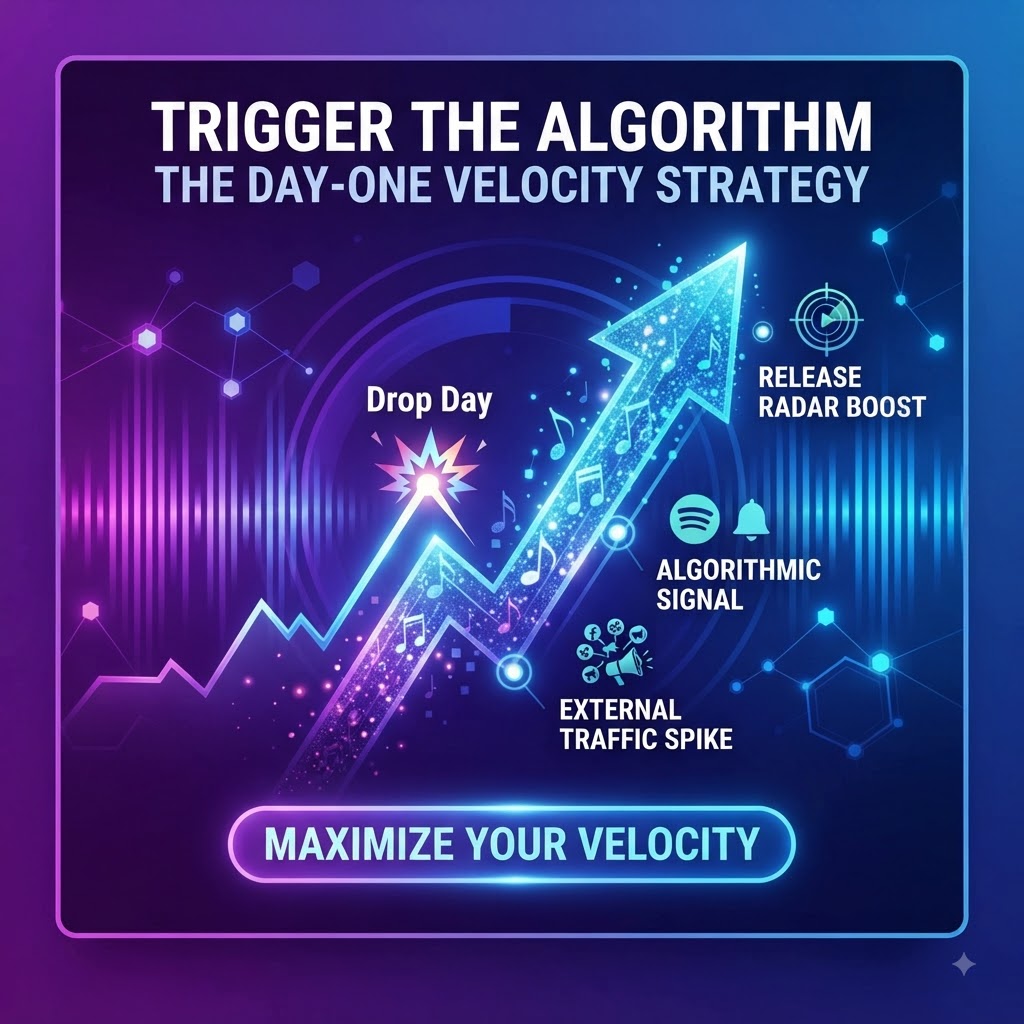
The “Day-One Velocity” Strategy: Triggering Algorithmic Spikes on Release Day
We’ve all been there. You spend weeks teasing snippets on TikTok, setting up pre-save links, and hyping up your followers, only for your new single to drop, get a quick initial bump, and then flatline forty-eight hours later.
If you’ve ever wondered why some independent tracks seem to magically take off while others get buried in the noise, it usually doesn’t come down to luck. It comes down to algorithmic signaling.
Spotify’s recommendation engine—especially Release Radar—runs on numbers, but more importantly, it runs on momentum. The single most crucial metric it looks at is Day-One Velocity.
Here is how you can stop letting the algorithm guess your worth and start engineering a launch day that actually forces Spotify to pay attention.
What Actually Is “Day-One Velocity”?
In plain terms, velocity is how fast your streaming numbers spike in a tight window. Spotify’s system is constantly scanning for abnormal, exciting behavior. When a track pulls in a massive, concentrated wave of streams, saves, and repeats within the first 24 hours, the algorithm flags it as something special.
It essentially tells Spotify: People aren’t just passively hearing this; they are actively hunting it down.
Nail that first day, and the platform rewards you by pushing your track straight into the Release Radar feeds of every single person who follows you—and eventually, into algorithmic editorial spots.
The Trap of the “Slow Burn”
Most artists treat a release like a slow-moving train. They put the track out, drop a couple of links in their bio, and hope the “organic reach” gods will take pity on them.
The harsh reality? If your stream count looks like a flatline on launch day, the algorithm assumes nobody cares. By the time you actually start pushing ads or sending emails three or four days later, the “new release” window has slammed shut.
How to Engineer the Spike
If you want the algorithm to work for you, you have to manufacture a traffic jam on your release day. Here is how to make it happen:
1. Build a Real “Launch Squad”
Pre-saves are great for gathering data, but they don’t guarantee immediate action. Instead of hoping people remember your drop, rally your core supporters—whether that’s a Discord server, an email list, or a group chat—and let them know the exact hour the track goes live.
2. Coordinate, Don’t Drip
The biggest mistake you can make is spacing out your promo over a week. If you’re working with creators, running ads, or sending out newsletters, line them all up to drop simultaneously. When a handful of trusted sources all point to your track within the exact same two-hour window, you create the massive spike the algorithm feeds on.
3. Lean on Verified Traffic
Not all streams are created equal. If your traffic comes from random, unverified links, the algorithm doesn’t quite know what to do with it. To truly maximize day-one streaming velocity, you need to pair your launch with our verified promotional networks. That way, the listeners hitting your music are active, high-intent users with real Spotify accounts—which is precisely the signal the platform needs to see.
The Bottom Line
Music marketing on streaming platforms is a feedback loop. You provide the initial spark of velocity, and the algorithm provides the fuel.
Stop waiting for Spotify to discover you. Show the platform that your audience is already here.
Ready to make some noise?
Stop leaving your release day to chance. Deliver maximum day-one stream velocity to your drop. Submit your track through our verified network today.