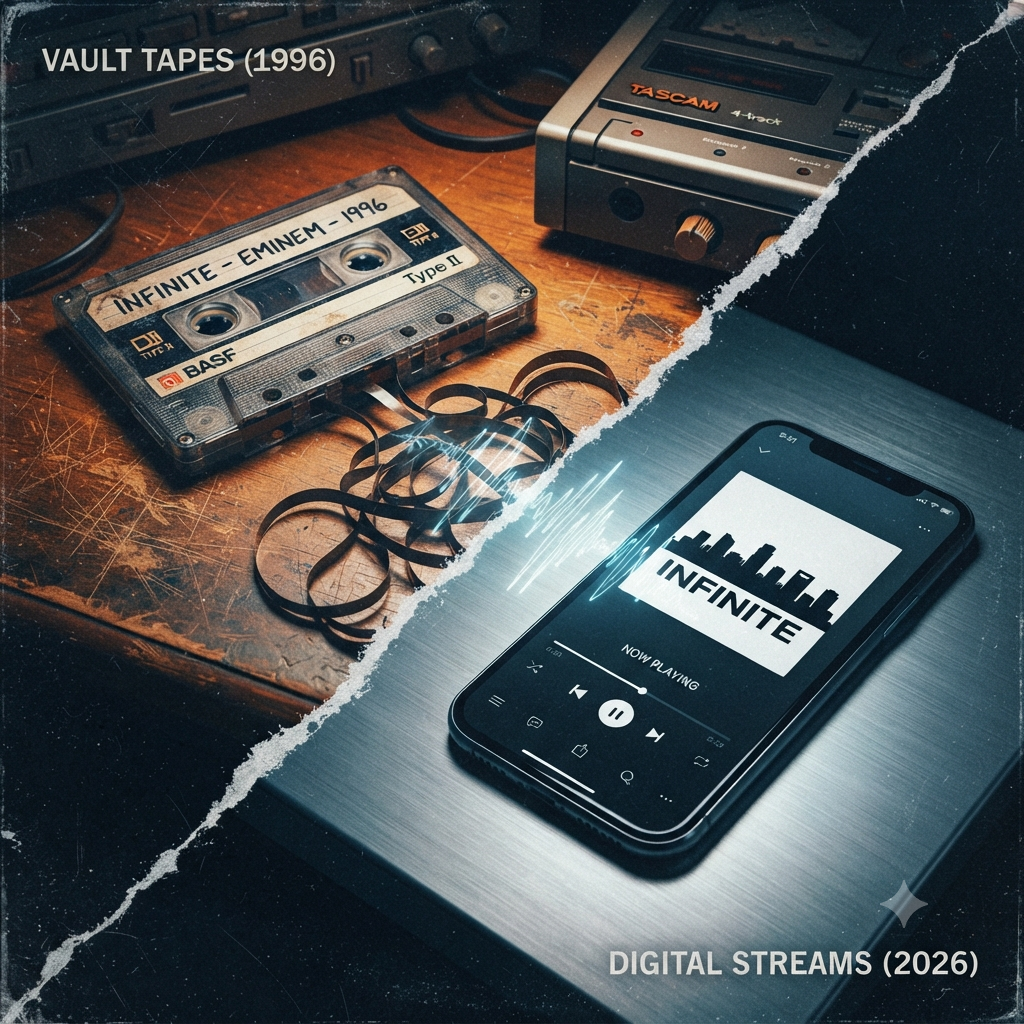
Why the Infinite EP Streaming Release Strategy Actually Works
Most independent rappers leave their earliest music off streaming services because they assume nobody cares about rough, dated recordings—or they think clearing old tracks is too much of a headache. Meanwhile, bootleg channels on YouTube and SoundCloud quietly rack up tens of thousands of plays off those exact songs, collecting ad revenue that belongs to the artist.
When an established act finally brings rare vault material to official platforms, they solve three problems at once:
-
Stopping Revenue Leaks: Every stream on an unofficial YouTube upload is money walking out the door. Getting your original recordings properly distributed under your verified artist profile pulls all those scattered listeners into one place where every play pays out.
-
Using New Music to Feed the Old: Notice how Infinite didn’t just drop quietly on a random Tuesday with zero context. It arrived right alongside “Welcome,” a brand-new record with IDK over a J. Dilla beat. That pairing creates a natural bridge. Younger fans checking out the IDK feature click over to Eminem’s page and stumble into 1996, while old-school heads searching for Infinite end up streaming the new single.
-
Feeding the Catalog Algorithm: Streaming platforms today run heavily on deep-catalog listening. Listeners don’t just play whatever came out last Friday; they live in mood playlists, throwback mixes, and radio queues. The more quality, cleared music you have sitting in your official discography, the more entry points new fans have to find you.
How Indie MCs Can Turn Vault Tapes Into Streaming Revenue
You obviously don’t have Interscope’s legal team or marketing budget behind you, and that’s fine. You don’t need them to run a scaled-down version of this exact play. Whether your vault consists of a 2012 Bandcamp tape, local studio demos from college, or an unreleased EP sitting on an external drive, here is how to bring those records to DSPs without getting hit with copyright strikes or sounding terrible next to modern releases.
1. Sort Out Your Beats and Samples Before Uploading Anything
The number one reason classic mixtapes stay trapped in the past is uncleared samples and jacked industry beats. Back in the blog and mixtape era, nobody cared if you spit sixteen bars over a beat you ripped off YouTube or a classic Dilla instrumental. Today, distributors will flag and reject that audio immediately.
Before you touch a distributor dashboard, audit every single track on your old project:
-
Separate Originals from Industry Beats: If you rapped over a famous producer’s beat without a license, leave it off DSPs. Stick strictly to tracks produced by beatmakers you actually worked with.
-
Track Down Your Old Producers: Hit up the guys who made those beats back in the day. Ask if any samples were used. If a track relies on an uncleared soul or jazz loop, you have two realistic options: either track down the sample clearance through a platform like Tracklib (if it’s in their catalog), or hire a local session musician to replay the melody. Replaying a sample only requires a mechanical publishing license, which is dramatically cheaper and easier to secure than clearing an original master recording.
-
Put Split Sheets in Writing: Even if you recorded the song in a basement in 2011, send your producer a quick digital split sheet before uploading. Locking in a 50/50 or agreed-upon royalty split up front prevents awkward arguments the moment a track starts gaining traction.
2. Remaster Dated Audio Without Ruining the Vibe
If you take a raw, unmastered WAV file from 2009—or worse, a 128kbps MP3—and upload it straight to Spotify, it is going to sound noticeably quiet and thin compared to everything else in a listener’s queue. When a song drops in volume on a playlist, people skip it within five seconds.
You need a proper remaster, not a total overhaul:
-
Dig for the Original Session Files: If you still have the tracked-out stems, great. A mix engineer can clean up muddy low-end frequencies and bring the vocals forward. If all you have is a final stereo mixdown, a good mastering engineer can still work wonders using modern EQ, gentle compression, and noise-reduction tools to tame tape hiss or room hum.
-
Aim for Competitive Loudness: Have your engineer master the project around -14 to -10 LUFS. That puts your old tracks right in the sweet spot for Spotify and Apple Music normalization so your drums still knock on phone speakers and car stereos.
-
Keep the Raw Character: Do not let an engineer over-process your vocals with modern pitch correction or sterile digital sheen. Part of the charm of Infinite—and any good vault tape—is hearing an artist hungry, raw, and developing their voice. Clean up the mud, boost the punch, and leave the grit intact.
3. Anchor Your Archival Drop to a Brand-New Single
One of the biggest takeaways from the eminem infinite ep streaming release strategy is timing. If you simply upload a ten-year-old project and backdate the release year in your distributor settings, Spotify’s algorithm will bury it at the bottom of your discography. Nobody gets a notification, and it won’t hit anyone’s Release Radar.
Instead, treat your vault tape like a frontline release:
-
Drop a New Lead Single First: Record a fresh track—ideally something that nods to the boom-bap or classic sound of your older work—and release it two to three weeks ahead of the vault EP.
-
Include a Bonus Track: Tack one newly recorded verse, a remix, or a previously unheard demo onto the end of the remastered project. It gives your core supporters an immediate reason to stream the whole tape from start to finish.
-
Set the Release Date to Today: Set the official DSP release date to the current week in 2026 so it triggers algorithmic playlists for your followers. You can easily honor the history of the project in the cover art typography, press copy, and track titles (for example: Recorded 2011 / 2026 Remaster).
4. Sell the Story Behind the Tape
Listeners love context. A random EP appearing on your profile with no explanation feels like filler; a restored underground tape with a real backstory feels like an event.
Dig through your old phones, hard drives, and photo albums for flyers, studio photos, or notebooks from the era when you made the music. Cut short vertical videos breaking down what your life looked like when you wrote those verses, what studio you were recording in, or how your writing style has changed since then. Hip-hop blogs, playlist curators, and podcast hosts are always looking for an angle beyond “check out my new song,” and an archival restoration gives them a genuine narrative to cover.
Once your remastered tracks are live on DSPs, you can breathe new life into your classic vault recordings and drive fresh listener discovery through our hip-hop music promotion channels. Combine a clean master, a real story, and targeted outreach, and those old files collecting dust on your hard drive can finally start working for you.
🚀 Turn Your Vault Tracks into Active Streams: Put your classic and newly mastered rap records in front of real hip-hop heads. Submit your track through our Music Submission Portal.